


Imagine unwinding after a long day in modern India, perhaps with a cup of chai and a crispy samosa, or a sweet jalebi. Our snacking habits are deeply ingrained in culture, a quick bite offering comfort and energy. But cast your mind back a staggering 150 million years, to the Late Jurassic period, a time when our subcontinent was still part of the supercontinent Gondwana, and gargantuan dinosaurs roamed the earth. What constituted the ‘perfect snack’ for the inhabitants of such a profoundly different world?
The concept of a ‘snack’ in the Late Jurassic was, naturally, far removed from our present-day notion of convenience and flavour profiles. It wasn’t about crunch or sweetness in the way we understand it. Instead, the ‘perfect snack’ was about survival: readily available nutrition, efficient energy acquisition, and ecological suitability. For creatures ranging from towering sauropods to agile ornithopods and burgeoning early mammals, their opportunistic bites reveal a fascinating glimpse into prehistoric diets.
Decoding the Jurassic Pantry: A World Without Modern Fruits
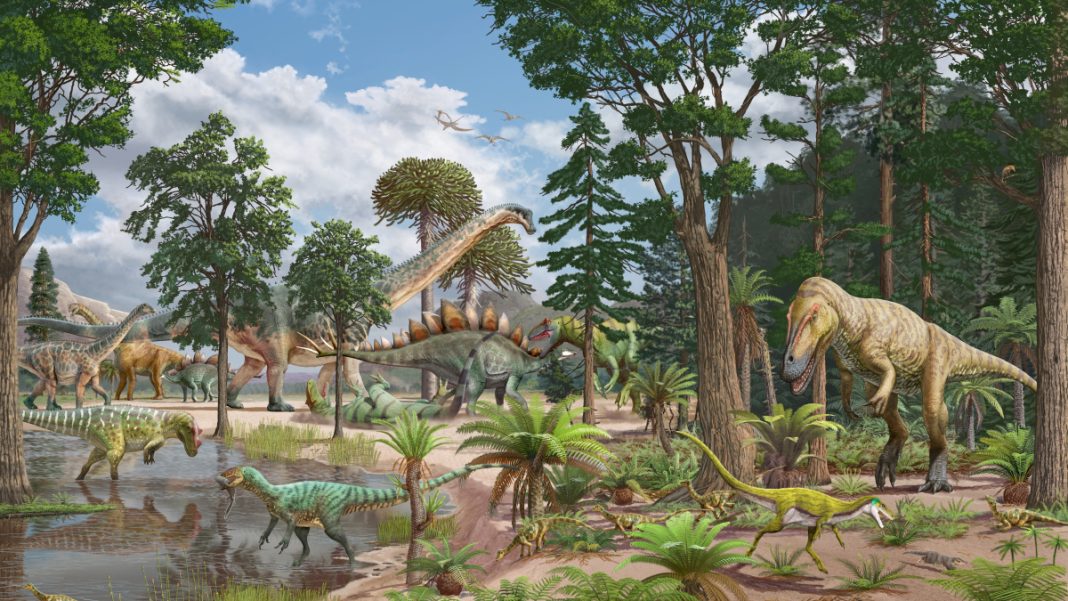
To understand the Jurassic snack, we must first understand the Jurassic pantry. Picture a landscape dominated not by colourful flowers and lush fruit trees, but by vast forests of conifers, towering cycads, ginkgoes, and a dense undergrowth of ferns and horsetails. These were the primary producers, the backbone of the terrestrial food web 150 million years ago.
For the colossal herbivorous dinosaurs, like the long-necked sauropods, their ‘snack’ would have been a continuous, bulk intake of plant matter. A young, succulent fern frond or the tender shoots of a conifer sapling might have offered a welcome change from tougher foliage, providing easily digestible nutrients. Cycad seeds or the fleshy outer layers of their cones could have been considered a calorie-dense treat, akin to a prehistoric energy bar, offering vital fats and carbohydrates. The ‘perfect snack’ for them wasn’t a single item, but rather the most palatable and nutrient-rich part of the abundant vegetation readily available in their immediate environment.
What’s notably absent from this picture are the fruits we enjoy today. Angiosperms, or flowering plants, which give us apples, mangoes, and bananas, were only just beginning to emerge in their most primitive forms towards the very end of the Jurassic, and certainly hadn’t evolved the sweet, fleshy, dispersed fruits we recognise. So, the idea of a dinosaur munching on a delicious, sugar-rich berry is largely a modern fantasy.
The Opportunistic Omnivore’s Bite
While the image of massive herbivores defines the Jurassic, a closer look reveals a diverse array of smaller creatures, including early mammals, lizards, and smaller dinosaurs, who would have had different dietary needs and opportunities. For these creatures, the ‘perfect snack’ could have been far more varied.
Insects, for instance, would have been an incredibly important protein source. Grubs extracted from decaying logs, beetles scurrying under ferns, or even primitive butterflies (proto-lepidoptera) fluttering amongst cycads, would have offered a quick, concentrated burst of energy. These small, protein-packed morsels were the equivalent of today’s high-protein snack bars for the smaller inhabitants of the Jurassic ecosystem.
Furthermore, evidence suggests that some smaller dinosaurs, like certain ornithopods or even early birds (if we stretch to the very late Jurassic), might have been omnivorous, supplementing their plant-based diet with insects, small vertebrates, or even eggs found in nests. This opportunistic foraging highlights that a ‘snack’ was often about what was most accessible and offered the highest immediate nutritional return for the energy expended.
“The Jurassic period was a world of green, but not the vibrant, fruit-laden green we often imagine today,” states Dr. Anjana Sharma, a leading Indian paleontologist. “Understanding what constituted a ‘snack’ then requires us to fundamentally rethink our modern dietary frameworks. It was less about culinary delight and more about efficient energy acquisition in a challenging, ever-changing environment.”
The Evolution of Sustenance
The ‘perfect snack’ 150 million years ago was a testament to the available resources and the pressing needs of survival in a pre-angiosperm world. For the giants, it was high-volume, digestible plant matter. For the smaller denizens, it was concentrated packets of energy like seeds or protein-rich insects. This profound difference in dietary options shaped the evolution of species, their behaviours, and the very ecosystems they inhabited.
Reflecting on the culinary landscape of the Late Jurassic reminds us of the incredible journey of life on Earth. From humble fern fronds and protein-rich grubs to the global smorgasbord of snacks we enjoy today, the definition of a ‘perfect snack’ has evolved dramatically, mirroring the grand tapestry of biological change over millions of years. It’s a humbling thought, connecting our modern chai-and-samosa moments to the ancient, vital bites of creatures long past.

