


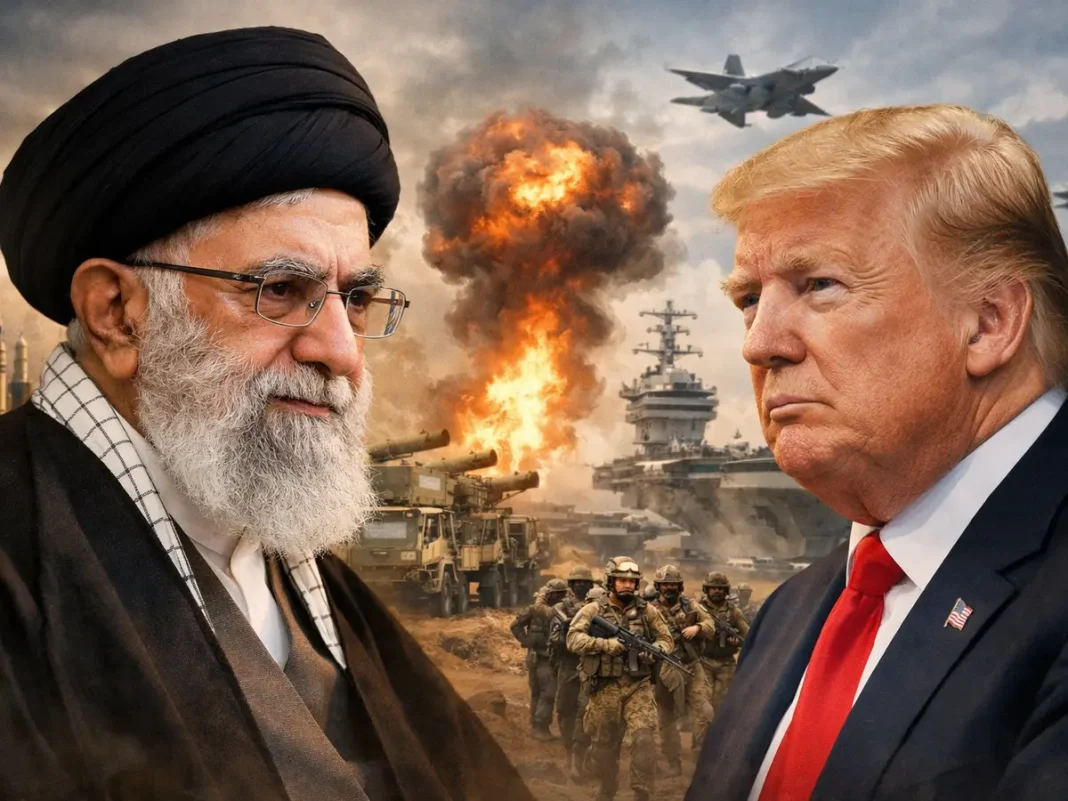
The geopolitical stage remains tense, with the simmering standoff between the United States and Iran once again demanding global attention. As rhetoric escalates, epitomized by President Donald Trump’s assertion of “We’ll make a deal” and Iranian Supreme Leader Ali Khamenei’s firm stance that Iran is “not initiators of war,” the world watches anxiously. For India, a nation deeply invested in regional stability and global energy security, these tensions carry significant implications, forcing a delicate diplomatic balancing act amidst high stakes. This article delves into the core of what’s unfolding and its wider repercussions.
The Escalating War of Words: “Deal” vs “Defense”
The recent exchange between Washington and Tehran underscores a fundamental divergence in approach and objectives. President Trump’s declaration, “We’ll make a deal,” reflects his administration’s long-held strategy of “maximum pressure.” This approach aims to compel Iran to negotiate a new, more comprehensive agreement than the 2015 Joint Comprehensive Plan of Action (JCPOA), which the US unilaterally withdrew from in 2018. Trump’s vision of a deal would likely address not only Iran’s nuclear program but also its ballistic missile capabilities and its regional influence, which the US and its allies, particularly Saudi Arabia and Israel, view as destabilising. The underlying implication is that crippling sanctions and military deterrence will force Iran to the negotiating table on US terms.
On the other side, Supreme Leader Ali Khamenei’s resolute declaration that Iran is “not initiators of war” but is prepared to defend itself, signals a deeply entrenched defiance. This rhetoric is rooted in Iran’s post-revolution doctrine of resistance against perceived foreign interference and an assertion of national sovereignty. From Tehran’s perspective, the US sanctions are an act of economic warfare, and any “deal” offered under such duress would amount to capitulation. Iran’s actions, such as increasing uranium enrichment or launching military drills, are often framed domestically as defensive measures to deter aggression and demonstrate resolve, rather than overt provocations aimed at initiating conflict. The Strait of Hormuz, a critical chokepoint for global oil shipments, frequently becomes a focal point of these tensions, with both sides demonstrating military readiness, raising concerns about potential miscalculation.
A Deep-Rooted History of Distrust and Shifting Alliances
The current impasse is not an isolated incident but a manifestation of decades of animosity and strategic competition. The 1979 Islamic Revolution and the subsequent hostage crisis fundamentally altered US-Iran relations, transforming a key regional ally into an ideological adversary. The nuclear program, which Iran insists is for peaceful energy purposes but Western powers suspect has a military dimension, became a central point of contention, leading to international sanctions. The JCPOA was a landmark attempt to de-escalate, offering sanctions relief in exchange for curbs on Iran’s nuclear activities. However, the Trump administration’s withdrawal from the deal, citing its perceived flaws and Iran’s continued regional actions, effectively dismantled the fragile framework and reignited tensions.
Iran’s regional activities, supporting groups in Iraq, Syria, Lebanon, and Yemen, are viewed by the US and its regional allies as proxies for expanding Iranian influence and threatening regional security. Tehran, conversely, sees these actions as legitimate support for allies and a necessary bulwark against external threats and extremist groups. The complex web of alliances, with the US firmly backing Saudi Arabia and Israel, while Iran aligns with various non-state actors, creates a highly volatile environment where regional conflicts can easily escalate into broader confrontations. As one seasoned diplomat, Ambassador T.P. Sreenivasan, aptly put it, “The challenge in the Persian Gulf is not merely about a nuclear deal; it reflects a deep-seated ideological clash and a struggle for regional dominance. De-escalation requires more than just political will; it demands a fundamental shift in perception from both sides to find common ground.” This ideological chasm makes diplomatic breakthroughs exceedingly difficult, even as the risk of military confrontation looms.
India’s Imperative: Balancing Diplomacy and Energy Security
For India, the escalating US-Iran tensions present a formidable diplomatic tightrope walk. India shares historic and cultural ties with Iran, and crucially, strategic interests, particularly the Chabahar Port project. This port offers India a vital gateway to Afghanistan and Central Asia, bypassing Pakistan, and its development is pivotal for India’s regional connectivity ambitions. However, US sanctions on Iran have created significant hurdles, making it challenging for Indian companies to engage without risking secondary sanctions.
Economically, India, a major energy importer, is highly sensitive to fluctuations in global oil prices. Any disruption to oil supplies from the Gulf, or a spike in prices due to conflict, would have immediate and severe repercussions on India’s economy and inflation. Furthermore, the large Indian diaspora in the Gulf region means stability is paramount for the safety and economic well-being of millions of Indian citizens. Consequently, New Delhi has consistently advocated for de-escalation through dialogue and diplomacy, stressing the importance of resolving differences peacefully. While maintaining its strategic partnership with the US, India has also sought waivers for key projects like Chabahar and continued to engage with Iran, balancing its diverse interests in a volatile geopolitical landscape.
The ongoing rhetoric between Trump and Khamenei serves as a stark reminder of the fragile peace in the Middle East. The interplay of historical grievances, strategic imperatives, and domestic political pressures on both sides creates an unpredictable scenario. For the global community, and especially for nations like India with significant stakes in regional stability and energy security, sustained diplomatic efforts and a concerted push for de-escalation remain the most prudent path forward, however challenging it may seem.

