


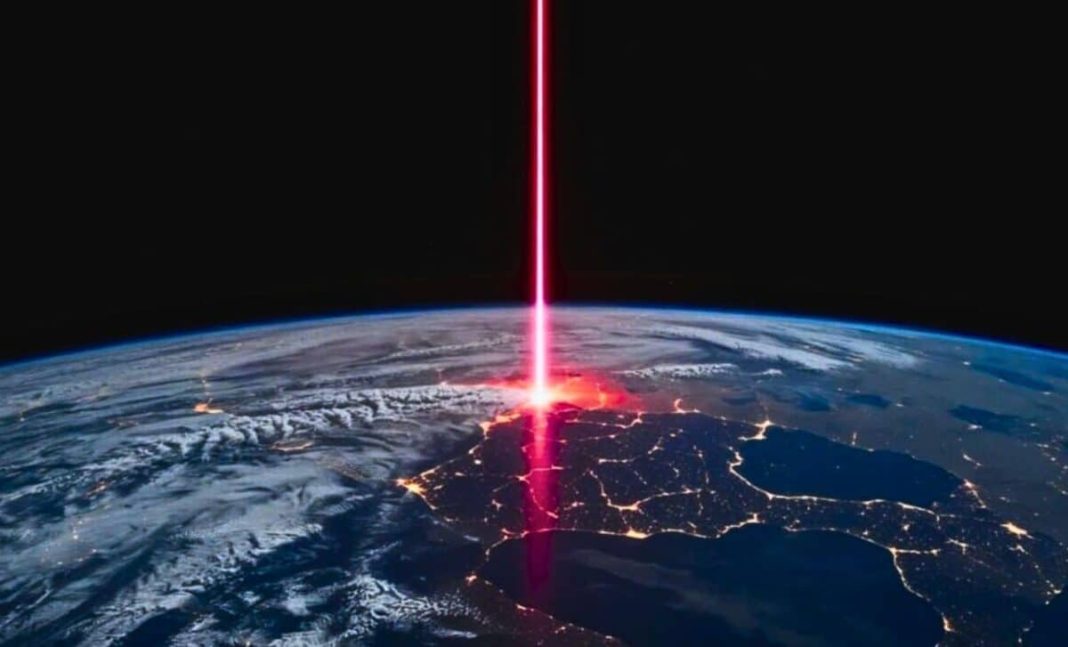
Imagine peering into a mirror so vast, it doesn’t just show you what’s happening now, but what happened almost at the very beginning of everything. That’s essentially what it feels like when we talk about a recently detected signal: a faint, 10-second whisper from a staggering 13 billion light-years away. This isn’t just a number; it’s a cosmic receipt, stamped and delivered from a time when our universe was barely a toddler. For anyone with even a fleeting curiosity about the cosmos, this is the kind of news that sends shivers down the spine – the good kind, the awe-inspiring kind.
The Deepest Echoes of Time
To truly grasp the magnitude of this discovery, we need to wrap our minds around what “13 billion light-years away” actually means. It’s not merely a measurement of distance, but a journey back through time. Light travels at a finite speed, and when we detect light or radio waves from such an immense distance, we’re seeing them as they were when they first embarked on their voyage. This signal left its source when the universe was only about 800 million years old – a mere fraction of its current 13.8 billion-year age.
At that primordial epoch, the cosmos was a vastly different place. The first stars were just beginning to ignite, forging the heavier elements that would eventually form planets and, ultimately, us. Galaxies were still nascent, chaotic swirls of gas and dust, colliding and merging in a grand, violent dance. Receiving a signal from this era isn’t just astronomy; it’s cosmic archaeology, offering an unprecedented opportunity to study the universe when it was in its infancy.
A Brief, But Profound, Signal
The signal itself, lasting a remarkable 10 seconds, adds another layer of intrigue. Many of the mysterious transient radio events we detect, known as Fast Radio Bursts (FRBs), typically last only milliseconds. A 10-second duration suggests something potentially different, something powerful enough to travel such an unfathomable distance and persist for an extended period.
What could have caused such an event? The possibilities are as vast and mysterious as the universe itself. Could it be the death throes of a supermassive star? The collision of neutron stars, or perhaps something even more exotic that we don’t yet understand? The beauty of these signals lies not just in their detection, but in the questions they ignite. As one astrophysicist, Dr. Anya Sharma, put it, “Each new detection from the early universe is like finding a new page in a history book we didn’t even know existed. This 10-second pulse isn’t just a blip; it’s a profound invitation to rewrite our understanding of cosmic evolution.” The fact that it survived the immense journey, warping through spacetime, tells us it was an incredibly energetic event.
What Does This Cosmic Whisper Tell Us?
Beyond the immediate excitement, this detection has profound implications for our understanding of the universe. It pushes the boundaries of how far back we can effectively “see” and suggests that even at such early stages, powerful and detectable phenomena were already shaping the cosmos. It informs our models of star formation, galaxy evolution, and the distribution of matter in the early universe. Moreover, it encourages the development of even more sensitive instruments, pushing the very edge of what’s technologically possible in our quest to listen to the oldest echoes.
The universe continues to surprise us, revealing its ancient secrets one faint signal at a time. This 10-second whisper isn’t just a data point; it’s a profound reminder of our place in a grand, evolving story, and an exciting promise of countless more wonders waiting to be discovered across the vast stretches of time and space.

