


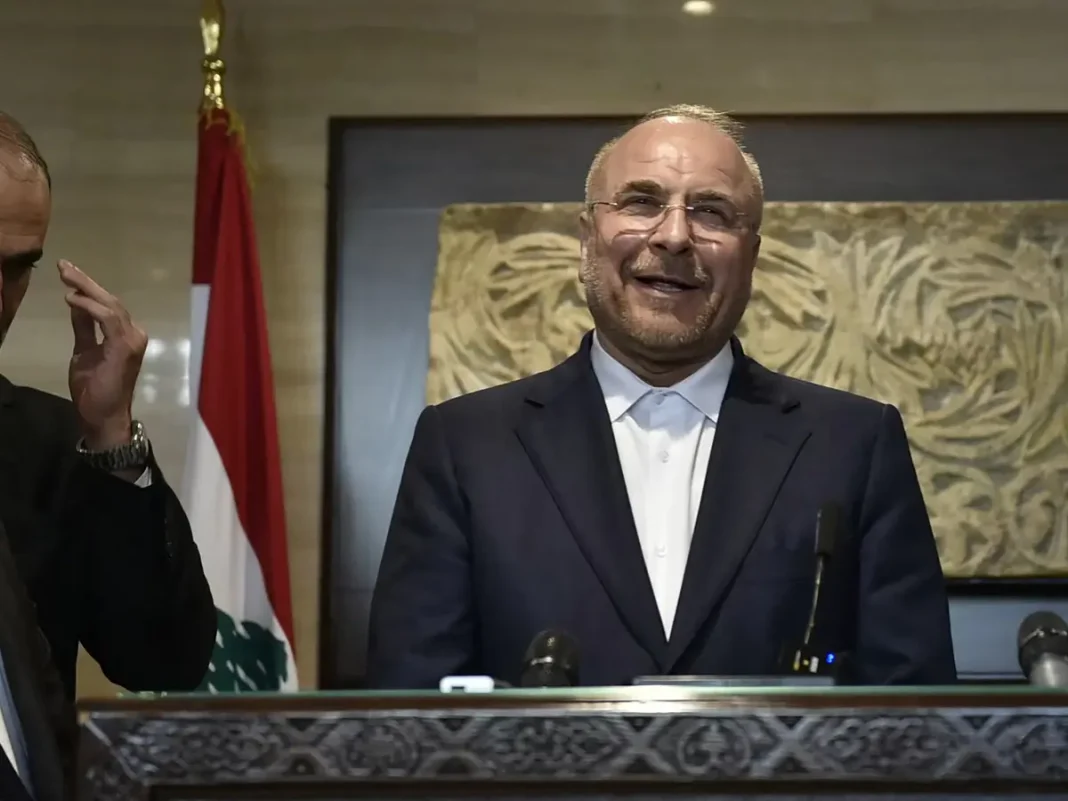
As the diplomatic chessboard in the Middle East continues to shift, a potent warning from Iran’s highest legislative office has sent ripples across international observers. Mohammad Bagher Ghalibaf, the Speaker of the Iranian Parliament, recently issued a stark message directed at former US President Donald Trump, declaring, “We have prepared to reveal new cards on the battlefield” as an unspecified ceasefire deadline approaches. This pronouncement comes at a critical juncture, underscoring the enduring fragility of US-Iran relations and the potential for renewed escalations, with significant implications for global stability and, notably, for India.
Iran’s Calculated Warning Amidst Looming Deadlines
Ghalibaf’s assertive statement, while referencing a “ceasefire,” is largely understood in diplomatic circles to signify the expiration of a period of relative, albeit tense, diplomatic impasse or the end of specific restraints related to Iran’s nuclear programme and the international sanctions regime. The use of “battlefield” imagery, even if metaphorical, suggests a readiness for a more confrontational approach should the current status quo prove untenable from Tehran’s perspective. It highlights Iran’s determination to assert its strategic autonomy and potentially recalibrate its regional and nuclear policies in response to perceived external pressures.
The phrase “new cards” could encompass a range of actions: from further accelerating its nuclear enrichment activities beyond the limits set by the Joint Comprehensive Plan of Action (JCPOA), to a more assertive stance in regional proxy conflicts, or even a new diplomatic offensive designed to disrupt existing alliances. This veiled threat serves as a reminder that despite ongoing international efforts to de-escalate tensions, the underlying grievances and strategic ambitions of key regional players remain potent drivers of future policy. For India, a nation deeply invested in West Asian stability, such pronouncements are closely monitored for their potential to disrupt energy supplies and regional trade routes.
The Shadow of Past Policies and Future Uncertainties
The specific mention of Donald Trump, despite him no longer being in office, is highly significant. Trump’s 2018 decision to unilaterally withdraw the US from the JCPOA and re-impose a “maximum pressure” campaign of sanctions irrevocably altered the trajectory of US-Iran relations. This policy led to Iran systematically reducing its commitments under the nuclear deal, accelerating uranium enrichment, and deepening regional proxy engagement. Ghalibaf’s warning to Trump can be interpreted as a message directed not just at the former president but at the broader conservative political faction in the US that advocates for a hardline stance against Iran.
The current US administration under President Joe Biden has expressed a desire to return to the JCPOA, but negotiations have been fraught with complexities, mistrust, and new demands from both sides. Tehran insists on the complete lifting of all Trump-era sanctions, while Washington seeks guarantees for Iranian compliance and addressing regional security concerns. The “ceasefire deadline” alluded to by Ghalibaf could refer to the patience wearing thin in Tehran regarding the stalled nuclear talks, or the potential expiry of temporary agreements allowing IAEA monitoring. Should these diplomatic avenues fail, the “new cards” Iran refers to could dramatically reshape the nuclear landscape and regional security architecture.
Analysts suggest that Ghalibaf’s statement is a calculated move to both signal Iran’s resolve to its domestic audience and to pressure international powers, including the US, to offer concessions. “Iran is effectively saying that the period of restraint imposed by the hope of renewed negotiations is coming to an end,” observes a geopolitical analyst. “They are preparing for a scenario where diplomacy fails, and they need to demonstrate leverage.” This period of uncertainty necessitates cautious engagement from global players, including India, which has historically maintained a nuanced and independent foreign policy approach towards both the US and Iran.
Regional Ripple Effects and India’s Strategic Calculus
An escalation of tensions between the US and Iran would have profound implications for the wider Middle East. The region, already volatile due to conflicts in Yemen, Syria, and Lebanon, could see a dangerous proliferation of proxy engagements, threatening vital shipping lanes in the Persian Gulf and the Strait of Hormuz. Such instability inevitably impacts global oil markets, leading to price spikes that directly affect energy-dependent economies like India’s. India, as a significant importer of crude oil and a nation with a large diaspora in the Gulf, has a critical stake in regional peace and stability.
Furthermore, India’s strategic investments, such as the Chabahar Port project in Iran, which offers a crucial connectivity route to Afghanistan and Central Asia, could face renewed challenges under heightened sanctions or instability. New Delhi has consistently advocated for a diplomatic resolution to the Iranian nuclear issue and for de-escalation of tensions in the region. The prospect of Iran “revealing new cards” underscores the necessity for India to continue its delicate balancing act, maintaining strategic autonomy while engaging with all parties to foster dialogue and prevent a dangerous slide towards confrontation. The coming weeks will be crucial in determining whether the diplomatic path can avert a fresh wave of regional volatility.

