


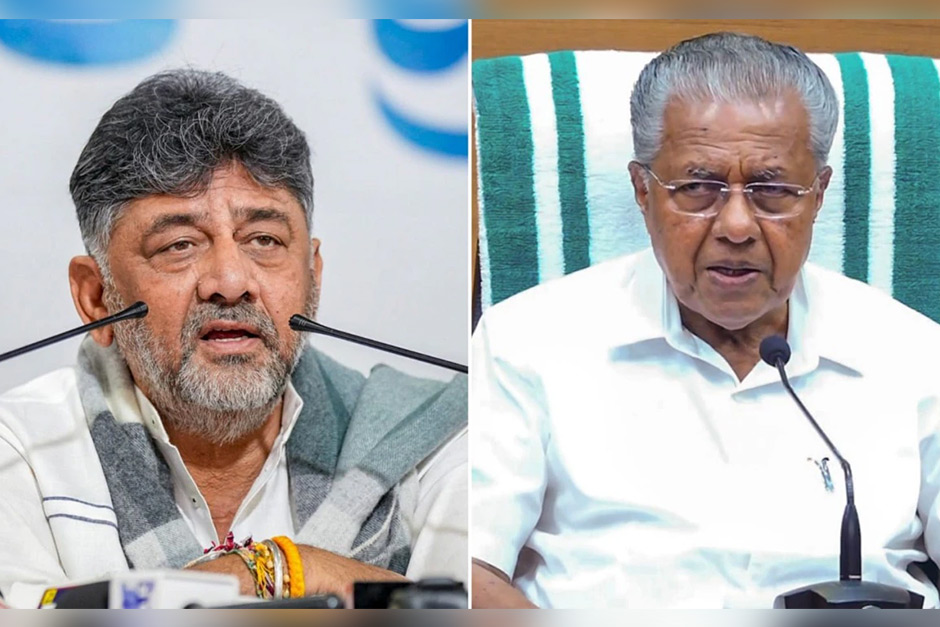
Bengaluru, India’s Silicon Valley, has frequently grappled with the challenges of rapid urbanisation, a problem acutely highlighted by recent heavy rains and subsequent urban flooding. In response, civic authorities have initiated a demolition drive targeting encroachments on stormwater drains (nalas). This action, however, has not only stirred local debate but has also spilled into inter-state politics, drawing sharp criticism from Kerala Chief Minister Pinarayi Vijayan, to which Karnataka’s Deputy Chief Minister, D.K. Shivakumar, has issued a robust rebuttal.
The Bengaluru Demolition Drive: A Necessity or a Hardship?
The latest series of demolitions in Bengaluru comes in the wake of severe flooding that crippled parts of the city. Authorities, particularly the Bruhat Bengaluru Mahanagara Palike (BBMP), have identified illegal structures built over stormwater drains as a primary culprit, obstructing the natural flow of water and exacerbating inundation during monsoon seasons. The drive aims to reclaim these vital waterways, ensuring better flood management for the future.
The process has seen earthmovers and civic teams move into various localities, dismantling residential and commercial structures that have encroached upon the nalas. While many residents acknowledge the need for such action to prevent future calamities, the implementation has been met with mixed reactions. Those affected often cite long-standing ownership, lack of proper prior notice, or the perceived targeting of smaller properties while larger, more influential encroachments remain untouched. The BBMP, however, maintains that due process is being followed, with notices issued and maps consulted to identify genuine infringements.
Kerala CM’s Critique and Karnataka’s Measured Response
The controversy took a significant political turn when Kerala Chief Minister Pinarayi Vijayan publicly criticised the Bengaluru demolition drive. Vijayan, speaking on the plight of migrant labourers and the humanitarian aspect, reportedly questioned the method and impact of the demolitions, drawing parallels to a contentious “bulldozer politics” narrative often seen in other parts of India. His comments implicitly suggested a lack of empathy and due consideration for those rendered homeless or jobless, many of whom are believed to be migrant workers from states like Kerala.
In a swift and pointed response, Karnataka’s Deputy Chief Minister D.K. Shivakumar, who also holds the Bengaluru Development portfolio, countered Vijayan’s remarks, clarifying the state’s approach. Shivakumar firmly distanced Karnataka’s actions from the controversial “bulldozer politics” often associated with swift, sometimes arbitrary, demolitions without judicial oversight.
“We are not into bulldozers,” Shivakumar stated unequivocally to the media, asserting a more measured and legalistic stance. “We are following the law. We are identifying government properties that have been encroached upon. We are sending notices. If they are legally rightful owners, we will ensure that justice is given to them. If it is purely government land and encroached, we are asking them to vacate it.”
Shivakumar’s statement underscored the Karnataka government’s intent to adhere to legal protocols, distinguish between legitimate ownership claims and clear encroachments, and ultimately protect public infrastructure. His response sought to frame the demolitions not as an aggressive, punitive measure, but as a necessary civic exercise rooted in law and public interest, a clear distinction from the narrative of summary demolitions.
Balancing Urban Development and Social Equity
The exchange between the two Chief Ministers highlights the complex interplay between urban development needs, legal frameworks, and social equity concerns. Rapid urbanisation in cities like Bengaluru often leads to unplanned growth, with encroachments sometimes occurring due to lax enforcement, corruption, or sheer necessity for housing and livelihoods.
While reclaiming public land and infrastructure, especially stormwater drains crucial for flood mitigation, is undeniably important for sustainable urban living, the method of execution invariably faces scrutiny. Governments are tasked with the delicate balancing act of ensuring civic compliance, protecting the rule of law, and addressing the humanitarian impact on those affected. The debate underscores the need for proactive urban planning, clear demarcation of public land, and robust, transparent processes to prevent future encroachments and manage existing ones with minimal distress.
As Bengaluru continues its drive to reclaim its drainage systems, the political dialogue surrounding it serves as a reminder of the broader challenges faced by Indian cities in their quest for development, accountability, and compassionate governance.

