


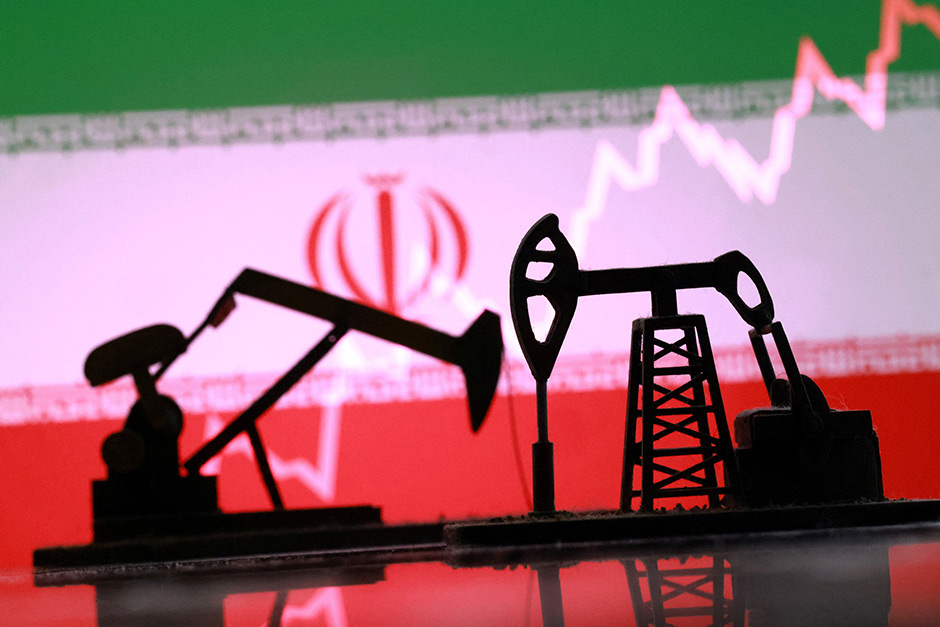
The thought of conflict, especially in volatile regions, often conjures images of geopolitical chess and strategic maneuvers. But for those of us living in a world powered by oil and gas, it’s also a stark reminder of how fragile our energy lifelines truly are. Imagine, for a moment, a serious escalation involving Iran. Beyond the immediate human tragedy, such a scenario would send shockwaves through the global energy market, with particular and profound implications for a continent that powers much of the world: Asia.
The stakes are enormous, not just for the Middle East, but for every industry, every household, and every economy deeply intertwined with the flow of black gold and natural gas. When we talk about Iran, we’re not just discussing a regional player; we’re talking about a nation positioned at a crucial artery of global trade.
The Strait of Hormuz: A Chokepoint with Global Consequences
At the heart of this concern lies one of the world’s most critical maritime chokepoints: the Strait of Hormuz. This narrow waterway, bordered by Iran to the north, is the only sea passage from the Persian Gulf to the open ocean. Through it passes an astonishing amount of the world’s seaborne oil – estimates suggest anywhere from 20% to 30% of global petroleum consumption, alongside significant volumes of liquefied natural gas (LNG). It’s an indispensable conduit for crude oil from Saudi Arabia, Kuwait, Qatar, Bahrain, and the UAE.
Should conflict arise, the immediate threat of disruption to this passage isn’t just a theoretical worry. Even the hint of instability can send crude oil prices soaring, reflecting market anxieties about potential supply interruptions. A direct closure, or even heavily restricted passage, would not just create a ripple; it would trigger a tsunami across the global energy landscape. It’s a scenario that keeps energy analysts awake at night, because the world simply doesn’t have enough spare capacity or alternative routes to easily compensate for such a massive bottleneck.
Asia’s Thirst: A Vulnerable Giant
No region stands to lose more from a disruption in Middle Eastern energy supplies than Asia. Powerhouses like China, India, Japan, and South Korea are ravenous for energy, fueling their vast manufacturing sectors, booming urban centers, and rapidly growing economies. These nations are heavily reliant on imported energy, with a significant portion of their oil and gas coming directly from the Persian Gulf via, you guessed it, the Strait of Hormuz.
For Japan and South Korea, which are almost entirely dependent on imports for their energy needs, a crisis in the Strait would be nothing short of catastrophic. Their industries, from automotive to electronics, would face immediate and immense pressure from soaring input costs and potential shortages. India, too, with its massive population and expanding industrial base, would see its economic growth targets evaporate amidst an energy squeeze. China, while having diversified some of its sources, remains a colossal importer from the region, and even minor disruptions would impact its industrial engine room.
As one seasoned energy analyst put it recently, “For Asia, the Strait of Hormuz isn’t just a trade route; it’s the jugular vein of their economic future. Any constriction there would have immediate and profound consequences, threatening not just GDP growth but also social stability in nations heavily reliant on affordable, consistent energy.”
Beyond the Pump: Economic Tremors and Social Fallout
The consequences extend far beyond just the price at the pump. Skyrocketing oil and gas prices translate directly into higher costs for everything that needs to be transported, manufactured, or heated. This means rampant inflation, eating into consumer purchasing power and making everyday goods more expensive. Businesses would struggle with increased operational costs, potentially leading to layoffs, reduced investment, and a significant slowdown in economic activity.
A prolonged energy crisis could unravel years of economic progress in many Asian nations, pushing vulnerable populations deeper into poverty and potentially sparking social unrest. It’s a stark reminder that global energy security isn’t just an economic issue; it’s a fundamental pillar of global stability and human well-being. The interconnectedness of our world means a conflict far away can quickly become a very personal problem for millions across a continent.
Ultimately, the prospect of conflict with Iran underscores a critical vulnerability in the global energy infrastructure, one that places Asia, with its insatiable energy demands, squarely in the line of fire. It’s a grim reminder that geopolitical stability and energy security are two sides of the same coin, and for Asia, that coin is particularly precious.

