


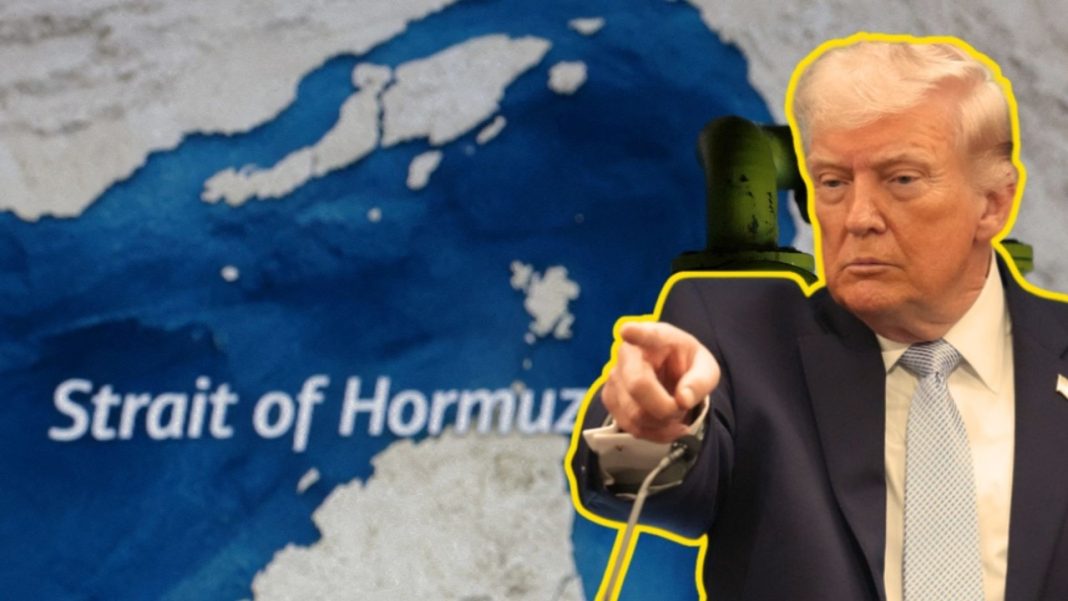
In a geopolitical landscape perpetually on edge, where the phrase “war not over” often hangs heavy in the air, a recent proposition from former US President Donald Trump has stirred a potent mix of surprise and intrigue. Trump, known for his unconventional diplomacy, has reportedly floated the idea of a joint venture with Iran to manage and collect tolls from ships traversing the strategically vital Strait of Hormuz. This unexpected suggestion, coming from a figure who oversaw a period of intense “maximum pressure” sanctions against Tehran, presents a fascinating thought experiment for international relations, particularly for energy-dependent nations like India.
Trump’s Bold Overture Amidst Lingering Tensions
The notion of the United States and Iran — two nations locked in decades of deep animosity, often described as a cold war with intermittent skirmishes — collaborating on a significant economic and strategic enterprise sounds almost fantastical. Yet, Trump’s reported proposal suggests a business-first approach to a diplomatic quagmire. The Strait of Hormuz is arguably the world’s most critical oil chokepoint, with approximately one-fifth of global oil consumption, along with a significant portion of liquefied natural gas (LNG), passing through its narrow waters daily. For Iran, which borders the strait, controlling or co-managing this passage has long been a point of leverage and national pride.
The context surrounding Trump’s idea is crucial. His presidency saw the US unilaterally withdraw from the Joint Comprehensive Plan of Action (JCPOA), the 2015 nuclear deal, and re-impose crippling sanctions on Iran. This era was marked by heightened tensions, including attacks on oil tankers in the Gulf, drone incidents, and proxy conflicts across the Middle East. Against this backdrop of what many still perceive as an unresolved, simmering conflict, the former president’s talk of a “joint venture” to collect a “Hormuz toll” introduces a radical departure from established policy and rhetoric. It raises questions about whether this is a genuine attempt at de-escalation through economic partnership or simply a characteristic piece of Trumpian political showmanship.
Feasibility and Geopolitical Hurdles
While intriguing, the practical implementation of such a joint venture faces monumental challenges. From Iran’s perspective, accepting such an offer from a nation that has consistently sought to isolate and economically cripple it would require a significant ideological shift and immense political will. Would Tehran be willing to legitimize a US presence in a venture so central to its sovereignty and strategic interests, especially given the history of US sanctions aimed at cutting off Iran’s oil revenue?
Furthermore, the legal and international implications are complex. Who would determine the toll structure? How would the revenue be shared? What about the sovereignty of other Gulf states whose shipping also depends on the strait? Countries like Saudi Arabia, the UAE, and Qatar, all major energy exporters and key US allies, would undoubtedly view such an arrangement with suspicion, concerned about potential shifts in regional power dynamics and maritime security. Any unilateral decision to impose a toll on international waters would likely face widespread condemnation and could destabilize global shipping and energy markets.
As one geopolitical analyst observed, “While a novel idea, any proposition for joint control over an international strait, especially by historically adversarial powers, would necessitate an unprecedented level of trust and a re-evaluation of international maritime law. It’s less about economic feasibility and more about fundamental shifts in strategic alignment.” The proposal underscores the enduring tension between economic pragmatism and entrenched geopolitical rivalries.
India’s Stake in Hormuz Stability
For India, the stability and free navigation of the Strait of Hormuz are not abstract geopolitical concerns but matters of critical national interest. As the world’s third-largest oil importer, a significant portion of India’s crude oil and LNG supplies, crucial for its growing economy, transits through this chokepoint. Any disruption, whether from conflict or an arbitrary toll, directly impacts India’s energy security, trade balance, and inflationary pressures.
New Delhi has historically maintained a delicate diplomatic balance, fostering relations with both the United States and Iran. While India values its strategic partnership with the US, it also has deep-rooted ties with Iran, exemplified by the Chabahar Port project, which offers India an alternative trade route to Afghanistan and Central Asia, bypassing Pakistan. A US-Iran joint venture, if genuinely aimed at stabilizing the Strait, might cautiously be welcomed by India, as it could reduce regional volatility. However, India would also be wary of any arrangement that could lead to new forms of maritime taxation or restrictions that increase the cost of its essential imports. India’s primary concern remains uninterrupted, affordable access to energy supplies, making any development in Hormuz a subject of keen observation and careful diplomatic consideration.
Trump’s unexpected proposal serves as a stark reminder that even in the most entrenched rivalries, unconventional thinking can emerge. While its immediate feasibility is highly debatable, it forces a reconsideration of what might be possible, even if currently improbable, in the volatile arena of US-Iran relations and the critical waterways of the Middle East.

