


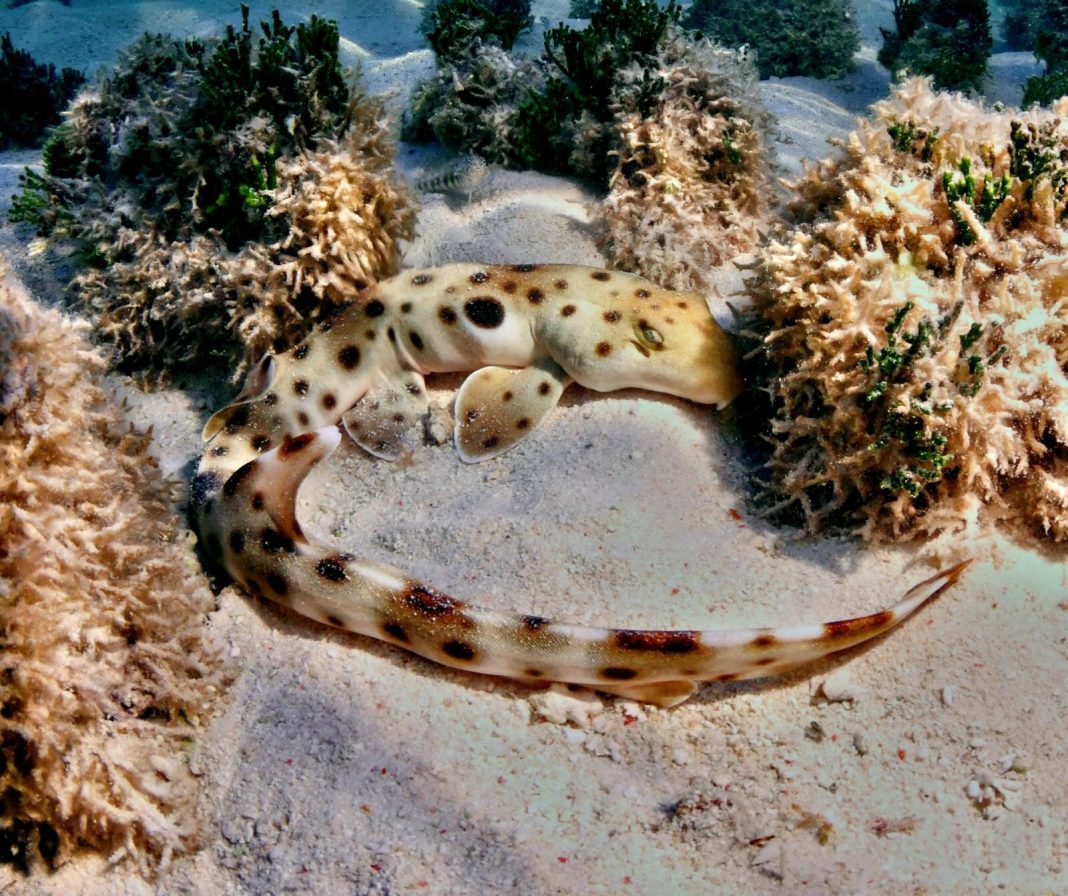
Imagine a shark, not gracefully gliding through the ocean depths, but rather using its fins to “walk” across the seafloor or a shallow reef flat. This isn’t science fiction but a remarkable reality brought to us by the epaulette shark, a creature challenging long-held biological assumptions about marine survival and reproduction. Found in the warm, shallow waters of the Indo-Pacific, these extraordinary sharks are rewriting the rulebook on how complex organisms can not only endure but thrive and perpetuate their species in the face of extreme environmental odds.
The Remarkable Epaulette Shark: A Coastal Marvel
Known scientifically as Hemiscyllium ocellatum, the epaulette shark is a relatively small species, typically growing up to a metre in length. While its distinctive eye-like spots near its pectoral fins give it its name, it’s their locomotion that truly sets them apart. These sharks possess uniquely adapted pectoral and pelvic fins that act almost like limbs, allowing them to literally “walk” by propelling themselves across solid surfaces. This isn’t just a quirky behaviour; it’s a vital survival strategy. As tides recede, epaulette sharks often find themselves stranded in shallow, oxygen-depleted pools or navigating exposed reef flats to find new hunting grounds or safer havens. Their ability to walk allows them to traverse these challenging landscapes with surprising agility, a feat unheard of for most fish, let alone sharks.
This walking ability is a testament to their evolutionary ingenuity, enabling them to exploit niches inaccessible to other predators. They hunt small fish and invertebrates hidden in crevices, effectively expanding their foraging territory beyond the typical swimming range of most marine life. Their adaptability to extreme intertidal environments hints at deeper, more fundamental biological innovations.
Beyond Fins: Hypoxia and Reproductive Success
The true “rule-breaking” aspect of walking sharks extends beyond their unique gait into their physiological resilience, particularly concerning their reproductive strategies. Epaulette sharks are masters of surviving hypoxia – conditions of extremely low oxygen. When trapped in isolated tide pools under the scorching sun, oxygen levels can plummet to near zero. While most marine animals would quickly perish, these sharks can endure these conditions for hours, sometimes even overnight, by drastically slowing down their metabolism and partially shutting down non-essential brain functions.
This incredible tolerance for oxygen deprivation is directly linked to their reproductive success. By surviving in environments that are lethal to competitors and predators, epaulette sharks carve out unique, protected nurseries for their offspring. They are oviparous, meaning they lay eggs. These egg cases, often camouflaged and securely tucked into the reef structure, develop in an environment where the parents can survive and return to, but where fewer other species can pose a threat. This allows for a higher survival rate for their young in an otherwise harsh world.
The ability to not just survive but also successfully perpetuate their species in such extreme conditions fundamentally challenges our understanding of the environmental prerequisites for complex marine reproduction. They haven’t broken the biological rules of reproduction itself, but rather, they’ve defied the environmental “rules” dictating where and how complex organisms can successfully breed.
“These sharks offer a profound glimpse into the evolutionary plasticity of life. Their ability to not only survive but also successfully perpetuate their species in the face of extreme environmental stress challenges our fundamental understanding of what it takes for complex organisms to reproduce and thrive, especially as our oceans undergo rapid change.” – Dr. Ananya Sharma, Marine Biologist, Indian Institute of Tropical Marine Sciences.
Implications for a Changing World
The insights garnered from studying epaulette sharks hold significant implications, particularly for regions like India with its extensive coastline and rich marine biodiversity. As global climate change leads to rising ocean temperatures and increased deoxygenation events, understanding species that can adapt to such extremes becomes paramount. Epaulette sharks serve as a living blueprint for resilience, showcasing how life can find ways to persist and reproduce even in increasingly challenging marine environments.
Their survival strategies could offer clues for conservation efforts or for predicting which species might be more vulnerable or adaptable in future scenarios. For marine scientists and conservationists, these walking wonders are not just a curiosity but a critical subject of study, representing hope and a powerful reminder of the untapped evolutionary potential within our oceans.
In essence, the walking shark is more than just an anomaly; it’s a testament to the incredible adaptability of life. By defying conventional biological expectations regarding survival and reproduction in harsh environments, it compels us to look closer at the ingenious ways nature finds to thrive, offering invaluable lessons for a world grappling with environmental shifts.

