


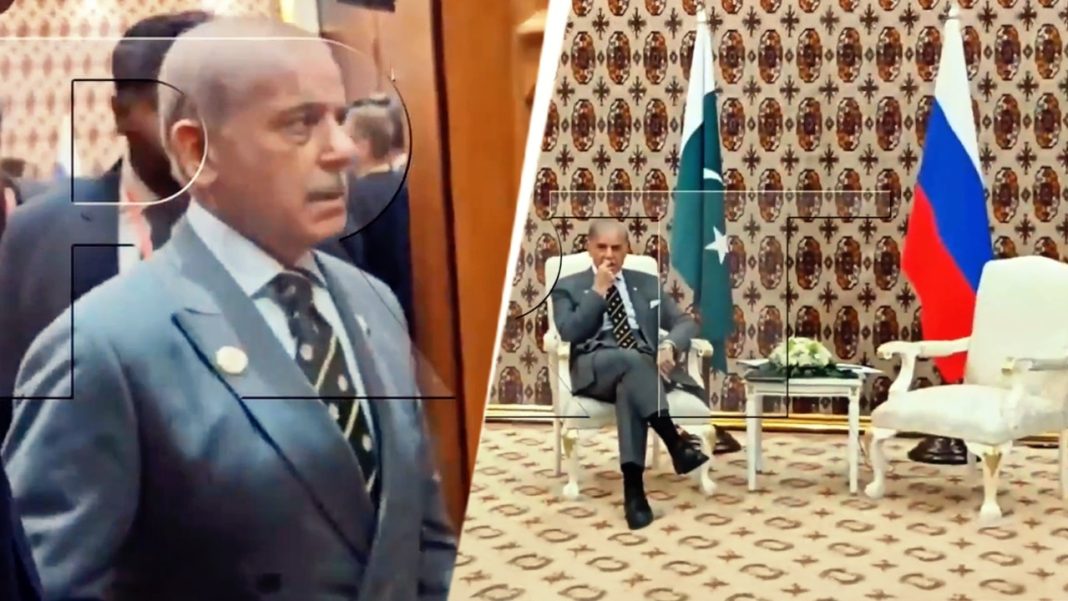
The world of high-stakes diplomacy is often characterized by carefully choreographed interactions, strict protocols, and subtle gestures that speak volumes. However, sometimes, even the most seasoned leaders find themselves in unexpectedly awkward situations. Such was the case during the Shanghai Cooperation Organisation (SCO) summit in Samarkand in September 2022, when a video clip went viral, showing Pakistani Prime Minister Shehbaz Sharif approaching Russian President Vladimir Putin and Turkish President Recep Tayyip Erdoğan in what appeared to be an unscheduled and somewhat eager intervention into their private huddle. The incident, quickly dubbed a “gatecrash,” sparked widespread discussion and amusement, raising questions about diplomatic decorum and the quest for international visibility.
The Viral Moment at Samarkand
The incident unfolded on the sidelines of the pivotal SCO summit, a crucial platform for Eurasian political, economic, and security cooperation. Russian President Vladimir Putin and Turkish President Recep Tayyip Erdoğan were engaged in a seemingly intense, private discussion, their body language suggesting a closed-door conversation. According to multiple reports and the viral video footage, Pakistani Prime Minister Shehbaz Sharif had been waiting for approximately 40 minutes for an opportunity to speak with the two leaders. Growing visibly impatient, Sharif eventually decided to walk directly towards them, interrupting their tête-à-tête.
The video captures the moment Sharif approaches, a slight smile on his face. President Putin, noticing the interruption, briefly gestures with his hand as if to acknowledge Sharif, but immediately returns his attention to Erdoğan. The Turkish President offers a quick glance before also refocusing on Putin. Sharif then attempts to join the conversation, standing awkwardly beside them for a few moments before a member of his delegation or a protocol officer appears to guide him to a more appropriate waiting area or attempt to facilitate a proper introduction. The footage quickly became fodder for social media, leading to countless memes and online commentary worldwide, highlighting the perceived discomfort and the break in diplomatic etiquette, particularly from an Indian perspective observing regional developments.
Diplomatic Decorum and Geopolitical Optics
In the realm of international relations, adherence to protocol and diplomatic etiquette is paramount. Heads of state and government typically engage through pre-scheduled bilateral meetings or designated informal exchanges. An unscheduled approach, particularly one that interrupts a high-level discussion between two other leaders, is generally considered an unusual departure from established norms. For many observers, especially those within Indian strategic circles, the incident at Samarkand was seen as more than just an awkward moment; it was interpreted through the lens of Pakistan’s perceived diplomatic struggles and its eagerness to secure international attention and support, particularly amidst pressing economic challenges back home.
The optics of the situation were widely discussed. While some defended Sharif’s actions as a pragmatic attempt to seize an opportunity for engagement, others viewed it as a desperate move that potentially undermined Pakistan’s diplomatic standing. The image of a prime minister waiting for an extended period and then seemingly forcing an interaction resonated with broader narratives about countries vying for influence and relevance on the global stage. This quest for visibility is particularly acute for nations facing internal instability or external pressures, where even a brief word with a major global player can be seen as a diplomatic victory.
As Dr. Rohan K. Gupta, a prominent Indian foreign policy analyst, observed, “While every leader seeks to advance their nation’s interests, there’s a fine line between persistent diplomacy and an apparent disregard for protocol. Such moments, amplified by social media, can inadvertently shape public perception of a country’s diplomatic gravitas and its ability to engage effectively on the world stage.” The incident underlined the constant interplay between formal protocol and the sometimes messy reality of informal interactions in multilateral forums, especially in a region as strategically vital as Eurasia.
The context of the SCO summit further amplified the incident’s significance. It was a gathering where major global and regional powers converged to discuss pressing issues, from security to economic cooperation. For Pakistan, a country navigating complex geopolitical waters and seeking crucial financial aid, securing face time with influential leaders like Putin and Erdoğan could be deemed vital. The viral video, however, unintentionally shone a spotlight on the informal, sometimes awkward, mechanics of this high-stakes international engagement.
Conclusion
The “gatecrashing” incident involving Prime Minister Shehbaz Sharif at the SCO summit, while perhaps a fleeting moment in the grand scheme of international diplomacy, served as a poignant reminder of the complexities inherent in global interactions. It sparked a viral sensation and considerable debate, transcending mere political commentary to become a cultural moment of digital age diplomacy. Beyond the memes and the immediate amusement, it highlighted the perpetual dance between established diplomatic norms and the often urgent imperatives of national interest. For Pakistan, the desire for meaningful engagement with global powers like Russia and Turkey remains a critical objective, and this incident, irrespective of its intent, certainly brought the nation’s diplomatic efforts into sharp focus on the world stage.
The event also offered a unique lens for Indian observers to reflect on the dynamics of regional diplomacy and the varied approaches nations take to assert their presence and pursue their strategic goals. It underscored that in the era of instant global communication, even a minor deviation from protocol can quickly become a subject of international scrutiny and discussion, influencing perceptions far beyond the immediate diplomatic circles.

