


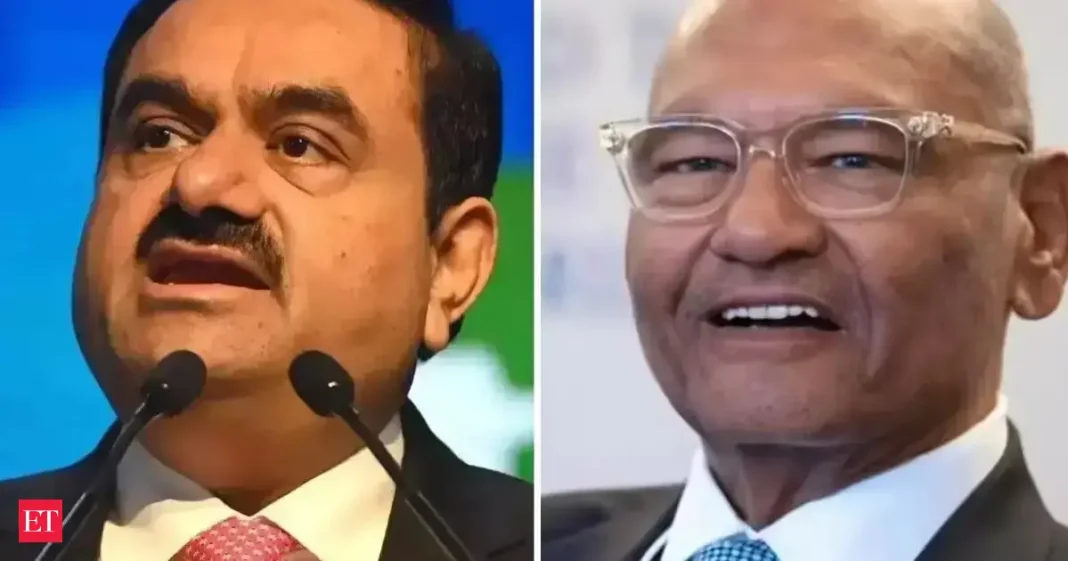
India’s corporate landscape is once again witnessing a high-stakes legal battle as Vedanta Limited has escalated its challenge against the Adani Group’s proposed acquisition of Jaiprakash Associates’ cement assets. The mining conglomerate has moved the Supreme Court, seeking a stay on the deal, injecting a fresh wave of uncertainty into one of the country’s most significant asset transfers in the cement sector.
This development underscores the intense competition for strategic assets in India, particularly those undergoing financial restructuring or asset sales. The legal wrangling at the apex court not only has profound implications for the companies involved but also sets precedents for future M&A activities and the resolution of distressed assets in the Indian market.
The Genesis of the Dispute: Adani’s Ambitions and JAL’s Divestment
The Adani Group, led by billionaire Gautam Adani, has been aggressively expanding its footprint in the Indian cement industry. Following its massive acquisition of Ambuja Cements and ACC from Holcim in 2022, the conglomerate has been on the lookout for further opportunities to bolster its capacity. Its sights then turned to Jaiprakash Associates Limited (JAL), a company that has been undertaking significant divestments of its non-core assets to reduce its substantial debt burden.
In October 2022, Adani Cement, through its subsidiary Ambuja Cements, announced an agreement to acquire Jaiprakash Associates’ cement business, including grinding units and clinker facilities, for an enterprise value of ₹5,000 crore (approximately $600 million). This acquisition was seen as a strategic move for Adani to further consolidate its position as India’s second-largest cement player. The deal aimed to integrate JAL’s robust cement infrastructure, which includes integrated cement plants, grinding units, and a sizeable captive power plant, into Adani’s burgeoning cement empire. The acquisition was approved by the Competition Commission of India (CCI), paving the way for its completion, subject to other regulatory and legal clearances.
Vedanta’s Legal Challenge: A Claim of Right of First Refusal
Vedanta Limited’s move to the Supreme Court stems from its contention that it possesses a “right of first refusal” (ROFR) over a significant portion of Jaiprakash Associates’ cement assets. Vedanta claims that it had previously entered into an agreement with Jaiprakash Associates, which granted it the first right to acquire these specific assets should JAL decide to sell them. According to Vedanta, this contractual right was not honored when the deal with Adani was struck, effectively bypassing their prior claim.
Vedanta had initially approached the National Company Law Tribunal (NCLT) and subsequently the National Company Law Appellate Tribunal (NCLAT), seeking to assert its ROFR and stay the Adani-JAL transaction. However, these tribunals did not grant the desired relief to Vedanta, prompting the mining major to elevate the matter to the Supreme Court. The core of Vedanta’s argument is that the proposed sale to Adani violates a pre-existing contractual obligation, and therefore, the transaction should be halted or re-evaluated to accommodate their preferential right.
This legal challenge complicates what appeared to be a straightforward asset sale for JAL, critical for its debt reduction strategy. The Supreme Court’s involvement now means that the highest judicial authority in the country will deliberate on the validity and enforceability of such contractual rights in the context of large-scale corporate divestments.
Broader Implications for India’s Corporate Sector and M&A Dynamics
The Supreme Court’s decision in this case could have far-reaching implications for mergers and acquisitions in India, particularly for asset sales involving financially stressed companies. It highlights the complexities arising from prior contractual agreements, especially when multiple bidders with significant market power are involved. The outcome will likely clarify the hierarchy of claims and the robustness of contractual rights like ROFR in the face of competitive bidding and corporate restructuring efforts.
An industry analyst, preferring anonymity due to the ongoing legal proceedings, remarked, “These disputes highlight the intricate legal frameworks surrounding large-scale asset transfers, particularly when multiple corporate giants are vying for strategic assets. The Supreme Court’s ruling will provide much-needed clarity on the precedence of contractual rights in divestment processes, potentially influencing how future deals are structured and contested.”
For Jaiprakash Associates, a prolonged legal battle could delay its debt reduction efforts, while for Adani, it represents an unforeseen hurdle in its aggressive expansion plans. Vedanta, on the other hand, is steadfast in protecting its perceived contractual rights and strategic interests in the cement sector. The Supreme Court’s intervention marks a critical juncture, promising a definitive legal interpretation that will resonate across India’s dynamic corporate landscape.
As the legal proceedings unfold, all eyes will be on the Supreme Court to see how it navigates the competing interests and contractual intricacies of this high-profile corporate tussle. The verdict will undoubtedly shape future strategies for M&A, asset divestment, and the enforcement of pre-existing agreements in the Indian business environment.

