


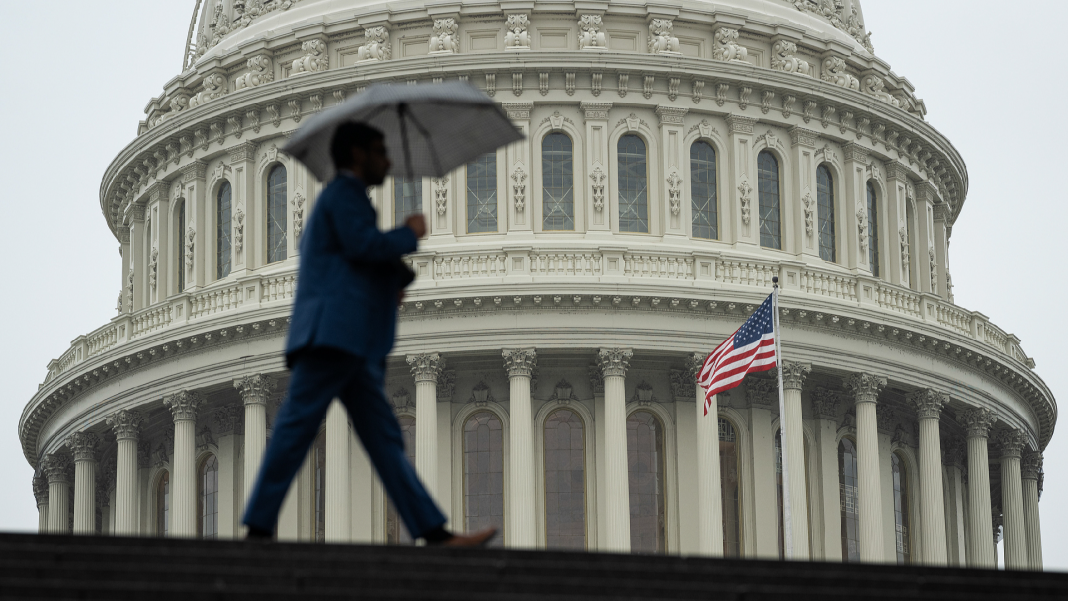
In a move with far-reaching implications for global stability and Middle Eastern geopolitics, the United States Senate recently voted against a resolution aimed at curbing President Donald Trump’s authority to take military action against Iran without explicit congressional approval. The 50-40 vote effectively rejected efforts by a bipartisan group of senators to reassert legislative oversight over the executive branch’s war-making powers, leaving the door open for the administration to pursue its “maximum pressure” campaign against Tehran with fewer congressional constraints.
The outcome reverberates beyond Washington, echoing through international capitals, including New Delhi, where policymakers closely monitor developments that could impact India’s strategic and economic interests in a volatile region. This decision underscores the continued tension between executive prerogative and legislative oversight in US foreign policy, particularly concerning a nation as strategically critical and historically complex as Iran.
The Legislative Battle Over War Powers
The resolution in question, a version of the War Powers Resolution (S.J.Res. 68), sought to compel the President to seek congressional authorization before engaging in any further military action against Iran, barring immediate self-defense. Proponents argued that it was a crucial step to restore the constitutional balance of power, ensuring that decisions of war and peace rest with the people’s representatives in Congress, not solely with the President. They pointed to public sentiment, which largely favors diplomatic solutions over military confrontation, and expressed deep concern over the potential for escalating tensions into a full-blown conflict.
Key figures like Senator Tim Kaine, a Democrat who led the charge for the resolution, emphasized the gravity of war decisions. However, the resolution ultimately failed to garner the necessary votes, falling short even of a simple majority, let alone the two-thirds needed to override a potential presidential veto. Republicans, by and large, aligned with the administration, arguing that restricting the President’s flexibility could embolden adversaries and undermine national security. They maintained that the President, as Commander-in-Chief, needs the ability to respond swiftly and decisively to evolving threats, without being “handcuffed” by Congress.
The debate highlighted a fundamental disagreement over the interpretation of the Constitution’s provisions for war-making authority, a recurring theme in American political history. While the Constitution grants Congress the power to declare war, presidents have historically engaged in military actions without explicit declarations, citing inherent executive powers or statutory authorizations for the use of military force.
Middle East Tensions and India’s Stakes
The Senate’s vote comes against a backdrop of heightened US-Iran tensions, which dramatically escalated following the US withdrawal from the Joint Comprehensive Plan of Action (JCPOA) nuclear deal in 2018 and the subsequent imposition of crippling sanctions on Iran. The assassination of Iranian General Qassem Soleimani in early 2020 further pushed the two nations to the brink of conflict. This latest vote suggests that President Trump retains significant leeway to continue his assertive stance, potentially without needing to seek explicit congressional consent for further actions that could be framed as deterring or responding to Iranian aggression.
For India, the continued state of flux and uncertainty in the Middle East is a matter of considerable concern. The region is not just a critical source of India’s energy imports but also home to a massive Indian diaspora whose safety and well-being are paramount. Any disruption to oil production or shipping lanes in the Persian Gulf, particularly the Strait of Hormuz, could trigger a sharp spike in crude oil prices, dealing a significant blow to India’s import-dependent economy and exacerbating inflationary pressures.
India maintains diplomatic ties with both the US and Iran, navigating a complex geopolitical landscape with strategic nuance. Its investment in Iran’s Chabahar Port, offering a vital trade route to Afghanistan and Central Asia, underscores its long-term strategic interests in the region’s stability. Escalations between the US and Iran directly threaten these economic and strategic lifelines. “The American people do not want war with Iran. We must take action to prevent it,” stated Senator Bernie Sanders, a strong proponent of the resolution, encapsulating the sentiment of those who sought to rein in executive authority.
An Unpredictable Path Forward
The Senate’s decision undeniably strengthens the President’s hand in formulating and executing Iran policy, at least for the remainder of his term. It signals to Tehran that Congress, for now, will not serve as an immediate check on potential military actions. This lack of congressional restraint could empower the administration to escalate its “maximum pressure” tactics further, raising the specter of miscalculation and unintended conflict in an already fragile region.
Looking ahead, the path remains deeply unpredictable. The absence of a strong congressional mandate for de-escalation means that diplomatic avenues might continue to be overshadowed by coercive measures. Global powers, including India, will undoubtedly continue their calls for restraint and dialogue, recognizing that regional stability is a prerequisite for economic growth and collective security. The upcoming US presidential elections will also play a crucial role in shaping future policy directions, adding another layer of uncertainty to the complex US-Iran dynamic.
In conclusion, the US Senate’s vote against curbing President Trump’s Iran war powers signifies a critical moment in US foreign policy, upholding the executive’s broad authority in military matters. For India, deeply invested in the Middle East’s stability and its own energy security, this development necessitates continued vigilance and proactive diplomatic engagement to navigate the turbulent geopolitical waters ahead.

