


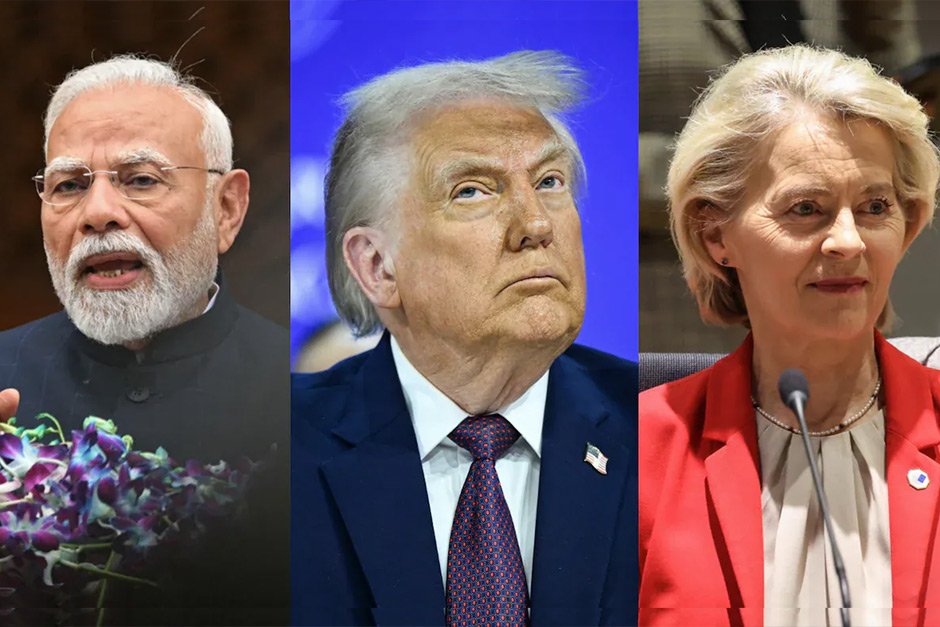
India stands at a pivotal juncture on the global economic stage, increasingly recognized as a vital player in a multipolar world. Recent advancements in trade dialogues with economic powerhouses like the United States and the European Union are not merely transactional agreements; they are strategic maneuvers that signify India’s growing confidence and its potential to reshape global supply chains and trade dynamics. While these engagements undeniably elevate India’s international standing, the path to fully leveraging these opportunities is fraught with intricate challenges that demand astute policy and sustained reforms.
A New Dawn: India’s Strategic Embrace of Western Economies
The strategic imperative behind India’s intensified engagement with the US and EU is multifaceted. As global supply chains undergo significant restructuring, driven by geopolitical shifts and the imperative for resilience, India emerges as a compelling alternative manufacturing hub and a robust consumer market. Both the US and the EU view India as a crucial partner in diversifying their economic dependencies, particularly away from a concentrated reliance on specific regions, and in fostering stronger democratic alliances.
For the US, the relationship extends beyond traditional trade figures. Initiatives like the Indo-Pacific Economic Framework for Prosperity (IPEF), while not a conventional free trade agreement, signal a deeper commitment to collaboration across critical areas. Pillars on supply chain resilience, clean economy, and fair economy are designed to integrate India more deeply into trusted global value chains, enhance technological cooperation, and align regulatory standards. This partnership is crucial for India’s access to advanced technologies and investment in future-critical sectors like semiconductors and renewable energy, solidifying its role in the Indo-Pacific strategy.
Similarly, the EU, a behemoth economic bloc, has re-energized its efforts to ink a comprehensive Free Trade Agreement (FTA) with India, after negotiations stalled for years. This renewed vigour reflects Europe’s strategic interest in reducing economic risks and fostering new growth markets. An EU-India FTA promises immense opportunities for Indian industries to access a vast, affluent market, while attracting European investment and technology. For India, it’s about securing preferential access for its goods and services, and integrating into high-value European supply chains.
Unpacking the Potential: US and EU Partnerships
The potential gains from deeper trade ties with the US and EU are substantial. Increased foreign direct investment (FDI) can flow into India, boosting manufacturing capabilities, creating jobs, and facilitating technology transfer. Sectors like IT, pharmaceuticals, automotive components, and textiles stand to benefit significantly from greater market access. For instance, enhanced collaboration with the US on critical minerals processing could secure India’s supply chain for electric vehicles and renewable energy components, crucial for its green transition goals.
The EU FTA, once finalized, could reduce tariffs on a wide range of Indian exports, making them more competitive. Simultaneously, it could lead to the harmonization of standards and regulations, simplifying trade procedures and enhancing predictability for businesses. This kind of integration not only boosts trade volumes but also promotes best practices in manufacturing and services, pushing Indian industries towards global competitiveness. These engagements are elevating India’s profile, making it a more attractive destination for global capital and innovation, and reinforcing its role as a key player in shaping the future of global commerce.
The Road Ahead: Persistent Hurdles and Domestic Reforms
Despite the immense promise, the path to fully realizing these opportunities is paved with significant challenges. Internally, India faces the perennial task of improving its ease of doing business rankings. Issues such as regulatory complexities, bureaucratic red tape, intellectual property rights (IPR) enforcement, and an evolving tax regime remain points of concern for foreign investors. Furthermore, upgrading infrastructure – from logistics and ports to power supply – is paramount to handle increased trade volumes and ensure efficient supply chains.
During negotiations, India grapples with demands from its trading partners concerning market access in sensitive sectors like agriculture and automotive, while also navigating issues related to environmental, social, and labour standards – particularly stringent from the EU. The balance between protecting nascent domestic industries under initiatives like “Make in India” and opening markets to global competition remains a tightrope walk. Developing a skilled workforce that can meet global standards in advanced manufacturing and services is another critical requirement.
As Dr. Priya Sharma, a leading economist specializing in international trade, notes, “While these agreements signal a significant step towards India’s global integration, the real challenge lies in enacting domestic reforms that allow our industries to truly compete and thrive on this new playing field.” India’s ability to capitalize on these global opportunities will hinge on its capacity to implement consistent, transparent, and industry-friendly policies.
In conclusion, the trade dialogues with the US and EU undeniably mark a new chapter for India on the global stage, promising unprecedented economic growth and integration. These partnerships are not just about trade; they are about strategic alignment, technological advancement, and a stronger voice in global governance. However, the true test lies in India’s commitment to continuous domestic reforms, policy consistency, and a proactive approach to addressing internal and external challenges. Only then can India truly transform potential into prosperity and cement its position as a global economic leader.

