


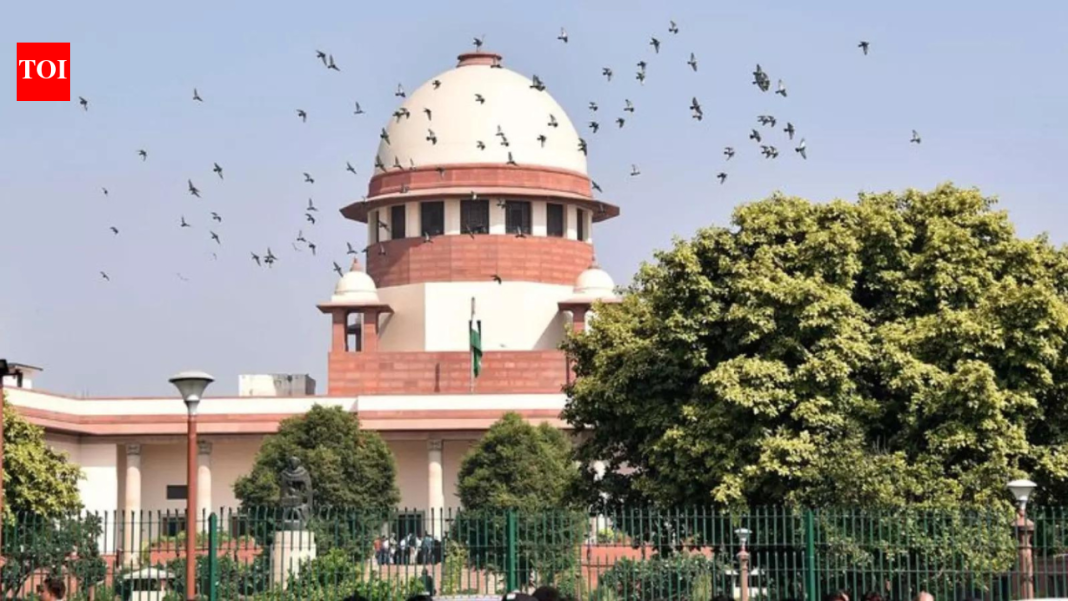
The landscape of affirmative action in India has seen another significant development with the Supreme Court’s recent pronouncement on the ‘creamy layer’ within Other Backward Classes (OBCs). In a ruling that reinforces the nuanced understanding of social and economic backwardness, the apex court has unequivocally stated that OBC creamy layer status cannot be determined by income alone, deeming such an approach “unsustainable in law.” This judgment promises to refine the criteria for accessing reservation benefits, ensuring they reach the truly deserving.
Understanding the Creamy Layer Principle
The concept of the ‘creamy layer’ was introduced to ensure that the benefits of reservation policies for OBCs do not disproportionately accrue to the more affluent and advanced sections within these communities. Originating from the landmark 1992 Indra Sawhney & Ors. v. Union of India judgment (also known as the Mandal Commission case), the creamy layer acts as an exclusion criterion, identifying individuals or families who, despite belonging to a backward class, have attained a certain level of social, economic, or educational advancement that places them outside the scope of needing reservation benefits.
Over the years, the criteria for identifying the creamy layer have been refined through various government notifications and expert committee reports. These typically include factors like parents’ income, their status in government service (e.g., Group ‘A’ or ‘B’ officers), professional categories (doctors, engineers, chartered accountants), property ownership, and agricultural land holdings. However, there has been an ongoing debate and often a tendency in practice to heavily emphasize the annual income criterion, sometimes to the exclusion of other equally important indicators of social standing and power. This over-reliance on income alone formed the crux of the challenge addressed by the Supreme Court.
The Supreme Court’s Clear Mandate
In its latest ruling, the Supreme Court addressed this critical lacuna, emphasizing that while income is undoubtedly a factor, it cannot be the sole determinant for deciding creamy layer status. The Court observed that the very purpose of identifying a creamy layer is to prevent the reservation policy from being monopolized by those who are no longer socio-economically backward, having moved beyond the disadvantageous position that the policy seeks to address. Restricting the criteria merely to income would potentially overlook other dimensions of privilege and influence.
The bench highlighted that the creamy layer concept aims to identify those who, by virtue of their social standing, employment, or professional advancement, have acquired the capacity to compete with the forward sections of society without the crutch of reservations. Factors like parental occupation, educational status, and inherited social capital contribute significantly to an individual’s standing, independent of their current annual income. For instance, a person from an established professional family, even with a moderate income, might possess inherent advantages not available to someone from a truly backward background, even if their current incomes are similar.
“The creamy layer identification is a complex socio-economic exercise, not a mere arithmetic calculation based on income figures,” the Court underscored, adding that “to reduce it to solely an income threshold defeats the constitutional spirit of substantive equality and social justice that underpins the reservation policy.” This robust observation by the judiciary underscores the need for a holistic and multifaceted approach, moving beyond a simplistic financial cutoff.
Implications and the Path Forward
This ruling is set to have significant implications for how creamy layer status is assessed across various government departments, public sector undertakings, and educational institutions. It necessitates a re-evaluation of existing guidelines and, potentially, the formulation of new, more comprehensive criteria that factor in social, educational, and occupational parameters alongside income. The Union government and state governments will likely need to revisit their respective policies to align with the Supreme Court’s directive.
For individuals seeking reservation benefits, this judgment means that their status will not be determined by a singular income threshold but by a broader consideration of their family’s overall standing. While this might introduce greater complexity in the assessment process, it is ultimately aimed at ensuring that the benefits of affirmative action genuinely reach those who are structurally disadvantaged. The ruling reiterates the judiciary’s commitment to upholding the delicate balance of reservation policies – fostering social justice while preventing their misuse.
In essence, the Supreme Court’s latest judgment serves as a timely reminder that the ‘creamy layer’ is fundamentally about identifying those who no longer require the crutches of reservation due to their overall advancement, not just their pay cheque. It calls for a more nuanced and context-sensitive approach, aligning the implementation of reservation policies more closely with their original constitutional intent of promoting genuine social mobility and equality in India.

