


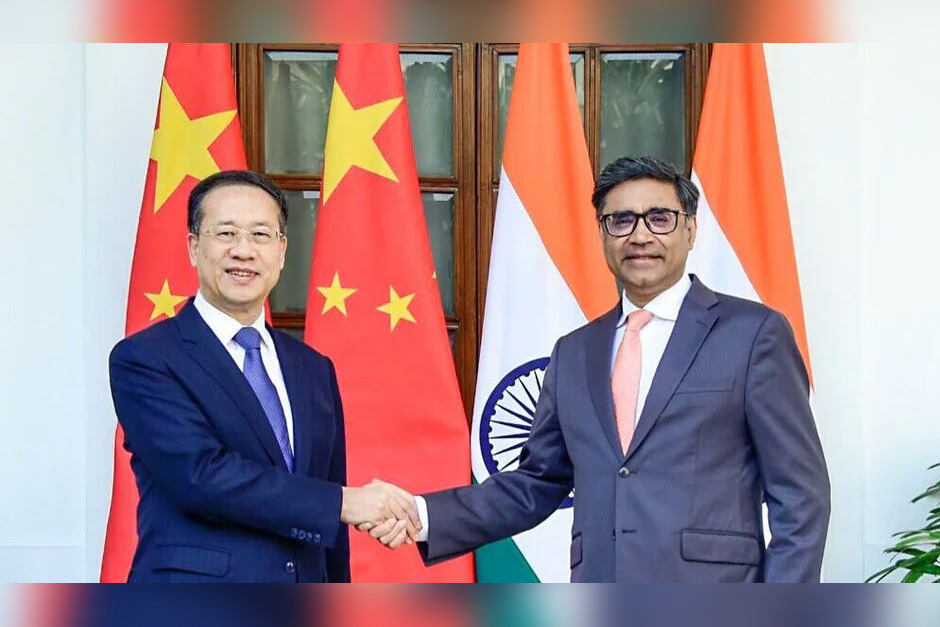
India’s long-standing ambition for a permanent seat on the United Nations Security Council (UNSC) has once again taken centre stage, following recent remarks from China. Beijing, a permanent member with veto power, stated its readiness to “understand and respect India’s aspirations” for a greater role in the global body. This statement, delivered amidst complex geopolitical currents and evolving bilateral relations, marks a notable shift in diplomatic language and has prompted observers to analyze its implications for India’s UNSC bid and the future of international governance.
For decades, India has championed the cause of UNSC reform, arguing that the Council’s current structure, largely a relic of post-World War II geopolitics, no longer reflects the contemporary global power balance. As the world’s most populous democracy, a rising economic power, and a consistent contributor to UN peacekeeping missions, India’s aspirations are not new. China’s latest utterance, while not an explicit endorsement, signifies a nuanced diplomatic opening that warrants careful consideration.
Understanding the Nuance in China’s Stance
China’s declaration to “understand and respect” India’s aspirations represents a subtle but significant evolution from its previous positions, which often ranged from explicit opposition to general evasiveness on the matter of expanding the permanent membership. While Beijing has historically supported increasing the representation of developing countries in the UNSC, it has consistently refrained from backing specific nations like India, Japan, or Germany for permanent seats, often citing the need for a “package solution” that enjoys broad consensus.
The phrasing “understand and respect” suggests an acknowledgement of India’s legitimate claims without a direct commitment to supporting its permanent membership. It leaves room for interpretation and does not necessarily imply a shift in China’s fundamental policy regarding UNSC expansion. However, even this level of acknowledgment from a P5 member, particularly one with which India shares a complex relationship, is noteworthy. It could be interpreted as a strategic gesture, perhaps aimed at fostering cooperation on broader multilateral platforms like BRICS or the Shanghai Cooperation Organisation (SCO), or as a reflection of India’s undeniable rise on the global stage.
Foreign policy analysts suggest that China’s statement might be a tactical move rather than a fundamental policy overhaul. “While China’s words are a welcome diplomatic shift, we must carefully assess the depth of this ‘understanding’ given the historical context and ongoing bilateral challenges,” says Dr. Rohan Mehra, a Professor of International Relations at Jawaharlal Nehru University. “True support would entail concrete steps towards facilitating India’s permanent membership, which remains a high bar.”
India’s Enduring Case for Global Leadership
India’s demand for a permanent seat is predicated on several strong arguments. With over 1.4 billion people, India represents nearly a fifth of humanity, making its exclusion from the top decision-making body on international peace and security increasingly anachronistic. Economically, India is among the largest and fastest-growing economies, playing a pivotal role in global trade and finance.
Beyond statistics, India’s democratic values, pluralistic society, and non-aligned foreign policy tradition resonate with a significant portion of the international community. India has been a leading voice for the Global South, advocating for equitable representation and justice in international forums. Its consistent contribution of troops to UN peacekeeping operations, often exceeding that of many permanent members, further solidifies its credentials as a responsible global actor committed to maintaining peace and stability.
India, along with Brazil, Germany, and Japan (collectively known as the G4 nations), has been a vocal proponent of comprehensive UNSC reform, including an expansion of both permanent and non-permanent categories. They argue that the current structure not only lacks contemporary legitimacy but also hampers the Council’s effectiveness in addressing 21st-century challenges, from climate change and pandemics to terrorism and regional conflicts. The consensus for reform, though widely acknowledged, often falters due to the divergent interests of the existing P5 members, who possess the power to veto any reform proposals.
Conclusion
China’s statement to “understand and respect India’s UNSC membership aspirations” represents a delicate dance in international diplomacy. While it falls short of an outright endorsement, it opens a window for further dialogue and subtly acknowledges India’s growing stature. For India, this moment reinforces the need to continue its robust diplomatic efforts, consolidating support from other nations and building a broader consensus for UNSC reform. The path to a permanent seat remains arduous, requiring intricate negotiations and overcoming vested interests. However, every acknowledgment, particularly from a key global player, contributes to building the momentum that India needs to rightfully claim its place at the highest table of global governance, ensuring the UN Security Council truly reflects the world it serves.

