


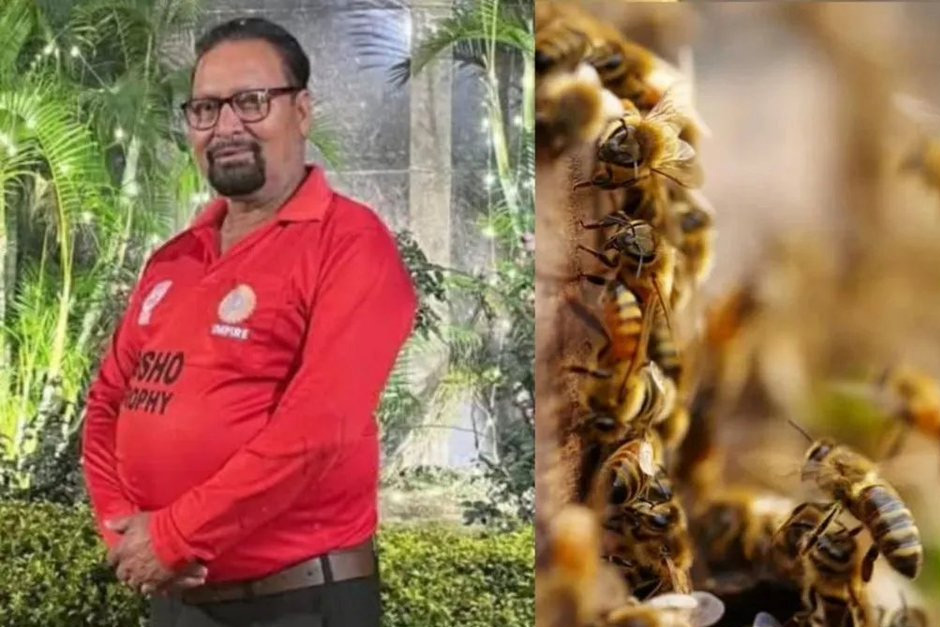
In a shocking and tragic incident that has sent ripples of sorrow through the local community, an umpire officiating a local cricket match in Unnao, Uttar Pradesh, succumbed to a fatal bee swarm attack. The unexpected and sudden demise of Mr. Ramesh Kumar, aged 52, during what should have been a spirited game, highlights the unpredictable dangers that can emerge even in familiar outdoor settings.
The Tragic Incident Unfolds on the Pitch
The incident occurred on a sunny Sunday afternoon at a village ground near Safipur, Unnao, where a friendly cricket match was underway. Eyewitnesses recount a sudden shift in the atmosphere around 3:30 PM. A large swarm of bees, reportedly disturbed from a nearby tree or structure, descended upon the ground, causing immediate panic among players and spectators alike. While most managed to flee to safety, Mr. Ramesh Kumar, who was standing near the non-striker’s end, was caught directly in the path of the aggressive swarm.
According to reports, the bees targeted Mr. Kumar relentlessly, stinging him multiple times across his body. Despite immediate attempts by some courageous villagers to help, the sheer intensity of the swarm made rescue difficult. Players and onlookers used whatever they could find – towels, shirts, even tree branches – to try and ward off the insects, but the attack was swift and brutal. Mr. Kumar, overwhelmed and in immense pain, collapsed on the pitch.
Immediate Response and Medical Aftermath
Following the harrowing attack, Mr. Kumar was rushed by concerned villagers to a nearby primary health center in Safipur. However, given the severity of his condition, he was advised to be taken to a larger hospital in Unnao city. En route, his condition deteriorated rapidly. Upon arrival at the district hospital, medical professionals made every effort to revive him, but it was tragically too late. He was declared brought dead, with preliminary assessments pointing towards severe allergic reaction (anaphylactic shock) compounded by the sheer number of stings.
Local police were informed of the incident, and a formal report has been lodged. The sudden nature of Mr. Kumar’s death has left his family and friends devastated. A respected figure in the community and a passionate cricket enthusiast, his absence will be deeply felt. The incident serves as a stark reminder of how quickly life can turn, especially when confronted with the raw power of nature.
Understanding the Risk and Community Echoes
Bee swarm attacks, while not common, are a known hazard in many rural parts of India, particularly during certain seasons when hives are disturbed or when bees migrate. Experts suggest that a single bee sting can cause localized pain and swelling, but multiple stings can inject a significant amount of venom, leading to systemic reactions. For individuals with undisclosed allergies, even a few stings can trigger a life-threatening anaphylactic shock. The lack of immediate, specialized medical care in remote areas often exacerbates the danger.
Speaking about the tragedy, Anil Singh, a local resident who was present at the match, remarked, “It was chaos. We’ve seen bees around before, and often tried to move them away from public spaces, but never anything like this. Ramesh bhaiya was a good man, loved cricket. It’s unbelievable that he died this way, playing the game he loved.”
The incident has sparked discussions within the community about safety protocols for outdoor events, particularly in areas known for bee populations. While completely preventing such natural occurrences is impossible, awareness about first aid for bee stings, knowing the nearest medical facilities, and perhaps even engaging local beekeepers for hive removal in high-traffic areas could potentially mitigate future risks.
The untimely passing of Mr. Ramesh Kumar is a profound loss, a poignant reminder of nature’s unpredictable force, and a call for heightened vigilance even in the most ordinary of circumstances. His memory will undoubtedly live on in the hearts of those who knew him and serve as a somber lesson for the wider community.

