


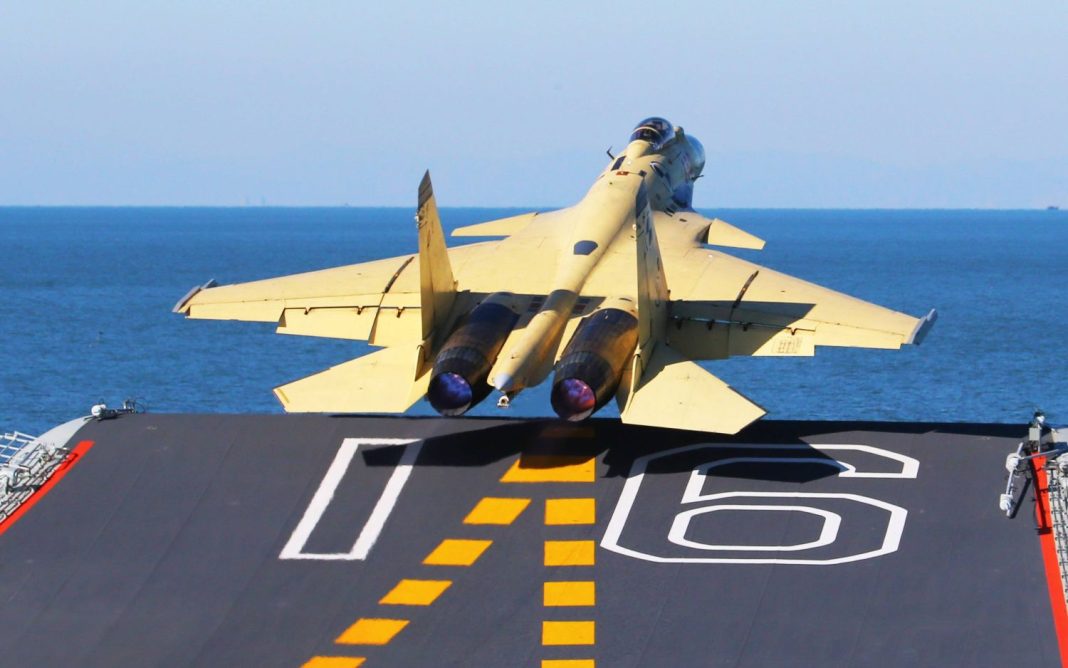
The vast expanse of the Indo-Pacific is a stage for a complex interplay of naval power, where historical relics from a bygone era now cast long strategic shadows. At the heart of this unfolding drama lies an incredible tale involving Ukraine’s abandoned Soviet-era assets and their unexpected rebirth into formidable instruments of China’s burgeoning naval might. These transformations, epitomized by the aircraft carrier Liaoning and its indigenous J-15 fighter jets, subtly but significantly redefine regional security dynamics, particularly for nations like Japan and with profound implications for India.
The Ghost of Varyag: From Black Sea to Yellow Sea
The story begins in the twilight years of the Soviet Union, with the partially constructed aircraft carrier Varyag rusting in a Ukrainian shipyard. Following the USSR’s collapse, Ukraine, grappling with economic turmoil, found itself with an incomplete supercarrier that it could neither finish nor maintain. This colossal hull, a symbol of Soviet ambition, became an abandoned relic.
In 1998, a surprising buyer emerged: a Macau-based travel agency, Chong Lot Travel Agency Ltd., reportedly acquired the Varyag for a mere $20 million, ostensibly to convert it into a floating casino. The ship’s arduous 627-day journey from the Black Sea, denied passage through the Bosphorus Strait by Turkey for over a year due to safety concerns, to its eventual docking in Dalian, China, captured global attention. What followed was a meticulous, years-long refitting and modernization process that unveiled China’s true intentions. The “casino” facade peeled away to reveal a nascent superpower’s ambition to establish a blue-water navy. In 2012, the Varyag was recommissioned as the PLAN Liaoning, China’s first operational aircraft carrier, marking a monumental leap in its naval capabilities.
Sukhoi’s Legacy and the J-15’s Ascent
The transformation of the Liaoning was only half the equation. An aircraft carrier is merely a very large warship without its air wing. Here again, Ukraine played an unwitting role. Reports suggest that in the early 2000s, China acquired a prototype of the Sukhoi Su-33, the Soviet Union’s carrier-borne fighter, from Ukraine. This acquisition provided critical insights into the design and engineering of a modern naval fighter jet, allowing China to bypass decades of research and development.
From this “abandoned relic” of Soviet aviation, China developed the Shenyang J-15 “Flying Shark”. While the J-15 bears a striking resemblance to the Su-33, it incorporates indigenous Chinese avionics, radar systems, and weaponry. The development of the J-15 was a Herculean task, requiring mastery of complex carrier operations, including arrested landings and ski-jump take-offs. The successful deployment of the J-15 on the Liaoning and later its sister ship, the Shandong, cemented China’s status as a formidable naval power capable of projecting air superiority far from its shores. For a nation that barely a few decades ago had a green-water navy, this was an astonishing achievement, showcasing China’s strategic foresight and relentless pursuit of military modernization.
Regional Implications: Haunting Japanese Jets and Indian Ambitions
The operationalization of the Liaoning and the J-15 significantly alters the strategic landscape of the Indo-Pacific. For Japan, a nation with its own sophisticated air force and maritime self-defence forces, China’s growing carrier capabilities are a serious strategic concern. The metaphor of “haunting Japanese jets” refers not to literal specters, but to the strategic challenge these platforms pose. The J-15, operating from carriers, expands China’s aerial reach over disputed territories in the East China Sea and beyond, directly impacting Japan’s air defence identification zone (ADIZ) and naval presence. Japan’s planned conversion of its Izumo-class destroyers into de facto aircraft carriers capable of operating F-35B stealth fighters is, in part, a response to this evolving threat perception.
From an Indian perspective, these developments underscore the intensifying naval race in Asia. India, with its own operational aircraft carriers like the INS Vikramaditya and the indigenously built INS Vikrant, and a long-term vision for a three-carrier battle group, closely monitors China’s naval expansion. The ability of Chinese carriers to operate beyond the “first island chain” and potentially into the Indian Ocean Region presents a strategic challenge for India, necessitating robust naval modernization and strategic partnerships. As Dr. C. Raja Mohan, a prominent Indian strategic affairs analyst, observed, “China’s rapid naval modernization, epitomized by the Liaoning and J-15, fundamentally alters the strategic calculus in the Indo-Pacific, necessitating a re-evaluation of security postures across the region.” This ongoing naval buildup prompts India to continuously enhance its own maritime domain awareness and anti-access/area denial capabilities.
The journey of these Ukrainian relics, from abandoned hulks and prototypes to formidable instruments of Chinese power projection, serves as a powerful testament to geopolitical shifts and strategic ingenuity. The Liaoning and J-15 are more than just military assets; they are symbols of a new strategic reality in the Indo-Pacific, compelling nations like Japan and India to adapt their defence strategies to a rapidly changing maritime environment. The echoes of Soviet-era ambition now resound through modern power dynamics, shaping the future of Asian security.

