


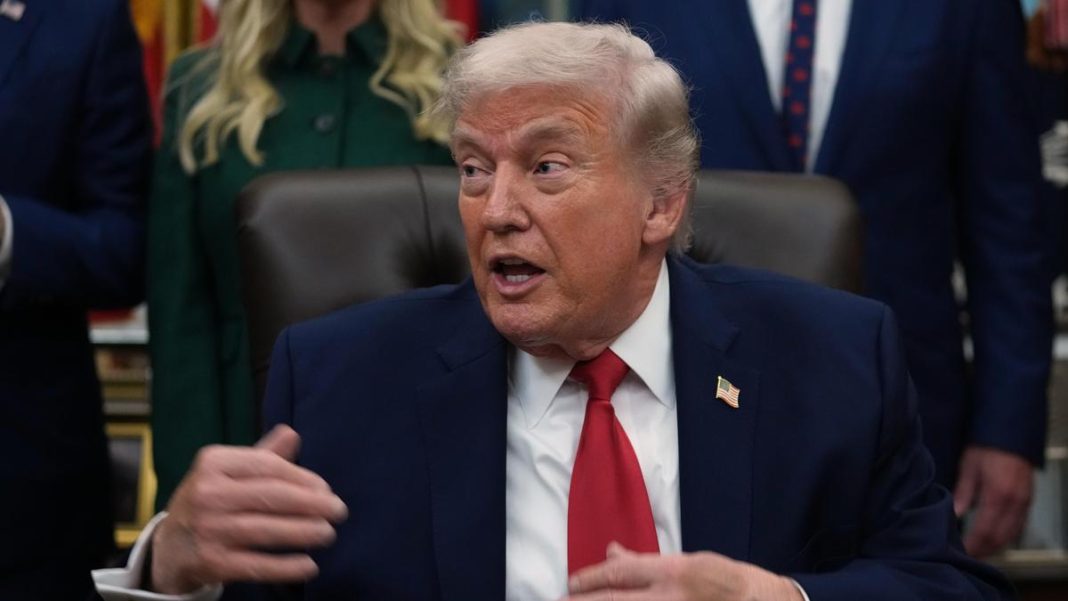
Washington D.C. has once again become the focal point of a significant policy shift, with the U.S. Congress reportedly moving to assert its authority over presidential trade powers. In a development closely watched by global economic stakeholders, Capitol Hill appears to be coalescing around efforts to roll back or significantly curtail the kind of unilateral tariffs previously imposed by former President Donald Trump on key allies, most notably Canada. This legislative push underscores a persistent tension within American governance regarding trade policy and carries weighty implications for international commerce.
The Tariff Tug-of-War: Executive Power vs. Legislative Oversight
The genesis of this congressional action lies in the controversial steel and aluminum tariffs levied by the Trump administration in 2018. Invoking Section 232 of the Trade Expansion Act of 1962, which allows for tariffs on imports deemed a threat to national security, the administration imposed a 25% duty on steel and 10% on aluminum from various countries, including close allies like Canada and the European Union. These moves were met with fierce opposition internationally and considerable debate domestically.
Canada, a staunch ally and the largest trading partner of the U.S., vehemently protested the tariffs, viewing them as unjustifiable and an affront to their deep economic ties. Ottawa responded with retaliatory tariffs on a range of American goods, escalating a trade dispute that rattled businesses on both sides of the border. While these specific tariffs were eventually lifted on Canada (and Mexico) in 2019 to facilitate the ratification of the United States-Mexico-Canada Agreement (USMCA), the underlying legislative authority and the precedent set by their imposition have continued to be a source of concern for many in Congress.
Legislators across the political spectrum have long argued that such unilateral executive actions bypass Congress’s constitutional prerogative to regulate commerce. The recent vote, or legislative initiative, is seen as a direct attempt to reassert congressional oversight, aiming to create mechanisms that would require greater legislative approval or provide avenues for Congress to block or reverse tariffs imposed under similar national security pretexts in the future. This isn’t merely about Canada; it’s about establishing checks and balances on presidential trade authority, irrespective of who occupies the White House.
Global Ripples: Implications for Trade and India
The U.S. Congress’s move sends a powerful signal about the future direction of American trade policy. It suggests a potential shift away from the more protectionist and unilateral tendencies seen in recent years towards a more collaborative and rules-based approach, even within the confines of domestic policy-making. For global markets, this could translate into greater predictability and stability, reducing the risk of sudden trade disruptions driven by executive fiat.
From an Indian perspective, such developments are noteworthy. India, itself a significant player in global trade and an emerging economic powerhouse, has often found itself navigating complex trade relationships, including with the U.S. While India has its own history of protectionist measures in certain sectors, it generally advocates for a stable, predictable, and fair international trading system. A U.S. trade policy that is more constrained by legislative oversight could be seen as reducing global trade uncertainty, which is generally beneficial for export-oriented economies like India’s.
“This congressional action underscores the inherent tension between executive trade authority and legislative oversight,” observes Dr. Priya Sharma, a noted Geopolitics & Trade Analyst. “It’s a clear signal that while presidents can initiate aggressive trade measures, the broader U.S. political apparatus can and will push back to uphold traditional trade principles and protect economic interests, both domestic and international.” This sentiment resonates in Delhi, where stability in major trading blocs is always preferred.
Looking Ahead: A Shifting Landscape?
The legislative action against presidential tariff powers could set a significant precedent. It suggests that future administrations, regardless of their political stripe, might face greater scrutiny and potential limitations when contemplating trade actions that bypass traditional legislative processes. This could lead to more robust internal debates on trade policy, fostering greater consensus before implementing measures that have far-reaching international consequences.
For nations like Canada, it offers a measure of reassurance that their key trading relationship with the U.S. might become more insulated from abrupt executive decisions. For the broader global economy, it reinforces the importance of alliances and multilateral frameworks, signaling that major trade policy shifts from the world’s largest economy are unlikely to occur without internal checks and balances. As the U.S. navigates its complex domestic political landscape, the world watches closely, understanding that these internal skirmishes often cast long shadows across international economic relations.

