


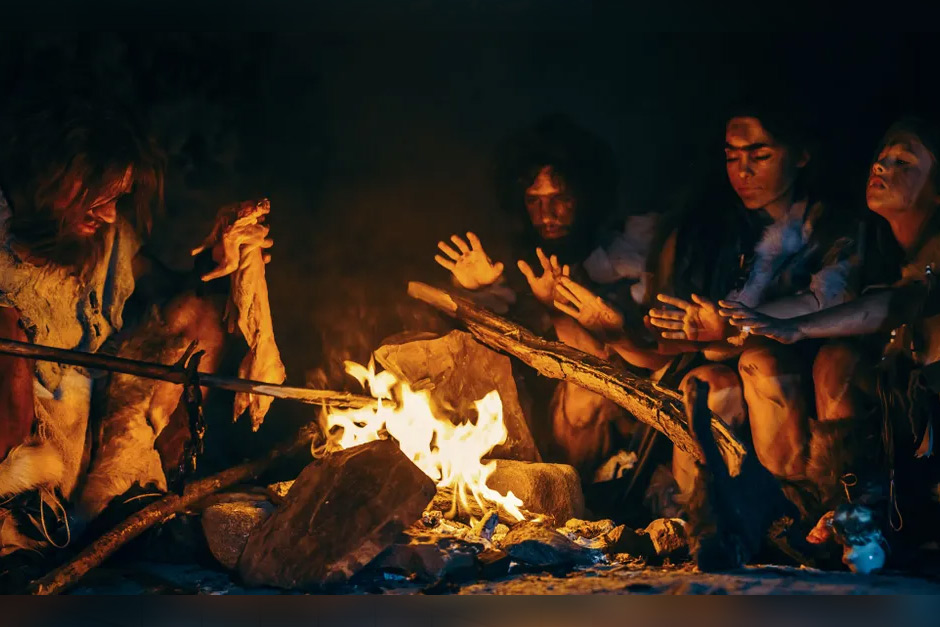
Get ready to have your mind blown. You know those fundamental stories we tell about human history? The ones that anchor our understanding of how we became… well, us? It turns out one of the biggest chapters just got a radical rewrite, pushing back the timeline of a truly transformative discovery by an astonishing margin. We’re talking about fire, folks. And our ancestors were apparently masters of the flame way, way earlier than anyone ever imagined.
For decades, the prevailing wisdom held that widespread, controlled use of fire became a common staple for early humans somewhere around 200,000 years ago. It was a pivotal moment, marking a significant leap in our evolutionary journey. But new, compelling evidence has emerged from ancient sites, hinting that our ancient cousins were harnessing the power of fire an incredible 400,000 years ago. Yes, you read that right. Four. Hundred. Thousand. Years. Ago.
The Spark That Doubled Our History Books
Imagine finding a puzzle piece that not only completes a picture but fundamentally changes what you thought the picture was. That’s essentially what’s happening in the world of archaeology right now. The clues aren’t just a single burnt twig or a faint scorch mark. We’re talking about a growing body of evidence: microscopic ash layers indicating sustained burning, heat-altered stone tools, and even charred animal bones that show signs of cooking. These aren’t random wildfires; they point to deliberate, repeated, and controlled use of fire by early hominins. It means our ancestors were not just stumbling upon naturally occurring fires but were actively managing them, perhaps even creating them, hundreds of thousands of years before we gave them credit for it.
This isn’t just a fascinating historical footnote. Doubling the timeline of fire mastery fundamentally reshapes our understanding of early human intelligence, social structures, and even physical evolution. It suggests a level of cognitive ability, planning, and resourcefulness that we previously attributed to much later stages of human development.
More Than Just Warmth: The Catalyst for Civilization
Think about what fire enabled. It wasn’t just about staying warm on a cold night, though that was certainly a huge benefit. Fire was the ultimate multi-tool for early humans. It provided protection from predators, allowing our ancestors to venture into new territories and sleep more soundly. It offered light, extending the usable hours of the day for tool-making, socializing, and strategizing. But perhaps most crucially, fire unlocked a revolution in diet.
Cooking meat and plants made them easier to digest, leading to better nutrient absorption and reduced chewing time. This dietary shift is believed to have played a significant role in the development of larger brains and smaller jaws – key evolutionary changes that define us as humans. Imagine the communal aspect too: gathering around a fire, sharing food, telling stories (in whatever form they took). Fire was a social catalyst, forging bonds and strengthening communities. “This isn’t just a new date on a timeline; it’s a fundamental shift in understanding the cognitive capabilities and societal structures of our ancestors,” reflected one excited researcher. “Imagine the planning, the knowledge transfer, the sheer ingenuity required to not just find fire, but to control it, to sustain it, and to integrate it into daily life hundreds of thousands of years ago. It’s truly humbling.”
What This Means for Our Story
This discovery pushes the dawn of human ingenuity back into the mists of time in a truly profound way. It paints a picture of our distant ancestors as far more adaptable, intelligent, and capable than previously thought. They weren’t just surviving; they were innovating, mastering one of nature’s most powerful forces and fundamentally reshaping their world in the process. It’s a powerful reminder that our understanding of the past is always evolving, and there are countless untold stories waiting to be unearthed, challenging our assumptions and revealing the extraordinary journey that led us to today.

