


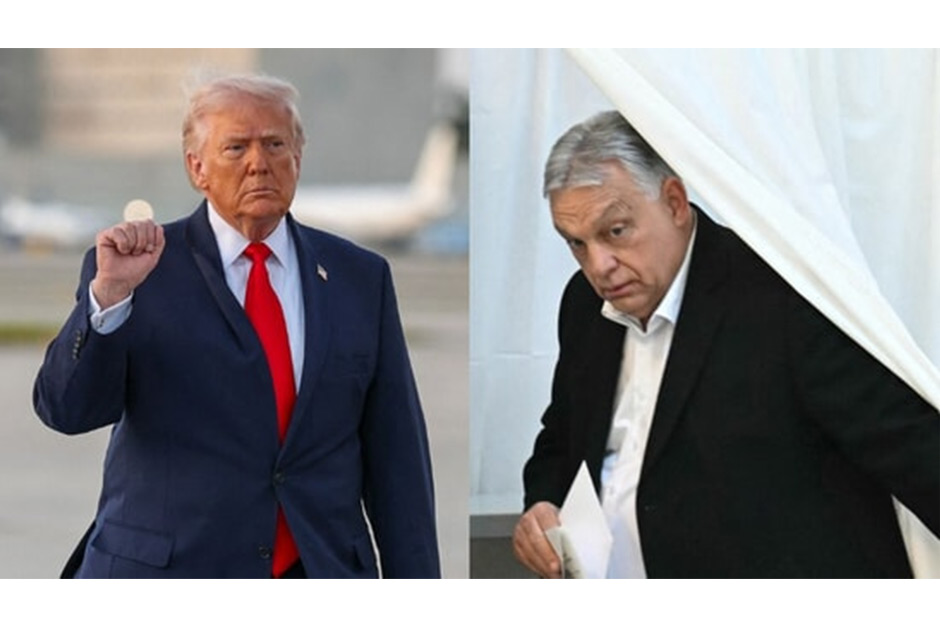
In a world increasingly shaped by interconnected political currents, the phenomenon often termed the ‘Trumpian revolution’ – a global surge of nationalist populism – appears to be facing significant headwinds. From the heart of Europe to its traditional stronghold in the United States, signs suggest a potential fracturing of this movement, marking a critical juncture for global politics. For India, a nation deeply invested in a stable, rules-based international order, observing these shifts offers valuable insights into the evolving nature of democratic resilience and geopolitical alignments.
The European Front: Hungary’s Pivotal Election and the Shifting Tide
Europe has long been a fertile ground for populist movements, with leaders like Hungary’s Prime Minister Viktor Orbán often seen as emblematic figures of this wave. Orbán, who has cultivated close ties with former U.S. President Donald Trump and shares many of his nationalist, anti-immigrant, and conservative social policies, faces a challenging political landscape. His Fidesz party, while dominant for over a decade, is encountering unprecedented opposition strength, particularly from figures like Péter Magyar, a former insider now challenging the establishment with a reformist agenda.
The upcoming elections in Hungary are not merely a domestic affair; they are widely viewed as a crucial barometer for the broader populist sentiment across the continent. A significant setback for Orbán could signal a weakening of the populist grip that has influenced European discourse on sovereignty, migration, and the future of the European Union. While the foundations of his power run deep, the emergence of a credible, unified opposition suggests that voters might be seeking alternatives to the long-standing status quo. This shift, if it materializes, could empower centrist and liberal forces across Europe, potentially altering the dynamics of EU policy-making and strengthening multilateral cooperation – developments that India, as a major global player, watches closely for their implications on global governance and trade.
MAGA’s Domestic Fault Lines: A Fractured Base at Home
Across the Atlantic, the ‘Make America Great Again’ (MAGA) movement, the progenitor of this global populist surge, is also showing signs of internal strain. While Donald Trump remains a formidable force within the Republican Party, the once monolithic façade of MAGA is increasingly revealing internal divisions and challenges to its long-term viability. Recent primary elections, congressional maneuvers, and public polling data suggest a more complex picture than a uniformly loyal base.
One significant indicator is the growing faction of Republicans seeking a path distinct from Trump’s direct influence, often termed the ‘Never Trump’ conservatives or those advocating for a return to traditional conservative principles. Furthermore, ongoing legal challenges and the evolving demographic landscape of American voters present continuous hurdles for the movement to expand beyond its core base. While Trump’s personal appeal remains strong with a segment of the electorate, the broader movement struggles to consistently secure victories in key elections without his direct presence on the ballot or when facing a unified opposition. The 2022 midterm elections, for instance, saw several Trump-endorsed candidates underperform, suggesting that unwavering loyalty to the former president does not always translate into electoral success. This internal recalibration within one of the world’s most influential democracies provides a fascinating case study for nations like India, which grapple with their own evolving political narratives and voter expectations.
Reflecting on these global dynamics, political analyst Dr. Priya Sharma observed, “What we are witnessing is not necessarily the end of populism, but perhaps a maturation of the electorate’s response to it. Voters, even those initially drawn to anti-establishment narratives, eventually seek stability, effective governance, and a clear path forward, leading to a natural recalibration.” This perspective suggests that while populist sentiments may persist, their manifestations and political success are subject to constant public scrutiny and evolving demands.
Global Ramifications and India’s Stance
The potential weakening of the ‘Trumpian revolution’ – both in its European iterations and at its American origin – carries significant ramifications for the global order. A shift away from hyper-nationalism and unilateralism could pave the way for a resurgence of multilateral cooperation, a framework that India has consistently championed. For New Delhi, a global environment where democratic institutions are robust and international partnerships are strengthened offers greater predictability and opportunities for addressing shared challenges like climate change, economic stability, and security.
As India continues its trajectory as a leading global power, its diplomatic engagement and strategic partnerships are influenced by the prevailing political winds in key nations. The potential for a more moderate, consensus-driven approach in major Western democracies could create a more conducive environment for India to advance its interests on the global stage, fostering collaborations that transcend ideological divides. While populism in various forms remains a potent force globally, the current signs suggest that its most prominent expressions are being rigorously tested, pushing political systems towards a new equilibrium.
The narrative of the ‘Trumpian revolution’ is far from over, but the current indicators from Europe and the United States suggest a pivotal moment of introspection and potential reorientation. How these political currents ultimately settle will undoubtedly shape the contours of international relations for years to come, with countries like India observing, adapting, and influencing this evolving landscape.

