


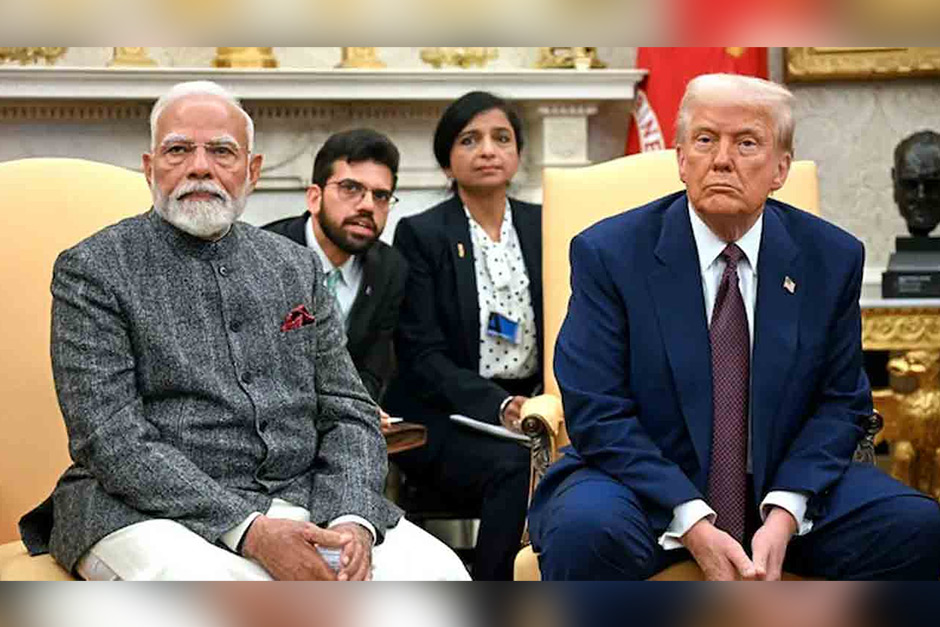
The relationship between India and the United States, often lauded as the “defining partnership of the 21st century,” stands at a critical juncture. While strategic convergence on issues like Indo-Pacific security and counter-terrorism has deepened ties, a comprehensive bilateral trade deal has remained conspicuously elusive. This persistent impasse, coupled with the looming prospect of a change in U.S. leadership, has sparked concern among policymakers. Recently, Democratic Congresswoman Sydney Kamlager-Dove, a prominent voice on the House Foreign Affairs Committee, issued a stark warning: “Trump will be the president who lost India.” Her statement underscores a profound anxiety about the potential trajectory of India-U.S. relations, particularly concerning economic engagement, should former President Donald Trump return to the White House.
The Elusive India-U.S. Trade Pact: A Decade-Long Pursuit
For years, both New Delhi and Washington have expressed a desire for a comprehensive trade agreement that reflects the true potential of their economies. Bilateral trade has grown significantly, reaching an impressive
India, with its vast domestic market and a strong focus on self-reliance under initiatives like ‘Make in India,’ has historically adopted a more protectionist stance on certain sectors. High tariffs on agricultural products, automotive parts, and luxury goods have been major sticking points for American businesses. Conversely, U.S. demands for greater market access, stronger intellectual property protection, and relaxation of data localization norms have met with resistance from Indian policymakers keen on safeguarding domestic industries and national interests. During the Trump administration’s first term, the U.S. even withdrew India’s preferential trade status under the Generalized System of Preferences (GSP), further highlighting the trade friction. Despite renewed efforts and the formation of various working groups under the Biden administration, a breakthrough remains distant, leaving a significant void in the economic dimension of the strategic partnership.
Kamlager-Dove’s Warning: A Glimpse into Future Friction?
Congresswoman Kamlager-Dove’s stark pronouncement is rooted in the perceived implications of a potential second Trump presidency. Her concern stems from the ‘America First’ doctrine and the transactional approach to foreign policy that characterized his previous term. This approach often prioritized immediate economic gains and unilateral actions, frequently resorting to tariffs and trade restrictions to achieve objectives.
A return to such policies could exacerbate existing trade disagreements and introduce new pressures on India. For instance, increased tariffs on Indian goods or stricter trade remedies could disrupt India’s burgeoning manufacturing and export sectors, particularly as the nation aims to integrate more deeply into global supply chains. Furthermore, intense pressure to open up sensitive sectors or alter regulatory frameworks without reciprocal benefits could be viewed by India as an infringement on its economic sovereignty. While India values its strategic alignment with the U.S., its foreign policy is firmly rooted in strategic autonomy, ensuring that New Delhi will not readily cede ground on its core economic or geopolitical interests, irrespective of who occupies the White House. Kamlager-Dove’s warning essentially highlights the risk that an overly demanding or protectionist U.S. administration could alienate a crucial strategic partner, diminishing the warmth and cooperation that both nations have painstakingly built.
Beyond Trade: The Enduring Strategic Canvas
While economic friction and the elusive trade deal are undeniable challenges, it is crucial to recognize that the India-U.S. relationship extends far beyond commerce. The two nations share significant strategic convergences, particularly in maintaining a free and open Indo-Pacific. Collaborations through platforms like the Quad (Quadrilateral Security Dialogue), robust defense cooperation, intelligence sharing, and joint military exercises underscore a shared vision for regional stability and counterbalancing emerging geopolitical realities.
India’s diverse foreign policy, characterized by its engagement with multiple global partners—be it Russia for defense equipment, the Middle East for energy, or Europe for technology—suggests that while the U.S. is a vital partner, India is not solely dependent on one nation. Therefore, “losing India” in a holistic sense might be an overstatement. However, a significant weakening of the economic pillar, or an increase in trade hostilities, could certainly strain the overall relationship, making it less robust and potentially hindering deeper cooperation in other critical areas. The challenge for both nations will be to navigate these economic disagreements without allowing them to overshadow the broader strategic imperatives that bind them.
The coming years will undoubtedly test the resilience of the India-U.S. partnership. As the world watches, the outcome of U.S. elections and the subsequent approach to international trade and diplomacy will heavily influence whether this defining relationship can continue its upward trajectory, or whether a period of increased friction and missed opportunities lies ahead. Both nations must find common ground to ensure that economic competition does not undermine the strategic cooperation vital for a stable global order.

