


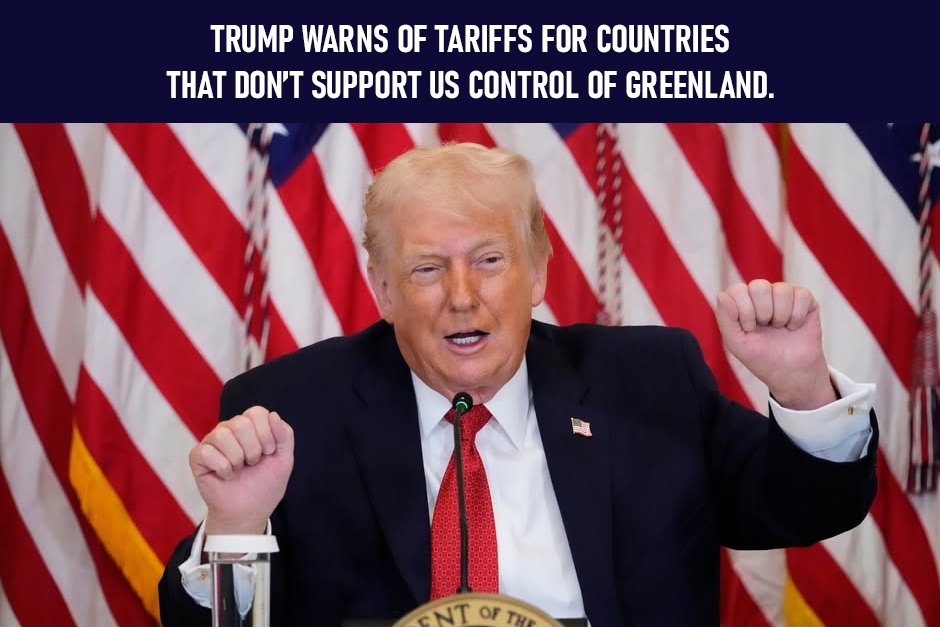
The global stage recently witnessed a fresh twist in the ongoing saga of international relations, courtesy of a statement from former President Trump. The proposition: tariffs for countries that do not support a potential US bid for control over Greenland. This isn’t merely an economic threat; it’s a bold articulation of how economic leverage might be wielded in pursuit of geopolitical ambitions, raising questions about sovereignty, alliances, and the future of international trade.
Greenland’s Geopolitical Chessboard
At the heart of this discussion lies Greenland, an autonomous territory of Denmark, vast in size and rich in strategic significance. Far from being just a frozen landmass, Greenland holds immense appeal for several reasons. Geographically, its position in the Arctic makes it a crucial player in monitoring maritime routes and projecting power in a region increasingly eyed by global superpowers due to melting ice caps. Militarily, it offers a strategic outpost, exemplified by Thule Air Base, a vital component of North American defense.
Beyond its military and geographical advantages, Greenland is believed to harbor vast reserves of rare earth minerals, coveted for their essential role in modern technology, from smartphones to electric vehicles and defense systems. Access to these resources could provide a significant boost to any nation’s economic and industrial base, reducing reliance on existing suppliers. This confluence of strategic location, military utility, and potential economic bounty transforms Greenland into a prize on the global geopolitical chessboard, making any discussion of its control inherently complex and controversial.
Economic Pressure as a Diplomatic Weapon
The former President’s warning about tariffs is a quintessential example of using economic might as a tool for geopolitical ends. Tariffs, typically levied to protect domestic industries or correct trade imbalances, are here repurposed as an incentive – or deterrent – in a sovereign dispute. This approach signals a readiness to link unrelated trade relationships directly to specific foreign policy objectives, potentially pressuring allies and adversaries alike to align with US interests regarding Greenland.
Such a tactic carries significant ramifications. For countries that might feel compelled to take a stance, it forces a difficult choice between economic stability and diplomatic principles. It could strain existing alliances, as nations might resent being strong-armed into supporting a claim that impacts another sovereign nation. Furthermore, this broad application of tariffs risks escalating trade disputes into wider diplomatic crises, potentially destabilizing global supply chains and established trade norms. “This sort of economic arm-twisting could fundamentally reshape how nations engage in diplomacy,” observes one international trade analyst. “It suggests that economic partnerships are no longer just about mutual benefit, but can be weaponized to achieve even the most ambitious geopolitical goals, making long-term planning much harder for everyone involved.” The “America First” doctrine, previously seen in various trade negotiations, appears here in a novel and more expansive form, blurring the lines between economic policy and territorial ambition.
The idea of imposing tariffs on countries that don’t back US control of Greenland is more than just a headline-grabbing statement; it’s a profound declaration about the evolving nature of international power dynamics. It underscores the immense strategic value of Greenland and highlights a willingness to employ potent economic instruments to achieve specific geopolitical objectives. As the world grapples with shifting power balances and resource competition, such bold assertions will undoubtedly fuel debates about national sovereignty, the future of international trade relations, and the intricate dance between economic influence and territorial ambition.

