


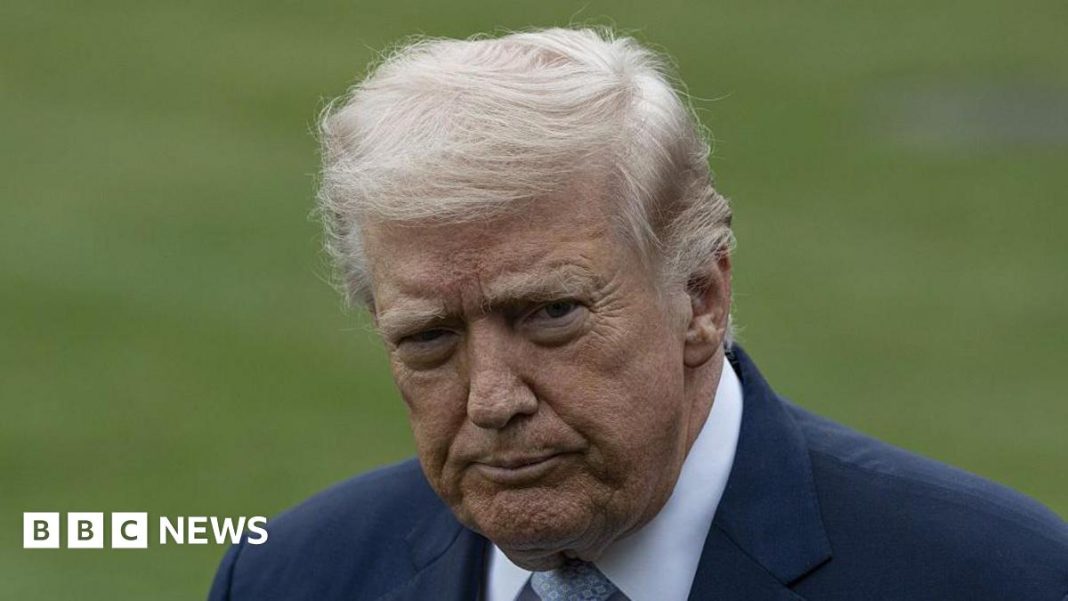
The Middle East, a region perpetually teetering on the edge, once again finds itself dissecting the complex signals emanating from Washington. For years, the specter of US-Iran confrontation has hung heavy over the Strait of Hormuz, a critical chokepoint for global oil supplies. Now, President Trump, known for his unpredictable foreign policy shifts, has hinted at a potential backing off from direct engagement in the region’s security efforts. While a de-escalation of American involvement might sound like a relief to some, it undeniably raises a colossal question: if the US steps back, who steps forward to guard this indispensable maritime artery?
The Shifting Sands of US Engagement
President Trump’s “America First” doctrine has consistently sought to recalibrate US global commitments, pushing allies to shoulder more of the burden. His administration has shown a clear reluctance for new “endless wars” or prolonged military deployments without direct US benefit. This philosophy often translates into a desire to disengage from what are perceived as other nations’ problems, even when those problems have global ramifications. A potential American reduction in naval presence or a more hands-off approach to regional security in the Persian Gulf is, therefore, not entirely unexpected. It aligns with a broader trend of questioning long-held alliances and security guarantees, suggesting that the era of unquestioning US guardianship might be drawing to a close. This isn’t just about troop numbers; it’s about the very perception of commitment and the readiness to intervene.
Hormuz: A Global Lifeline Demanding Collective Vigilance
Let’s be unequivocally clear: the Strait of Hormuz is not merely a strategic waterway for the United States. It’s an indispensable lifeline for the global economy. An estimated one-fifth of the world’s total oil consumption, along with a significant portion of liquefied natural gas, passes through this narrow strait daily. Any disruption, whether from geopolitical tensions, piracy, or environmental disaster, sends immediate shockwaves through international markets, impacting energy prices, trade routes, and ultimately, the livelihoods of billions. When the US signals a potential reduction in its security role, it doesn’t diminish the threat; it simply shifts the responsibility. As one seasoned international relations analyst aptly put it, “While a US de-escalation might momentarily ease tensions, the fundamental security of the Strait doesn’t magically resolve itself. It simply shifts the burden, and the world needs to be ready to collectively bear it.”
The Imperative for International Cooperation
If the US lessens its role, a vacuum could quickly emerge, creating instability that no nation can afford. This necessitates a robust and coordinated international response. European nations, heavily reliant on Middle Eastern energy, must consider strengthening their naval presence and developing more unified patrol missions. Asian economic powerhouses like China, Japan, South Korea, and India, whose industrial engines depend on unimpeded oil flow, have an equally vested interest. The Gulf Cooperation Council (GCC) states, situated directly on the Strait, must also enhance their maritime capabilities and deepen their own collaborative security frameworks. This isn’t just about naval ships; it’s about intelligence sharing, coordinated surveillance, and a unified diplomatic front to deter any potential aggressors or disruptors. The challenge is immense, requiring overcoming historical rivalries and establishing common operational protocols, but the alternative—a chaotic and insecure Hormuz—is simply untenable.
Conclusion: A Call for Shared Responsibility
President Trump’s latest signals regarding Iran and the Strait of Hormuz present the world with a stark reality: the era of relying solely on one global superpower for security in critical zones may be ending. This isn’t necessarily a bad thing, if it spurs greater multilateral cooperation. However, it requires proactive engagement from all nations with a stake in global trade and energy security. The responsibility for guarding the Strait of Hormuz isn’t American; it’s global. The time for other nations to step up, form new alliances, and ensure the continued free flow of commerce through this vital passage is now. The stability of the global economy literally depends on it.

