


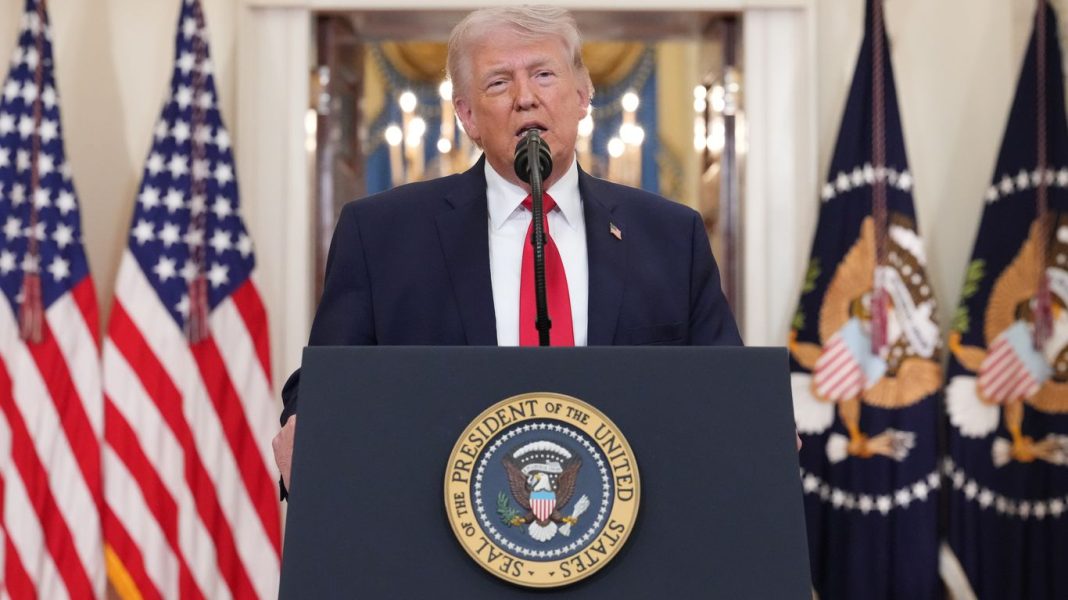
In the complex theater of international relations, words often carry immense weight, capable of shaping global perceptions and influencing geopolitical trajectories. Recently, a particularly stark statement attributed to former President Donald Trump regarding Iran has drawn significant attention. Reports indicate a threat to bomb Iran “back to stone ages” within a timeframe of “2-3 weeks,” a declaration that, regardless of its immediate intent, injects a potent dose of alarm into ongoing discussions about regional stability and military deterrence.
The Gravity of “Back to Stone Ages”
The phrase “back to stone ages” is a rhetorical tool with a clear, devastating connotation. It implies not just military defeat, but a complete societal collapse, erasing modern infrastructure, technology, and basic amenities. Such language is designed to convey an unparalleled level of destructive capability and a willingness to employ it without reservation. When coupled with a specific, albeit short, timeline of “2-3 weeks,” it transforms from a general warning into a seemingly urgent ultimatum.
This type of rhetoric serves multiple potential purposes. For some, it might be interpreted as a strong deterrent, aiming to prevent perceived hostile actions by illustrating the extreme consequences. For others, it could be seen as an escalatory threat, raising the stakes in an already volatile region and potentially limiting diplomatic off-ramps. The ambiguity inherent in such a statement – whether it’s a literal military plan or a hyperbolic warning – contributes significantly to its unsettling impact on the international stage.
Historical Echoes and Escalation Dynamics
Tensions between the United States and Iran have a long and intricate history, marked by periods of diplomatic engagement, economic sanctions, and intermittent military confrontations. Over the decades, rhetoric from both sides has frequently been sharp, often involving threats and counter-threats. However, the specific intensity and temporal specificity of the “back to stone ages” remark, coupled with a tight timeline, stand out even within this contentious historical backdrop.
Previous administrations have often relied on strategic ambiguity or targeted sanctions to manage the Iranian relationship. While military options are rarely off the table in foreign policy discussions, public declarations of such extreme destruction within a short window tend to shift the dynamic. This approach can be viewed as an attempt to leverage shock value for immediate compliance or as a dangerous gamble that could inadvertently trigger unintended responses. The historical pattern shows that escalating rhetoric often begets further escalation, creating a cycle that is difficult to de-escalate without careful and deliberate diplomatic efforts.
Potential Ramifications and Global Response
A statement of this nature, regardless of whether it’s fully implemented, carries significant potential ramifications across several dimensions. Geopolitically, it can solidify alliances and rivalries, forcing nations to reaffirm their positions. Regional players might interpret it as a signal to prepare for potential conflict or to seek alternative security arrangements. Economically, such threats can introduce instability into global markets, particularly impacting oil prices and investment flows in the Middle East.
The humanitarian consequences of any large-scale conflict, let alone one described with such devastating language, are immense and immediate. International bodies and humanitarian organizations typically voice strong concerns over such rhetoric, advocating for diplomatic solutions and de-escalation. As Dr. Anya Sharma, a seasoned geopolitical analyst, observed, “When leaders use such stark language, it inevitably raises global anxieties and forces nations to recalibrate their diplomatic and security postures, regardless of whether the words are meant literally or as a powerful deterrent. The ripple effect extends far beyond the immediate parties involved, affecting trade, security alliances, and public sentiment worldwide.”
In a world grappling with complex geopolitical challenges, statements threatening such extreme action demand careful consideration. They not only reflect a particular stance but also contribute to an atmosphere where the stakes are perpetually high. The coming weeks will undoubtedly reveal how this specific rhetoric integrates into broader policy discussions and how the international community continues to navigate the delicate balance of deterrence and diplomacy.
*

