


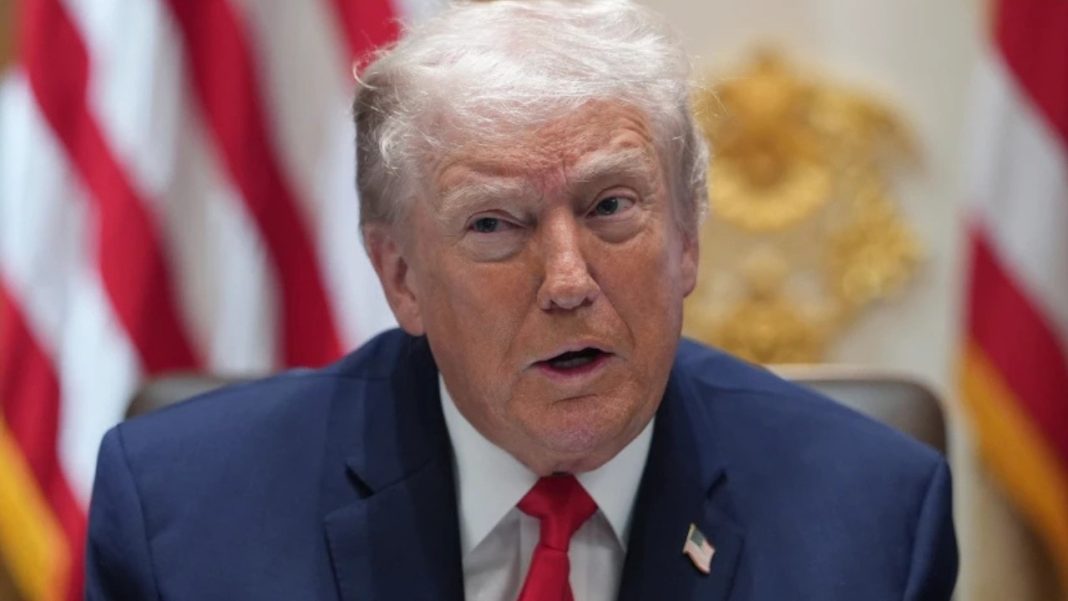
The global trade landscape, already navigating complexities from geopolitical shifts and supply chain disruptions, has been jolted by a renewed and aggressive stance from former U.S. President Donald Trump. In a recent statement, Trump threatened a staggering 50% tariff and the outright decertification of Canadian jets, reigniting a long-standing trade dispute with potentially severe consequences for North American allies and the global aerospace industry. This escalation, reminiscent of his previous “America First” trade policies, signals a potential new era of protectionism that countries like India are watching closely.
The Genesis of a Spat: Bombardier, Boeing, and Subsidies
The roots of this specific trade friction trace back several years, centered around Canadian aerospace giant Bombardier and its CSeries aircraft program, now known as the Airbus A220. In 2017, American aerospace behemoth Boeing filed a complaint with the U.S. Commerce Department, alleging that Bombardier received unfair subsidies from the Quebec and Canadian governments for its CSeries jets. Boeing argued that these subsidies allowed Bombardier to sell its aircraft at artificially low prices, thereby harming American competitors – a classic case of alleged dumping.
The U.S. Commerce Department initially sided with Boeing, recommending punitive countervailing and anti-dumping duties totaling over 300%. However, this decision was later overturned by the U.S. International Trade Commission (ITC) in 2018, which determined that Boeing was not harmed by Bombardier’s sales. Despite this, the underlying grievances never fully dissipated, and the issue remained a potent symbol of cross-border trade tensions, particularly during the renegotiation of NAFTA (now USMCA).
Trump’s Renewed Offensive: Tariffs and Decertification
Donald Trump’s latest remarks bring this dormant dispute roaring back to life, but with a significantly more aggressive edge. His threat of a 50% tariff is a direct financial blow, making the import of these jets prohibitively expensive for U.S. airlines. Far more drastic, however, is the mention of decertification. If enacted, decertification would mean that the aircraft, even if already purchased or operating, would no longer be legally permitted to fly in U.S. airspace. This would effectively cripple the American market for these jets, potentially rendering existing fleets unusable within the country and completely shutting down future sales.
This aggressive posturing is not just about the Bombardier jets; it reflects a broader inclination towards protectionist measures and a willingness to use trade as a powerful diplomatic and economic weapon. Such threats create immense uncertainty for manufacturers, airlines, and supply chain partners, forcing them to re-evaluate their strategies in anticipation of unpredictable policy shifts.
“We’re talking about a 50 percent tariff, and we’re talking about not being able to sell the plane into our country,” Trump reportedly stated, underscoring the aggressive stance and the potential for a severe trade confrontation.
The implications extend beyond the immediate financial impact. Decertification, a rare and extreme measure, sets a dangerous precedent for the use of regulatory power in trade disputes, potentially blurring the lines between safety certifications and economic protectionism.
Global Ripples and India’s Vantage Point
While primarily a North American dispute, the escalation has global ramifications, and nations like India are observing with keen interest. India’s burgeoning aviation market is one of the fastest-growing globally, with Indian airlines consistently placing significant orders for new aircraft. Any major disruption in the global aerospace supply chain, or a shift in the competitive landscape between manufacturers like Boeing and Airbus (which now controls the A220 program), can directly influence India’s procurement strategies, pricing, and diplomatic considerations with supplier nations.
Moreover, the use of such aggressive trade tactics, particularly decertification, could set a global precedent. For a country like India, which is actively building its domestic aerospace capabilities (e.g., Hindustan Aeronautics Limited – HAL) and engaging in international defense and civilian aerospace partnerships, understanding the evolving rules of engagement in global trade disputes is crucial. It highlights the potential risks of reliance on single suppliers or concentrated markets and underscores the importance of diversifying trade relationships and strengthening indigenous industrial capacities.
The episode also reinforces the fragility of established global trade norms and the World Trade Organization (WTO) framework, which aims to resolve such disputes through multilateral mechanisms. The willingness of a major economic power to bypass these mechanisms for unilateral action prompts a global rethink on trade resilience and strategy.
As the international community watches how this latest trade threat unfolds, its resolution – or lack thereof – will undoubtedly send significant signals about the future of global commerce. For India, a nation increasingly integrated into global supply chains and aiming for self-reliance, understanding these shifts is not just an academic exercise but a critical component of its economic and foreign policy strategy in a turbulent world.

