


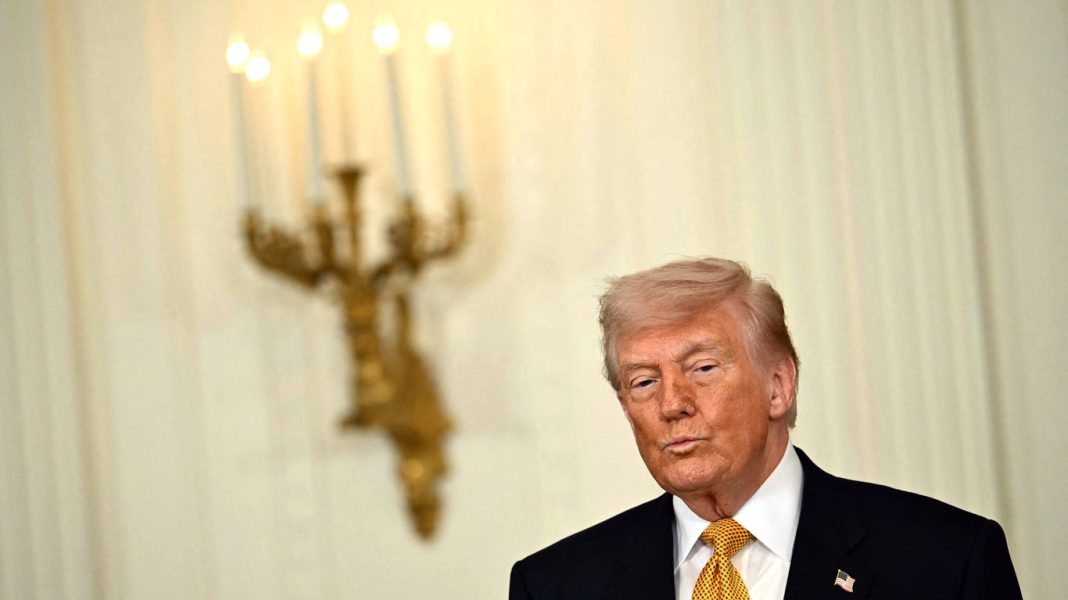
The intricate dance of international diplomacy often unfolds behind closed doors, but occasionally, a leading voice pulls back the curtain with a blunt assessment that resonates globally. Such was the case when former President Trump, known for his unvarnished opinions, told Axios he simply “didn’t like” Iran’s response to a proposed peace plan. It’s a moment that throws a stark spotlight on the enduring complexities of one of the world’s most volatile relationships.
For anyone hoping for even a glimmer of progress, Trump’s dismissal serves as a cold reminder of the deep chasm that still exists. A “peace plan” implies a pathway to de-escalation, a framework for mutual understanding, or at least a cessation of hostilities. To have it met with such a direct rejection, especially from a figure who has been deeply involved in shaping the US stance on Iran, underscores just how challenging the road ahead truly is.
The Echoes of Disappointment: What Lies Beneath a “Dislike”?
When a seasoned political figure like Trump expresses a strong dislike for a diplomatic proposal, it’s rarely just about personal taste. It suggests a fundamental mismatch between expectations and reality. While the specifics of Iran’s response remain largely under wraps, we can infer the points of contention. Diplomatic negotiations with Iran typically revolve around its nuclear program, regional proxy activities, and, crucially, the lifting of international sanctions. For a plan to be deemed unpalatable by Trump, it likely either didn’t offer enough concessions from the Iranian side on critical issues or made demands on the US and its allies that were considered non-starters.
The very phrase “didn’t like” carries a weight. It’s not a nuanced critique of specific clauses, but a wholesale rejection that implies the proposal failed to meet even a basic threshold of acceptability. This is particularly significant given Trump’s previous “maximum pressure” campaign against Iran, which sought to compel Tehran into broader concessions through economic hardship. A peace plan, from this perspective, would need to demonstrate a tangible shift in Iranian policy, something evidently missing from their latest offering.
The Trump Factor: Navigating a Unique Diplomatic Style
Trump’s approach to foreign policy has always been distinct, characterized by a willingness to challenge established norms and a preference for direct, often transactional, negotiations. His blunt assessment of Iran’s response is entirely consistent with this style. Unlike traditional diplomacy, which often involves careful language and measured responses, Trump tends to cut straight to the chase, making his position clear without equivocation.
This directness can be seen as both a strength and a weakness in the delicate world of international relations. On one hand, it leaves no room for ambiguity, forcing all parties to confront the reality of the situation. On the other, it can potentially close off avenues for further discussion, especially when a proposal is rejected outright rather than used as a starting point for renegotiation. As one international relations observer, Sarah Jenkins, recently put it, “Trump’s ‘dislike’ isn’t just an opinion; it’s a signal. It tells us that the gap between what each side considers acceptable remains wide, and that genuine breakthroughs will require a significant shift in posture from somewhere.” This ongoing tension highlights the immense difficulty in finding common ground when core interests and historical grievances are so deeply entrenched.
An Unsettled Horizon
Trump’s frank declaration serves as a sobering reminder that the path to peace and stability in the Middle East remains fraught with obstacles. A peace plan, by its very nature, is an aspiration, a document born of hope for a better future. When such a plan receives a thumbs down from a key player, it indicates that the fundamental disagreements persist, perhaps as intensely as ever.
The rejection leaves observers pondering the next steps. Will Iran revise its position? Will other international actors step in to bridge the divide? Or will this simply be another chapter in a long-running saga of distrust and failed overtures? What is clear is that the journey towards a lasting resolution is far from over, and moments like these underline the persistent, human challenge of reconciling deeply opposing viewpoints on the global stage.
*

