


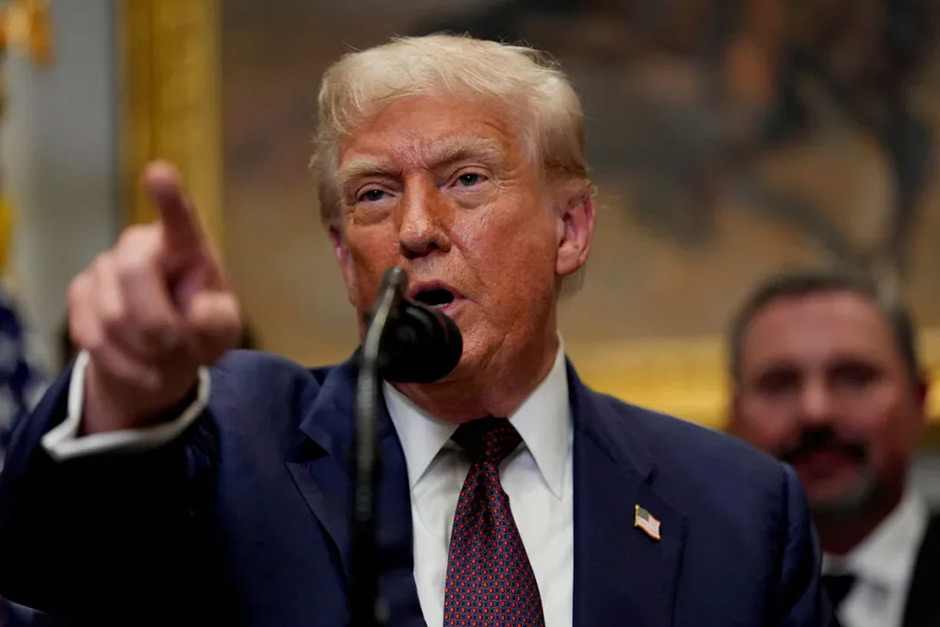
As the U.S. presidential election cycle heats up, the specter of protectionist trade policies, particularly tariffs, once again looms large. Former President Donald Trump has frequently indicated a return to his “America First” tariff agenda if re-elected. While framed as a tool to protect American industries and jobs, a growing chorus of U.S. lawmakers is voicing a crucial counter-narrative: these tariffs, particularly those targeting partners like India, primarily act as a hidden tax on American consumers, leading to soaring retail prices.
The Resurgence of Tariff Talk and India’s Role
During his previous term, Donald Trump’s administration implemented significant tariffs on goods from several countries, including China, and famously revoked India’s preferential trade status under the Generalized System of Preferences (GSP) in 2019. This move, which eliminated duty-free access for over $5.6 billion worth of Indian exports to the U.S., was a point of contention and led to retaliatory tariffs from India on certain American goods. The underlying philosophy was that tariffs would force other nations to renegotiate trade terms more favorable to the U.S. and incentivize domestic production.
Now, with a potential return to the White House, Trump has signaled even more aggressive tariff policies, potentially a universal 10% tariff on all imports and higher rates for specific countries. For a rapidly growing economic partner like India, whose bilateral trade with the U.S. reached a record $120 billion in goods in 2022-23, such measures could have significant implications. India exports a wide array of products to the U.S., from textiles and pharmaceuticals to precious stones, agricultural products, and auto components. Any new tariffs on these goods would directly impact their competitiveness in the American market.
US Lawmakers: Tariffs are a Tax on American Wallets
The core argument against these tariffs, articulated by numerous U.S. lawmakers from across the political spectrum, is that they are not paid by the exporting country but by American importers, who then pass these increased costs onto American consumers. This effectively means that tariffs are a domestic tax masquerading as a foreign policy tool. Retail prices for everyday goods – from clothing and footwear to electronics and essential medicines – would inevitably rise.
Consider the example of Indian textiles or handicrafts. An American apparel company importing fabrics from India would have to pay the imposed tariff. To maintain profit margins, the company would then increase the price of the finished garment sold in U.S. stores. This burden falls squarely on American households, eroding purchasing power, especially for lower and middle-income families already grappling with inflationary pressures.
As one senior congressional aide, deeply involved in trade policy discussions, succinctly put it: “Tariffs are not paid by foreign governments; they are taxes levied on American businesses and ultimately borne by American families struggling with rising costs. Imposing new tariffs on goods from countries like India would be a direct hit to the wallets of everyday Americans, making everything from clothing to pharmaceuticals more expensive.”
Lawmakers also point out that these policies can harm American businesses themselves. Companies that rely on imported raw materials or components for their manufacturing processes would face higher input costs, potentially making them less competitive globally or forcing them to cut jobs. Furthermore, retaliatory tariffs from countries like India could hurt American exporters, impacting sectors such as agriculture and technology.
Economic Interdependence and Geopolitical Considerations
The current India-U.S. relationship is marked by increasing strategic alignment and robust economic ties. Both nations are part of the Quad, collaborating on Indo-Pacific security, and bilateral trade has been on an upward trajectory, driven by mutual economic interests. Introducing broad tariffs could complicate this burgeoning partnership, potentially pushing India to diversify its trade relations further, perhaps towards other major economies.
Economists largely concur that tariffs are an inefficient and costly way to achieve trade policy goals. While proponents argue they protect domestic industries, the broader economic consensus suggests that the costs to consumers and businesses often outweigh the benefits. For Americans, the imposition of tariffs on Indian goods would mean higher prices at a time when affordability is a key concern, undermining the very economic well-being these policies ostensibly aim to protect.
The debate around tariffs highlights a fundamental economic reality: in an interconnected global economy, trade restrictions rarely have a singular, isolated impact. While the intent might be to level the playing field or protect domestic jobs, the mechanism often translates into increased costs for consumers at home. As U.S. lawmakers increasingly assert, the promise of “America First” tariffs could, paradoxically, result in American families paying more.

