


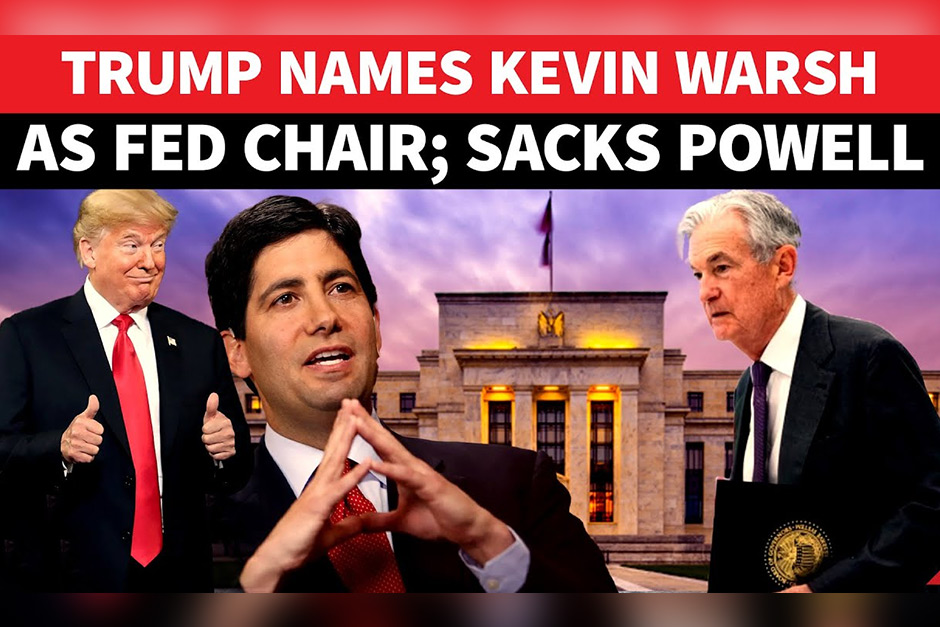
The Federal Reserve Chair isn’t just a powerful economic position; it’s a barometer for global financial confidence and a direct influence on the fiscal health of nations. Speculation regarding its leadership always draws intense scrutiny. Imagine a scenario where Donald Trump, known for his direct approach to economic policy, were to tap Kevin Warsh to take over as Fed chair from Jerome Powell. Such a hypothetical move would send significant ripples through global markets and reshape the discourse around monetary policy, demanding a balanced analysis of its potential ramifications.
Kevin Warsh: A Glimpse into a Different Policy Mindset
Kevin Warsh is a familiar and respected name within financial circles, boasting a rich background as a former Federal Reserve governor who served during the tumultuous 2008 financial crisis. His experience provides him with an intimate understanding of high-stakes economic policy. Warsh is often characterized as a proponent of more conventional, less expansive monetary policy. He has frequently expressed concerns regarding the substantial growth of the Fed’s balance sheet and the potential for inflation stemming from aggressive quantitative easing programs.
His economic philosophy tends to lean towards a more disciplined, less interventionist approach, contrasting in some ways with the recent direction under Jerome Powell. Powell’s tenure has emphasized flexibility, data-dependency, and a nuanced strategy to fulfill the Fed’s dual mandate of maximum employment and price stability, often navigating complex global economic headwinds with caution. A Warsh appointment would signal a move towards a potentially more hawkish perspective, focusing intently on inflation containment and possibly advocating for a more streamlined role for the central bank in the economy.
Navigating the Economic Currents: Potential Shifts and Market Reactions
A Federal Reserve under Kevin Warsh would likely signal a significant pivot in monetary policy direction. We could anticipate a heightened focus on inflation containment, potentially leading to a more assertive stance on interest rates. This might translate into quicker, or at least more predictable, rate hikes if inflationary pressures persist, alongside a rigorous re-evaluation of the Fed’s balance sheet reduction strategy. The nuances of the Fed’s dual mandate—balancing robust employment with stable prices—would undoubtedly be reinterpreted through Warsh’s lens, possibly prioritizing price stability with greater emphasis.
Such a shift would not be without its market tremors. Bond yields could experience upward pressure as investors price in a potentially more aggressive tightening cycle. The stock market, while initially perhaps wary of higher borrowing costs, might eventually find stability if a Warsh-led Fed is perceived as bringing greater certainty to long-term price stability and a clearer path towards normalization. However, the initial phase could be marked by volatility as markets adjust to a new philosophical approach. As one market observer noted, “A shift to Warsh would signal a definitive move towards a more hawkish posture, potentially unsettling bond markets initially as investors price in quicker rate adjustments or a more aggressive approach to quantitative tightening.” For businesses and consumers, a Warsh Fed could mean higher borrowing costs and a potentially cooler economy, balanced against the promise of firmer control over inflation.
Ultimately, the appointment of Kevin Warsh as Fed Chair would represent a profound change at the helm of US monetary policy. It would underscore a presidential desire for a different economic direction, potentially shifting the Fed away from the flexible, data-driven path established by Jerome Powell towards a more traditionally hawkish stance. While promising a firmer hand on inflation for some, it could introduce new uncertainties and challenges for markets accustomed to the current policy framework. The implications for economic growth, financial stability, and the global perception of US monetary policy would be substantial and far-reaching, setting a new course for America’s economic future.

