


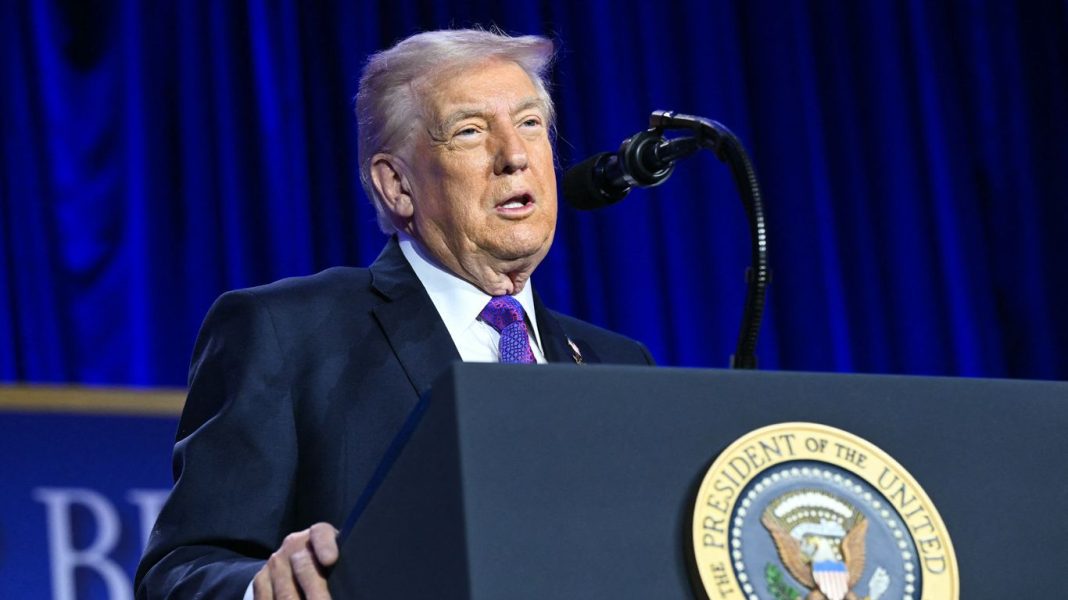
In the whirlwind of digital discourse, a recent incident involving a video depicting the Obamas, swiftly identified by many as racist and subsequently removed, has once again brought a familiar figure to the forefront: Donald Trump. What followed its deletion was not an acknowledgment of the video’s contentious nature or even a neutral silence, but an unyielding declaration from Trump himself: “I didn’t make a mistake.” This steadfast refusal to concede error, even in the face of widespread condemnation and the platform’s decision to remove the content, speaks volumes about a particular brand of political engagement and its implications for public discourse.
The Gravity of Amplification in the Digital Age
The digital realm has democratized information, but it has also magnified the responsibility of those with significant platforms. When a figure of Trump’s stature shares or amplifies content, it carries an implicit weight, regardless of whether he personally created it. The removal of the video in question underscores its problematic nature, suggesting it crossed lines of decency or platform guidelines. For many, the very act of its initial promotion, regardless of intent, was deeply troubling.
This isn’t just about a single video; it’s about the powerful amplification effect wielded by public figures. An uncritical share can lend legitimacy to harmful narratives, spreading them further and wider than they might otherwise travel. To then assert “I didn’t make a mistake” after the fact can be perceived not merely as a defense of one’s own judgment, but as a dismissal of the concerns that led to the content’s removal and the distress it caused. It prompts a crucial question: where does the accountability lie when content deemed offensive by many is disseminated by a prominent voice?
An Unapologetic Stance and Its Resonance
Trump’s response is, for many, characteristic of his political brand. Rarely has he been known to retract statements or admit to misjudgment. This consistent posture, where every action is defended as flawless, creates a unique dynamic in public life. It can be seen by supporters as strength and conviction, a leader unafraid to stand his ground against criticism. However, for others, it represents a concerning lack of introspection and an unwillingness to engage with alternative perspectives or acknowledge the impact of one’s actions.
The refusal to acknowledge a “mistake” in this context extends beyond a simple act of sharing. It touches upon issues of racial sensitivity, public decency, and the role of leadership in fostering respectful dialogue. “It just feels like a constant sidestep,” commented Sarah Chen, a political observer, “There’s rarely an admission of a misstep, even when the content itself is clearly problematic. It makes it harder to believe in any genuine attempt to unite or understand diverse perspectives.” This unwavering stance can further entrench divisions, making it challenging to bridge gaps when one side believes its actions are perpetually beyond reproach.
In a society grappling with issues of misinformation and divisive rhetoric, the actions and reactions of prominent individuals set a tone. Trump’s insistence that he made no error after a demonstrably racist video was removed from public view serves as a potent example of a leader operating within a self-defined sphere of infallibility. It leaves many wondering about the implications for accountability, for sensitivity, and for the very nature of truth in our shared public square. The conversation continues, defined not just by the content itself, but by the unapologetic stance taken in its aftermath.

