


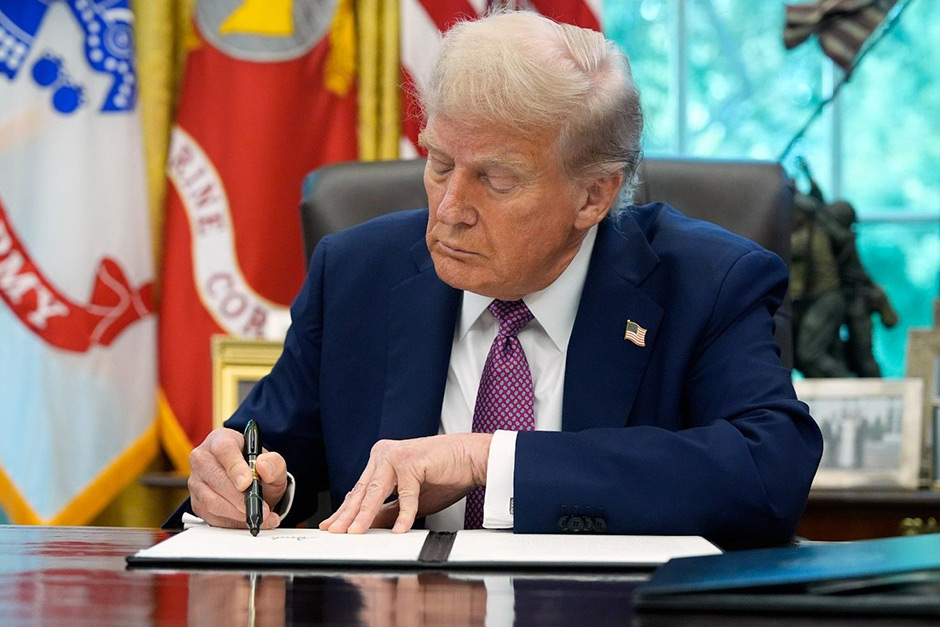
In a significant move poised to reshape energy geopolitics and bilateral relations, former US President Donald Trump has reportedly signed an executive order announcing the removal of the 25% penalty tariff previously imposed on India for its purchase of Russian oil. While the specifics of this order and its immediate implementation are subject to official confirmation and procedural steps, the announcement itself signals a profound shift in Washington’s approach to India’s energy security and its engagement with global energy markets. This development, coming amidst complex international dynamics, offers considerable economic relief and strategic flexibility for India, a nation heavily reliant on imported energy.
India’s Energy Imperative and Geopolitical Balancing Act
India, the world’s third-largest oil consumer, navigates a delicate balance between its burgeoning energy demands, economic stability, and foreign policy objectives. Following the geopolitical shifts stemming from the conflict in Ukraine, India significantly increased its imports of discounted Russian crude oil, a move driven by pragmatic economic considerations. The attractive pricing offered by Moscow proved crucial for India, helping to mitigate inflationary pressures and ensure a steady supply for its rapidly growing economy. This decision, however, placed India in a challenging position, as the US and its allies had previously sought to isolate Russia through sanctions and economic disincentives.
The implicit threat of secondary sanctions under the Countering America’s Adversaries Through Sanctions Act (CAATSA) loomed over India’s oil trade with Russia. While Washington had largely exercised waivers or refrained from imposing direct penalties on India in the past, citing the importance of the strategic partnership, the possibility remained a point of underlying tension. India consistently defended its position by highlighting its national interest, arguing that energy security for its 1.4 billion people was paramount, and that purchases were made outside existing Western sanctions frameworks. The prospect of a 25% tariff, had it been formally enforced, would have severely impacted India’s refining sector and cascaded into higher fuel prices for consumers, undermining the economic advantage of Russian oil.
Trump’s Rationale and Diplomatic Ripples
The reported executive order by Donald Trump underscores a potential pivot in US foreign policy, aligning with his “America First” principles which often prioritize economic self-interest and a re-evaluation of alliances. Observers suggest several motivations behind such a decision. Firstly, it could be seen as an effort to ease economic burdens on key strategic partners like India, thereby strengthening bilateral ties and fostering greater cooperation in other areas, such as countering China’s growing influence in the Indo-Pacific. Secondly, it aligns with a broader push to stabilize global energy markets and potentially temper oil prices, which can have significant domestic political implications.
From an Indian perspective, this development is unequivocally positive. The removal of the potential tariff threat provides greater certainty and predictability for its energy planning. It allows India to continue sourcing oil from Russia without the looming specter of US punitive measures, thereby securing its energy supply chain and allowing its refineries to operate optimally. This freedom significantly enhances India’s strategic autonomy in its foreign policy and economic decisions.
Commenting on the implications, an energy analyst from Mumbai, Dr. Kavita Sharma, stated, “This move, if officially enacted, would be a game-changer for India’s energy security. It provides crucial economic breathing room and validates India’s independent foreign policy stance, demonstrating a pragmatic understanding from Washington of our national imperatives.”
Beyond the immediate economic relief, the announcement sends a strong diplomatic signal. It indicates a willingness by a potential future US administration to adapt its strategies, recognizing the complex energy needs and geopolitical realities faced by its partners. For India, it solidifies its position as a significant global player capable of charting its own course, even amidst competing international pressures.
The reported executive order marks a pivotal moment in the intricate dance of international relations, especially concerning energy security and strategic partnerships. For India, it promises enhanced economic stability, greater flexibility in its energy procurement, and a validation of its principled approach to foreign policy. While the long-term ramifications will unfold over time, this announcement is poised to significantly strengthen the US-India strategic partnership and allow India to continue navigating the complex global energy landscape with increased confidence and autonomy.

