


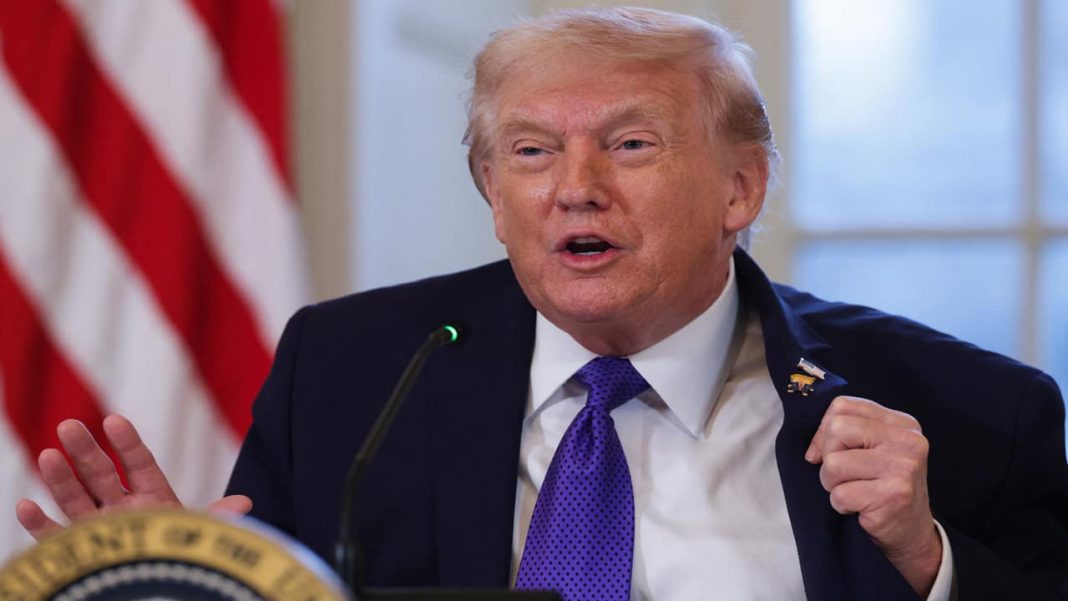
The Strait of Hormuz, a narrow waterway connecting the Persian Gulf to the open ocean, has long been a linchpin of global energy security. Through its waters passes approximately 20% of the world’s total oil consumption and a significant portion of its liquefied natural gas (LNG). Recent months have seen a dangerous escalation of tensions in this critical region, marked by tanker attacks, drone shoot-downs, and heightened rhetoric between the United States and Iran. Amidst this volatile backdrop, former US President Donald Trump has weighed in with a provocative suggestion: the US Navy could potentially escort tankers through the Strait to ensure the uninterrupted flow of global energy supplies. This assertion, while made by a private citizen, echoes past American foreign policy postures and carries profound implications for global trade, geopolitical stability, and particularly, for energy-dependent nations like India.
The Geopolitical Significance of Hormuz
The Strait of Hormuz is more than just a shipping lane; it is a geostrategic chokepoint. Bordered by Iran to the north and Oman and the UAE to the south, its narrowest point is only about 21 nautical miles wide, with the shipping lanes for oil tankers just two miles wide in each direction. Any disruption here, whether through military action, piracy, or even political intimidation, sends immediate ripples through global energy markets, impacting crude oil prices and the stability of the world economy.
The recent history of the Strait has been fraught with challenges. In 2019, a series of attacks on commercial vessels in the Gulf of Oman and near the Strait, which the US and its allies attributed to Iran, underscored the vulnerability of maritime trade. Iran has, on multiple occasions, threatened to close the Strait in response to sanctions or military pressure, a move that would be catastrophic for the global economy. Against this backdrop, the presence of various international navies, including the US Fifth Fleet, has been a constant, aiming to deter aggression and ensure freedom of navigation. Trump’s statement, therefore, revives a discussion about the extent of such protective measures and the potential for a more direct, assertive US role.
India’s Energy Lifeline and Diplomatic Tightrope
For India, the stability of the Strait of Hormuz is not merely a matter of international relations; it is a fundamental pillar of its national energy security. As the world’s third-largest oil importer, India relies heavily on the Middle East for its crude oil and gas needs. A staggering 60% of India’s crude oil imports, and a substantial portion of its LNG, transit through the Strait of Hormuz. Any prolonged disruption or significant increase in shipping insurance premiums due to heightened risks directly impacts India’s import bills, domestic fuel prices, and macroeconomic stability.
The prospect of US Navy escorts, while potentially ensuring the physical flow of energy, presents a complex diplomatic challenge for New Delhi. India has historically maintained a nuanced foreign policy, balancing its strategic partnership with the United States with its historically significant and pragmatic relationship with Iran. India has consistently advocated for de-escalation of tensions and peaceful resolution of conflicts in the region, wary of any actions that could further destabilize an already fragile environment. While committed to the principle of freedom of navigation, India prefers multilateral solutions and its own naval presence, such as Operation Sankalp, to safeguard its maritime interests rather than relying solely on the unilateral actions of any single power. India’s strategic autonomy dictates a cautious approach, aiming to protect its energy supplies without being drawn into regional rivalries.
Trump’s Assertion and the Path Ahead
Donald Trump’s statement, delivered within the context of his characteristic assertiveness, laid bare the fundamental rationale behind such proposals: “We will ensure free flow of energy to world.” This sentiment aligns with the traditional US role as a guarantor of international maritime commons, a role it has historically played across vital shipping lanes. From the US perspective, ensuring the free flow of energy is not just an economic imperative but also a strategic one, preventing adversaries from weaponizing energy supplies and maintaining global economic stability, which indirectly benefits US interests.
However, an overt US naval escort mission, particularly if perceived as unilateral or aggressive by regional players, carries inherent risks. It could be viewed by Iran as an act of provocation, potentially leading to further escalation, rather than deterrence. The international community itself is often divided on such robust interventions, with some nations preferring a more collaborative and less confrontational approach. For India, the critical question remains how best to secure its energy lifelines in a region perpetually on edge. While the call for ensuring energy flow is vital, the method of achieving it—whether through direct military escorts, diplomatic de-escalation, or a multilateral security framework—will define the future stability of the Strait of Hormuz and, by extension, global energy markets.
As geopolitical tremors continue to reverberate across the Middle East, India will undoubtedly watch developments in the Strait of Hormuz with keen interest. Its continued focus will be on advocating for stability, protecting its critical energy imports, and navigating the complex currents of international relations to secure its own economic future.

