


When former US President Donald Trump declared that the US was “taking control” of Venezuela’s oil reserves, it sparked intense global debate. For energy-reliant nations like India, understanding this assertion is crucial, given its implications for global oil markets and diplomacy. What does “taking control” truly mean, and how does it resonate with India’s strategic interests?
Unpacking Trump’s Statement: Rhetoric vs. Reality
Donald Trump’s “taking control” was not a military invasion, but intense economic and diplomatic pressure on the Nicolás Maduro regime. This strategy centered on comprehensive sanctions targeting Venezuela’s state-owned oil company, Petróleos de Venezuela, S.A. (PDVSA). US Treasury sanctions prohibited American entities from dealing with PDVSA and froze Venezuelan government assets, severely hindering Maduro’s ability to sell oil or access international funds. The US recognized Juan Guaidó as Venezuela’s legitimate interim president, aiming to transfer control of Venezuelan state assets, including oil revenues, to his government. This economic warfare starved the regime of primary revenue, empowering the opposition for humanitarian aid and national rebuilding.
Venezuela’s Oil: A Geopolitical Chessboard
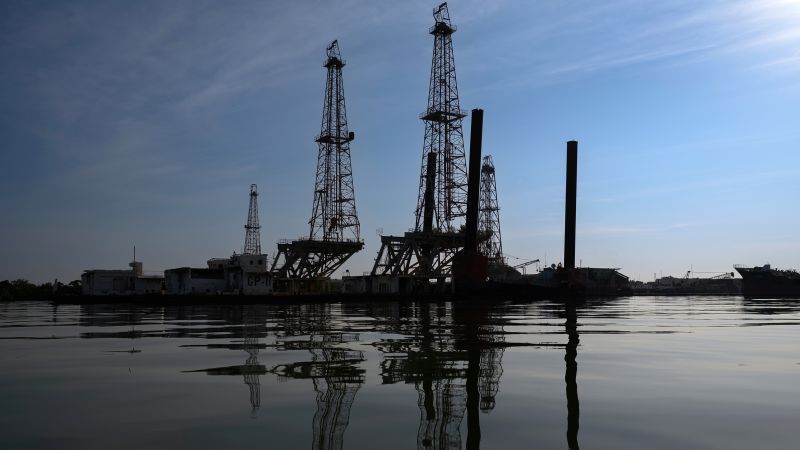
Venezuela’s 303 billion barrels, the world’s largest proven oil reserves, make it pivotal in global energy politics. The US was a major heavy crude consumer, but under the Maduro regime, instability, mismanagement, and US sanctions severely hampered production, causing a significant output drop.
The US cites democracy, human rights, and humanitarian crisis. Washington views controlling Venezuela’s oil revenue as a lever for democratic transition, though this interventionist approach raises questions about national sovereignty and potential global market destabilization. Any significant disruption can ripple through international markets. As Dr. Aruna Singh, a Delhi-based geopolitical analyst, observes, “The US’s strategy towards Venezuela’s oil isn’t about physical occupation, but a sophisticated attempt to incapacitate the Maduro regime by choking its financial lifeline. It’s economic warfare disguised as asset protection, aimed at compelling a political change through fiscal pressure.“
The Indian Perspective: Energy Security and Diplomacy
For India, the third-largest oil consumer, Venezuelan developments carry complex significance. Once a notable crude oil supplier, Venezuela’s flow to India largely ceased due to stringent US sanctions. This forced Indian refiners, like Reliance Industries, to diversify imports towards the Middle East, US, and West Africa, directly impacting India’s energy procurement and costs.
The situation highlights India’s challenge: balancing energy security with non-interference, a core foreign policy principle. India maintains ties with Maduro while preserving its crucial strategic partnership with the US, demanding a delicate diplomatic tightrope walk. This includes navigating challenges to Indian investments like ONGC Videsh (OVL) stakes in Venezuelan oil fields, where operational success and revenue repatriation are hampered by ongoing turmoil, impacting India’s broader security strategy and requiring continuous re-evaluation of import baskets.
Conclusion
Donald Trump’s declaration about “taking control” was not a literal military seizure, but a robust strategy of economic coercion. It aimed to undermine the Maduro regime by cutting off its primary income. This approach, while isolating Venezuela financially, sparked global debates on sovereignty and interventionism. For India, this drama serves as a potent reminder of interconnected global energy markets and intricate international diplomacy. As geopolitical currents shift, India must remain agile, adapting its energy procurement and navigating complex relations to secure its vital interests.

