


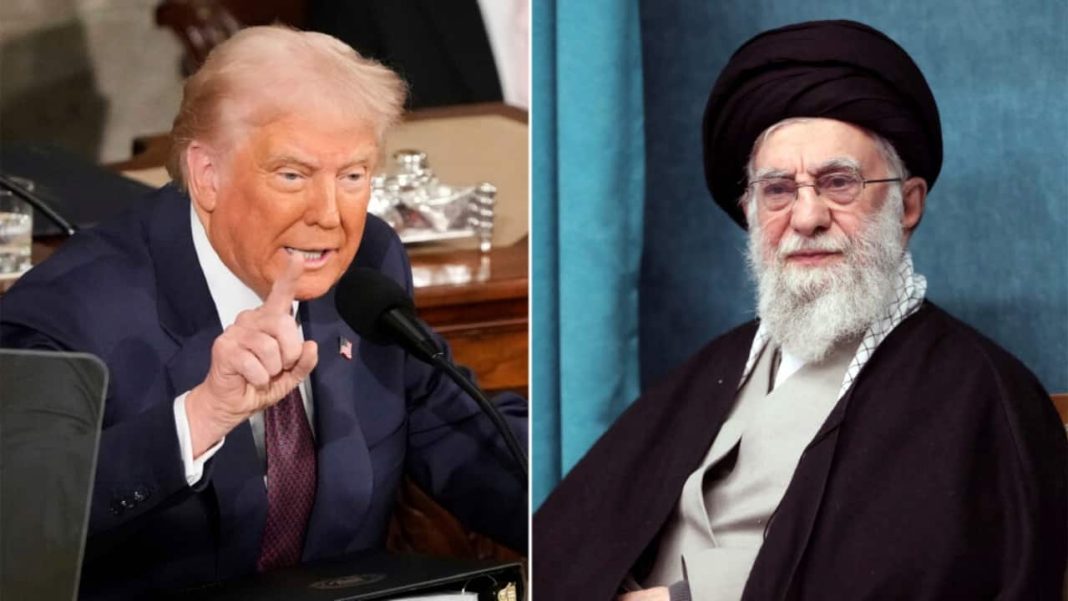
The geopolitical chessboard of the Middle East is once again gripped by escalating tensions, as fresh protests within Iran have drawn sharp international attention, particularly from the United States. A recent pronouncement by former US President Donald Trump has ignited a war of words, with his “locked and loaded” warning to Tehran meeting an equally defiant response from Iranian authorities. The situation presents a volatile mix of domestic unrest and international brinkmanship, carrying significant implications for regional stability and global powers, including India.
The current flashpoint began with reports of widespread public discontent across several Iranian cities, triggered by various socio-economic and political grievances. As security forces reportedly moved to quell the demonstrations, the international community watched closely. It was against this backdrop that the US weighed in, raising concerns that have quickly spiraled into a direct exchange of threats.
Trump’s Stance and the ‘Locked and Loaded’ Warning
The former US President Donald Trump, known for his assertive foreign policy, issued a stern warning to Iran, stating that the United States was “locked and loaded” should the Iranian regime crack down on its protesting citizens. This statement, delivered through his characteristic direct communication style, evoked memories of his administration’s ‘maximum pressure’ campaign against Tehran. The phrase ‘locked and loaded’ is a clear military idiom, signaling a readiness for decisive action and implying that any severe suppression of protesters could cross a red line for Washington.
Trump’s remarks are rooted in a long-standing US policy of advocating for human rights and democratic freedoms globally, though often selectively applied. For the US, the treatment of protesters in Iran touches upon deeper ideological conflicts between the two nations, which have been at loggerheads for decades over issues ranging from Iran’s nuclear program and ballistic missile development to its regional influence and perceived sponsorship of militant groups. The explicit threat of military preparedness underscores the serious view Washington takes on potential human rights abuses, framing the US as a potential protector of the Iranian populace against its own government’s actions.
Tehran’s Swift Retort: US Bases as ‘Legitimate Targets’
The reaction from Tehran was swift and unequivocal. Iranian officials condemned Trump’s warning as an unwarranted interference in their internal affairs and a blatant threat to their national sovereignty. They quickly countered with their own ominous message: US military bases and interests across the Middle East would be considered “legitimate targets” if Washington were to take any military action against Iran. This retaliatory threat amplified the already high stakes, suggesting a potential for widespread conflict that could engulf the entire region.
A senior commander within Iran’s Islamic Revolutionary Guard Corps (IRGC), speaking to state media, warned, “Any act of aggression or interference in our domestic matters will be met with a decisive and comprehensive response. We consider all American military installations in the region to be within our reach and legitimate targets should our sovereignty be threatened.” This quote highlights Iran’s long-held doctrine of asymmetric warfare and its demonstrated capability to strike targets beyond its borders through its network of proxies and its own missile capabilities. The proximity of numerous US military bases in countries like Iraq, Kuwait, Qatar, UAE, and Bahrain makes this threat particularly potent and a serious concern for regional stability.
Implications for Regional Stability and India’s Position
The rhetorical escalation between the US and Iran carries profound implications for the already volatile Middle East. An actual military confrontation could trigger a humanitarian crisis, disrupt global energy supplies from the crucial Strait of Hormuz, and destabilize economies worldwide. For India, a nation heavily reliant on Middle Eastern oil and gas imports, any disruption in the region directly impacts its energy security and economic stability. Furthermore, the safety and well-being of the large Indian diaspora working across the Gulf countries become paramount concerns in such scenarios.
India maintains delicate diplomatic and economic ties with both the United States and Iran. While a strategic partner to the US, India also values its historical relationship with Iran, exemplified by its investment in the Chabahar Port, which provides a vital trade route to Afghanistan and Central Asia, bypassing Pakistan. New Delhi has consistently advocated for de-escalation through dialogue and diplomacy in such geopolitical flashpoints, underscoring its commitment to regional peace and its policy of strategic autonomy. An outright conflict would force India into a difficult balancing act, potentially jeopardizing its economic interests and strategic objectives in the region.
The current standoff underscores the fragile nature of peace in the Middle East and the perilous consequences of miscalculation. As the international community watches with bated breath, the hope remains that diplomatic channels will prevail, preventing a dangerous escalation that could have devastating effects far beyond the immediate protagonists.
*

