


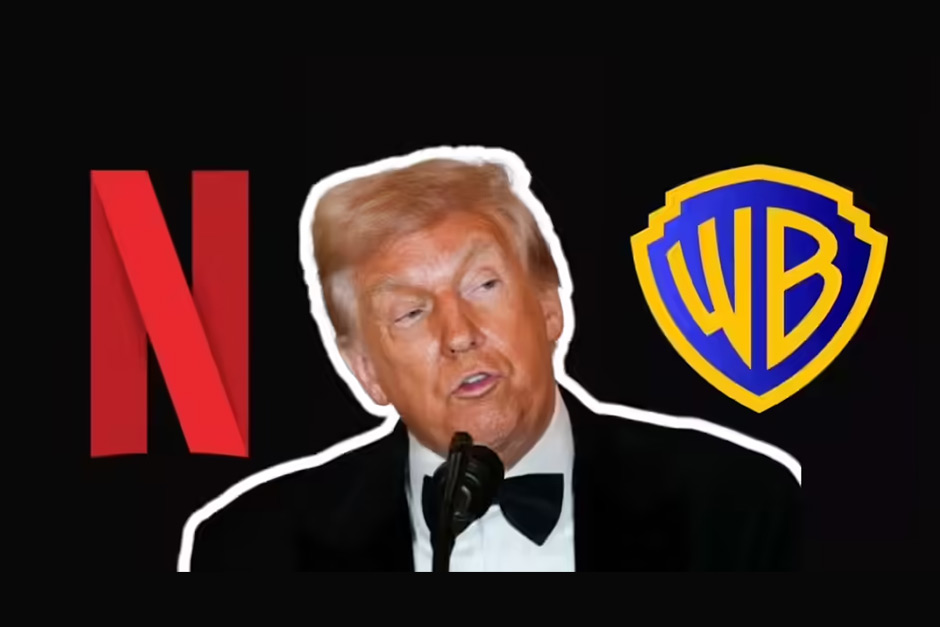
The world of media and entertainment is a vast, ever-shifting landscape, continuously reshaped by technological innovation and corporate maneuvers. From time to time, a hypothetical scenario emerges that sparks significant debate, even from unexpected corners. Such was the case when Donald Trump weighed in on the speculative possibility of Netflix acquiring Warner Bros. Discovery, voicing a concern that such a merger could be a “problem” due to the resulting entity’s “huge market share.” It’s a statement that cuts to the heart of ongoing discussions about industry consolidation, consumer choice, and the very definition of competition in the digital age.
Examining the Hypothetical Giant: Netflix and Warner Bros. Discovery
To understand the potential implications of Trump’s comment, it’s crucial to visualize the scale of the proposed merger. Imagine Netflix, the undisputed global leader in streaming with hundreds of millions of subscribers and a massive content production budget, joining forces with Warner Bros. Discovery (WBD). WBD is itself a titan, housing an incredibly diverse portfolio that includes HBO, the iconic Warner Bros. film and television studios, the DC Comics universe, CNN, Discovery Channel, HGTV, and countless other beloved brands. A combined entity would command an unparalleled library of premium content, a staggering global reach, and immense production capabilities. This isn’t just a merger; it’s the formation of a genuine entertainment superpower, capable of shaping culture and media consumption patterns on an unprecedented scale.
The Antitrust Alarm Bells: Why Market Share Raises Concerns
Trump’s “problem” assessment taps into long-standing antitrust principles centered on market concentration. When a single company or a very small group of companies controls a disproportionate share of a market, the immediate concern is a reduction in competition. For consumers, this could manifest as higher subscription prices, fewer truly independent content options, or even a stifling of innovative new services. If one entity controls both a vast distribution network (Netflix’s streaming platform) and an extensive content catalog (WBD’s properties), it could create bottlenecks, making it harder for new entrants to compete or for creators to find distribution outside the dominant player.
Beyond consumer impact, there are also implications for creators, talent, and other industry players. A smaller number of powerful buyers for films, TV shows, and journalistic content could lead to less favorable terms for producers and artists, potentially diminishing the diversity of voices and stories reaching audiences. As one entertainment industry analyst recently put it, “While the sheer size of a combined Netflix-Warner Bros. Discovery would be formidable, we also need to consider the broader streaming wars. Consumers today have more high-quality options than ever before, which still places a check on any single entity’s power.” This highlights the complex balancing act regulators face when evaluating such large-scale consolidation.
The Wider Lens: Is Competition Still Robust?
However, the question of market share in the modern media landscape isn’t straightforward. While a Netflix-WBD merger would indeed create a behemoth, the overall streaming and entertainment market is fiercely competitive. Giants like Disney (with Disney+, Hulu, ESPN+), Amazon (Prime Video, MGM), Apple (Apple TV+), Paramount (Paramount+), and Comcast (Peacock) are all investing billions into content and vying for subscriber attention. In this dynamic environment, some argue that even a massive merger might be less about creating a monopoly and more about achieving the necessary scale to compete effectively against other well-resourced players.
Proponents of such mergers often point to potential synergies, economies of scale, and the ability to invest even more heavily in groundbreaking original content, ultimately benefiting consumers through higher production values and more choices within that combined ecosystem. The challenge for regulators, then, is to discern whether a proposed merger genuinely threatens competition and consumer welfare, or if it represents a strategic move in an already highly concentrated and competitive field.
Ultimately, the hypothetical Netflix-Warner Bros. Discovery merger, and Trump’s reaction to it, underscores the ongoing tension between corporate ambition, market dynamics, and the critical role of antitrust oversight. In an era where media consumption is central to daily life, ensuring a vibrant, competitive, and diverse entertainment landscape remains a paramount concern for regulators and the public alike.

