


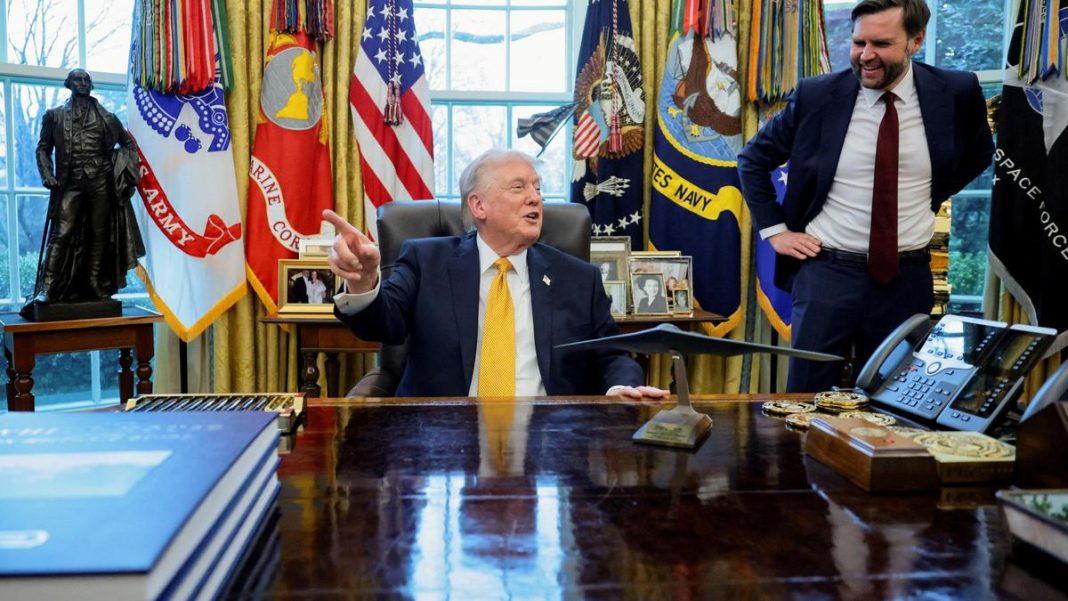
Former U.S. President Donald Trump’s assertion that he can do “anything” he wants with Cuba has reignited a critical discussion on American foreign policy, global sovereignty, and the delicate balance of international relations. Such pronouncements, while characteristic of his assertive style, send ripples far beyond the Caribbean, compelling nations like India to observe with keen interest the evolving dynamics between Washington and Havana. This statement not only underlines a potential return to a harder line against Cuba but also raises questions about unilateralism in an increasingly interconnected world.
A Glimpse into Renewed Tensions: Trump’s Stance
The comment by Donald Trump, asserting his unfettered control over U.S. policy towards Cuba, harks back to his administration’s consistent efforts to dismantle the diplomatic thaw initiated by his predecessor, Barack Obama. The Obama administration had normalized relations, reopened embassies, and eased travel and trade restrictions, marking a significant shift after decades of Cold War-era animosity. Trump, however, swiftly reversed many of these advancements, citing concerns over human rights and the communist government’s policies.
His approach was defined by a renewal of sanctions and travel restrictions, aiming to pressure the Cuban government. This stance was encapsulated in a direct quote from him in 2017: “I cancelled the Obama administration’s completely one-sided deal with Cuba. And they know I can do whatever I want with Cuba.” This declaration underscores a deeply unilateral philosophy, one that prioritises perceived national interests above established diplomatic frameworks or multilateral engagement. For many, including observers in India, such rhetoric highlights the potential for rapid and unpredictable shifts in global power dynamics, challenging the very notion of a stable, rule-based international order.
Global Repercussions and India’s Measured Response
While U.S.-Cuba relations might seem geographically distant, the underlying principles of sovereignty and non-interference deeply resonate with India’s foreign policy tenets. India and Cuba share a long history of camaraderie, rooted in the Non-Aligned Movement (NAM) and a shared commitment to developing country solidarity. India has consistently advocated for an end to the decades-long U.S. economic embargo against Cuba, viewing it as a violation of international law and detrimental to the Cuban people.
Trump’s strong rhetoric and policy implications for Cuba, therefore, prompt India to carefully navigate its diplomatic landscape. On one hand, India maintains a robust strategic partnership with the United States across various sectors. On the other, its principled stance on multilateralism and respect for national sovereignty necessitates a nuanced approach. India’s engagement with Cuba, encompassing development assistance, trade, and cultural exchange, continues unaffected by external pressures. New Delhi’s position traditionally emphasizes dialogue and peaceful resolution over coercive measures, reflecting its commitment to a multipolar world order where nations, irrespective of their size, have the right to self-determination. The potential for renewed U.S. restrictions on Cuba could indirectly affect global trade routes or investment sentiments, though direct economic impacts on India are minimal. However, the broader message it sends about the power of unilateral action is of concern to India, which champions a rules-based system.
Geopolitical Chessboard: Navigating a Complex World
The assertion of being able to do “anything” with a sovereign nation raises fundamental questions about international law and the role of powerful states. Such statements inevitably influence the geopolitical chessboard, potentially pushing smaller nations into closer alliances with other global powers. For instance, heightened U.S. pressure on Cuba could inadvertently strengthen Havana’s ties with nations like China and Russia, who might be eager to expand their influence in Latin America.
From an Indian perspective, observing these dynamics is crucial. India consistently advocates for a world order where multilateral institutions are strengthened, and international disputes are resolved through dialogue, not diktat. The unilateral imposition of sanctions or threats against sovereign states runs counter to this vision. India, as a rising global power, seeks to foster an environment of stability and cooperation. The challenge presented by such assertive foreign policy statements lies in maintaining principled positions while simultaneously safeguarding its diverse strategic interests across the globe. India’s emphasis remains on fostering economic development, human rights, and democratic values through engagement and cooperation, rather than isolation and coercion, a stance it will likely continue to uphold regarding Cuba.
Ultimately, while the immediate impact of Trump’s comments on India might be limited, the broader implications for international norms and the future of global diplomacy are profound. India will continue to monitor these developments closely, advocating for a stable, equitable, and rule-based international system where all nations, regardless of their geopolitical clout, are afforded respect and sovereignty.

