


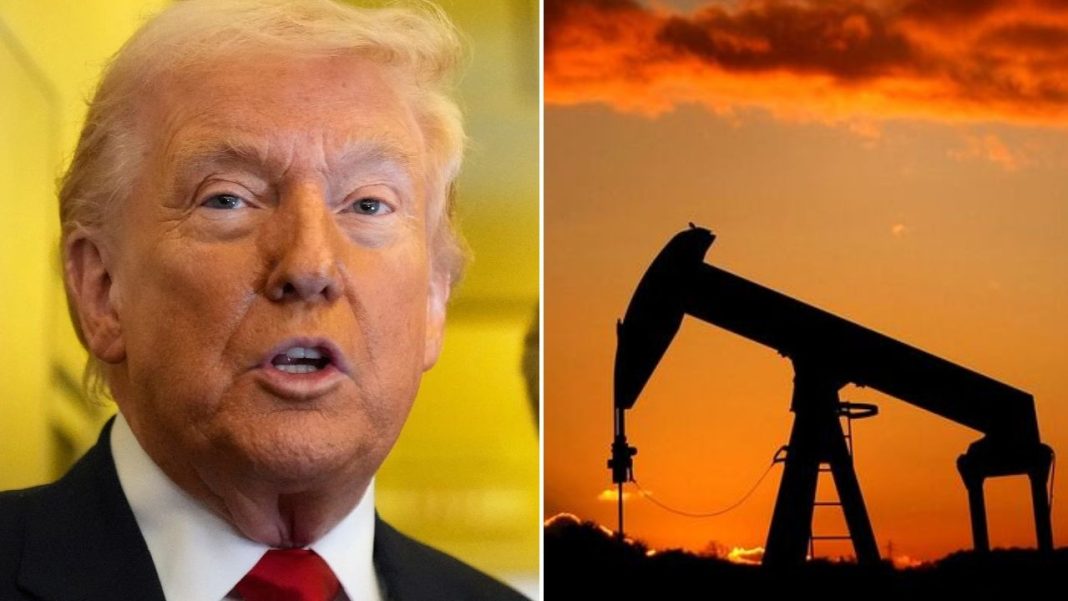
The global energy landscape is perpetually in flux, and few commodities dictate international economics quite like crude oil. For a nation like India, heavily reliant on imports to fuel its massive economy, every fluctuation in global oil prices sends ripples through households and industries alike. A recent report indicating that former US President Donald Trump is reviewing options to bring soaring oil prices under control, should he return to the White House, has thus garnered significant attention, particularly in energy-hungry markets like ours.
While still in the realm of potential future policy, the mere contemplation of such strategies by a figure of Trump’s global stature underscores the urgency of the oil price issue. For India, which imports over 85% of its crude oil needs, understanding the various levers a US administration might pull, and their potential ramifications, is crucial for economic planning and stability.
Global Volatility and Trump’s Historical Approach
Oil prices have witnessed significant volatility in recent years, driven by a complex interplay of geopolitical tensions, supply chain disruptions, and shifting demand patterns. Conflicts in Eastern Europe and the Middle East, coupled with production decisions by OPEC+ nations, have kept the market on edge. These factors have pushed crude benchmarks upwards, directly impacting consumer prices at the pump and adding inflationary pressure worldwide.
During his previous term, Trump’s approach to energy policy was marked by a strong emphasis on “energy independence” and boosting domestic oil and gas production, primarily through hydraulic fracturing (fracking). This strategy, aimed at increasing global supply, often put him at odds with environmental regulations but contributed to lower prices at the time. Reports now suggest his team is exploring similar, if not expanded, avenues. These could range from encouraging more US drilling and exports, releasing oil from the Strategic Petroleum Reserve (SPR), to leveraging diplomatic pressure on OPEC+ nations or even reconsidering sanctions on oil-producing countries like Iran and Venezuela, depending on the desired outcome.
India’s Vulnerability: A Consumer’s Perspective
For India, the implications of soaring oil prices are profound and multi-faceted. As the world’s third-largest oil consumer, every dollar increase in the price of a barrel of crude significantly inflates the nation’s import bill. This not only strains the Current Account Deficit (CAD) but also exerts downward pressure on the Indian Rupee, making all imports more expensive and potentially fueling inflation.
High crude prices directly translate to higher petrol and diesel prices for Indian consumers and businesses. This, in turn, impacts transportation costs, raises input prices for manufacturing and agriculture, and contributes to overall inflationary trends, affecting the common person’s purchasing power. The Indian government also faces a delicate balancing act, often absorbing some of the price shock through taxation adjustments, but sustained high prices can limit fiscal space for other developmental initiatives. As energy expert Dr. Meenakshi Singh noted in a recent seminar, “India’s economic resilience is inextricably linked to stable and predictable global energy markets. Any major policy shift by a global player like the U.S. has to be meticulously analyzed for its domino effect on our economy.” India has, in recent times, diversified its oil procurement, including increasing imports from Russia at discounted rates, a strategy that underscores its pragmatic approach to energy security in a volatile world.
Potential Policy Tools and Their Ramifications
Should Trump indeed return to office and prioritize bringing oil prices down, the tools at his disposal would be diverse, each with its own set of potential outcomes. Ramping up US domestic production could indeed increase global supply, theoretically pushing prices lower. However, this often faces environmental opposition and takes time to impact markets significantly. Releasing oil from the Strategic Petroleum Reserve offers a quicker, albeit temporary, fix for supply shortfalls. The effectiveness of diplomatic pressure on OPEC+ hinges on geopolitical leverage and the cartel’s internal cohesion. Furthermore, while easing sanctions on countries like Iran or Venezuela could bring more oil to market, such decisions are laden with complex foreign policy implications and might not align with broader geopolitical strategies.
Conversely, some hawkish approaches, such as tightening sanctions on certain producers, could inadvertently reduce supply and push prices even higher, counteracting the stated goal. The challenge for any US administration would be to devise a coherent strategy that balances domestic economic needs with global energy realities and geopolitical objectives.
For India, these potential policy maneuvers by a future US administration are not just abstract economic discussions. They represent tangible factors that could either alleviate inflationary pressures and support economic growth or exacerbate existing challenges. India will continue to closely monitor these developments, focusing on strengthening its own energy security through diversification, strategic reserves, and fostering domestic renewable energy sources, thereby mitigating the impact of global oil price volatility.
The report about Trump reviewing options underscores the pervasive influence of US policy on global energy markets. For India, it’s a reminder that while domestic policies are crucial, navigating the unpredictable currents of international politics and economics remains an ongoing imperative in securing its energy future.

