


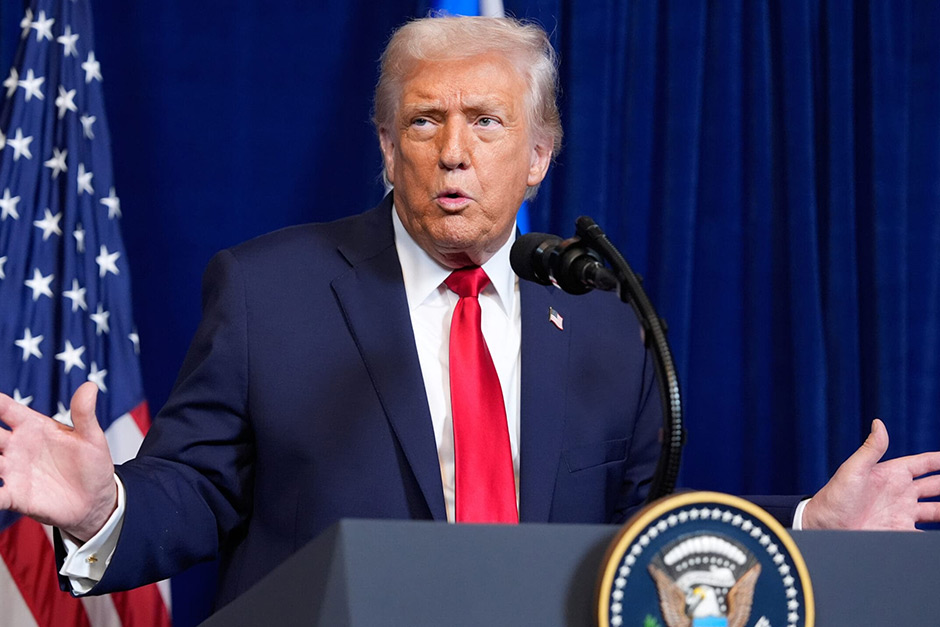
In a significant development echoing across global news desks, including those keenly observing developments from India, President Donald Trump has initiated the withdrawal of National Guard troops from several major American cities. Chicago, Los Angeles, and Portland, which have been flashpoints for protests and federal intervention, are seeing the reduction of federal presence following a series of court setbacks. The President’s announcement, accompanied by a resolute statement about potential future action, has reignited critical debates surrounding states’ rights, federal authority, and the delicate balance of law and order in a turbulent nation.
The decision comes after weeks, and in some cases months, of heightened tensions. Cities like Portland, in particular, had become a crucible for demonstrations against racial injustice and police brutality, drawing both local and federal law enforcement into prolonged confrontations. The deployment of federal agents, often without clear identification or direct coordination with local authorities, sparked outrage among state and city officials, who viewed it as an overreach and an infringement on their constitutional autonomy. For many observers in India, accustomed to debates on central government intervention in state matters, the parallels in these federal-state power dynamics in the U.S. have been particularly compelling.
The Legal Battleground: Courts Push Back on Federal Overreach
The withdrawal is a direct consequence of a series of legal challenges that questioned the legality and scope of the federal deployments. State attorneys general and civil liberties groups launched lawsuits arguing that the Trump administration exceeded its constitutional authority by deploying federal personnel to quell protests without the explicit invitation or consent of local governments. These suits often highlighted instances of federal agents making arrests far from federal property, using aggressive crowd control tactics, and allegedly violating citizens’ First Amendment rights.
One notable setback came from federal courts ruling that federal agents could not arbitrarily arrest protesters or use certain crowd control methods against peaceful demonstrators. While the administration maintained that its actions were necessary to protect federal property and personnel, as well as to restore order where local authorities were perceived to have failed, the judiciary largely sided with the states’ arguments for jurisdiction. These rulings underscored the robust system of checks and balances inherent in the American constitutional framework, a principle that resonates deeply in other democracies with federal structures, including India.
Critics of the federal intervention argued that the presence of camouflaged, heavily armed agents often inflamed situations rather than de-escalated them, turning peaceful demonstrations violent. Governors and mayors across the affected cities consistently called for the withdrawal of federal forces, asserting their capacity to manage local law enforcement issues and decrying what they perceived as a provocative and unconstitutional show of federal strength. The pushback from state capitals against Washington D.C. demonstrated a significant constitutional struggle, reminding the world of the nuanced nature of federalism even within established democracies.
“We Will Come Back When…”: A Conditional Retreat
President Trump’s announcement, while confirming the withdrawals, was not without a characteristic caveat. Speaking from the White House, he stated,
“We had to pull back, for now. The courts, in their infinite wisdom, have made it clear they want to try their own way. But let me be absolutely clear: if the cities descend into chaos again, if federal property is threatened, if innocent lives are at risk, we will come back. And we will come back stronger, with clear mandates, when the American people demand true law and order, not just rhetoric.”
This statement signals a conditional retreat, leaving the door open for future federal re-intervention if the administration deems it necessary. It also frames the decision not as an admission of overreach, but as a temporary concession to judicial rulings, implying a continuing commitment to a “law and order” stance that resonates strongly with his political base.
The President’s remarks suggest that the debate over federal intervention in local disturbances is far from over. With a contentious election looming, the issue of urban unrest, and the appropriate response to it, remains a potent political wedge. The withdrawal, while alleviating immediate tensions in the streets, has shifted the battleground from the physical streets to the political and legal arenas, setting the stage for ongoing scrutiny of local governance and federal oversight.
Implications for American Governance and Beyond
The withdrawal of federal troops marks a complex chapter in American governance, highlighting the persistent tensions between federal and state powers, especially during times of social unrest. For international observers, including those in India, these events offer critical insights into the resilience and challenges of democratic institutions. India, with its own history of state-centre dynamics and debates over law enforcement, watches closely as a global superpower navigates its internal divisions.
The coming weeks and months will reveal how local authorities in Chicago, Los Angeles, and Portland manage the ongoing protests without the federal presence. It will also test the mettle of the judiciary’s ability to delineate federal and state powers, reinforcing the principle that even in moments of perceived crisis, constitutional boundaries must be respected. The conditional nature of Trump’s withdrawal ensures that the discussion around federal intervention, and the President’s interpretation of his executive authority, will remain a central theme in the run-up to the elections, influencing not only domestic policy but also international perceptions of American stability.
Ultimately, this development underscores the dynamic interplay between executive authority, judicial review, and the rights of individual states within a federal system – a perpetual dance that defines mature democracies around the world.

