


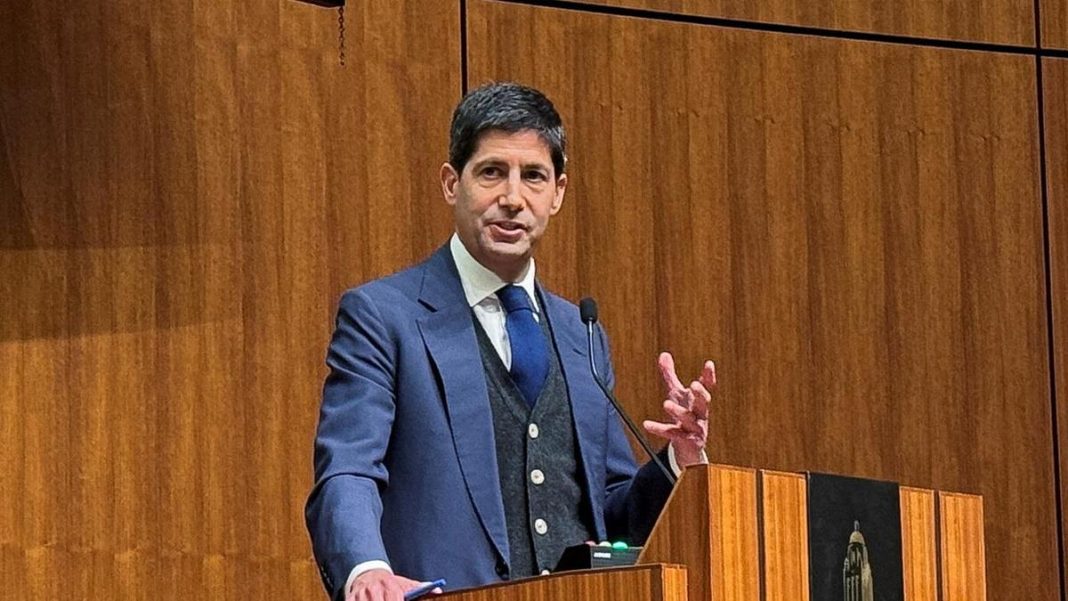
In a significant move that sent ripples across global financial markets, the White House today announced President Donald Trump’s decision to name Kevin Warsh, a former Federal Reserve Governor, as the next Chairman of the Federal Reserve. Warsh will succeed Jerome Powell, whose term concludes, marking a pivotal shift at the helm of the world’s most influential central bank.
The appointment, widely anticipated but nonetheless impactful, signals a potential new direction for U.S. monetary policy and is expected to have far-reaching implications, not least for emerging economies like India. Warsh’s known leanings and background suggest a Chairman poised to bring a different philosophy to interest rate decisions, quantitative easing, and financial regulation, compared to his predecessor.
Warsh’s Background and Policy Outlook
Kevin Warsh is a familiar figure in central banking circles, having served as a Federal Reserve Governor from 2006 to 2011 during a tumultuous period that included the 2008 financial crisis. Prior to his tenure at the Fed, Warsh served as Special Assistant to the President for Economic Policy and Executive Secretary of the National Economic Council under President George W. Bush. His career has also spanned investment banking, giving him a unique perspective bridging Wall Street and Washington.
Analysts generally characterise Warsh as a monetary hawk, often advocating for a stronger focus on inflation control and a less interventionist approach to monetary policy compared to some of his contemporaries. His past statements have also indicated a preference for normalising the Fed’s balance sheet and potentially reducing the central bank’s footprint in financial markets. Such an approach could mean a more data-dependent stance on interest rates, with a potential for quicker responses to inflationary pressures.
The transition from Powell to Warsh is also viewed through the lens of political alignment. President Trump had often expressed his desire for lower interest rates and a more accommodative monetary policy during Powell’s term. While Warsh is an independent thinker, his appointment may reflect a desire for a Fed Chair whose overarching economic philosophy aligns more closely with the administration’s growth agenda, albeit with a focus on stable prices.
Global Market Reactions and Indian Implications
The immediate reaction in global markets was a mix of volatility and speculation. U.S. Treasury yields saw initial fluctuations, and the dollar strengthened as investors began to price in the implications of a Warsh-led Fed. The equity markets, particularly sectors sensitive to interest rate changes, are bracing for potential shifts.
For India, the appointment of a new Fed Chair with potentially different policy inclinations carries significant weight. A more hawkish Fed, signalling a greater willingness to raise interest rates to combat inflation or to quickly normalise monetary policy, could lead to a strengthening U.S. dollar. This scenario typically puts pressure on emerging market currencies, including the Indian Rupee. A depreciating rupee can make imports more expensive, particularly crude oil, which is a major concern for India’s trade balance and inflationary outlook.
Furthermore, higher interest rates in the U.S. could make dollar-denominated assets more attractive, potentially triggering capital outflows from Indian markets. Foreign Portfolio Investors (FPIs) often reallocate funds based on global interest rate differentials, and a shift towards higher returns in the U.S. could impact liquidity in Indian equities and debt markets. The Reserve Bank of India (RBI) will be closely monitoring Warsh’s initial statements and actions to calibrate its own monetary policy decisions, ensuring financial stability and managing inflationary pressures domestically.
“This appointment injects a significant element of uncertainty into the global monetary policy landscape,” stated Dr. Priya Sharma, a Mumbai-based economist specialising in international finance. “While Warsh’s intellectual credentials are strong, markets will be keenly watching for clues on the speed and trajectory of interest rate adjustments and the Fed’s balance sheet normalisation. For India, this means heightened vigilance on capital flows and currency movements, necessitating a cautious stance from the RBI.”
Looking Ahead: A New Era?
Kevin Warsh’s tenure as Fed Chair will undoubtedly usher in a new era for U.S. monetary policy, one that could diverge significantly from the post-financial crisis approach. His challenge will be to navigate a complex global economic environment, balancing inflation control with economic growth, and maintaining the Fed’s crucial independence amidst political pressures.
For India and other emerging economies, staying abreast of these developments will be paramount. The ripple effects of decisions made in Washington D.C. frequently determine the flow of capital, currency valuations, and, ultimately, the economic trajectory across continents. The coming months will provide critical insights into the direction of Warsh’s Fed and its broader implications for the global financial ecosystem.
*

