


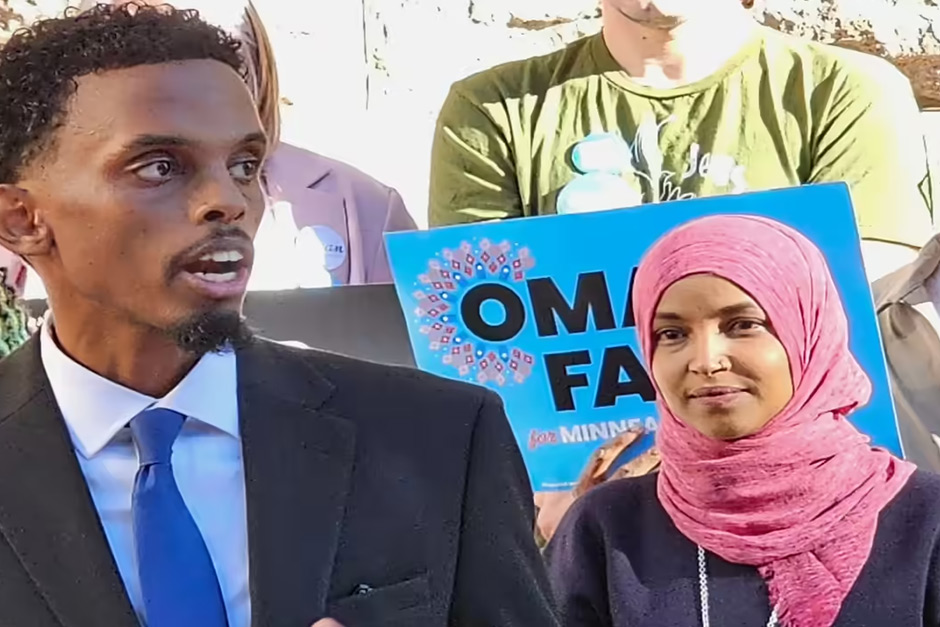
The global news cycle often magnifies political rhetoric, sometimes obscuring the complex realities it purports to describe. Such was the case recently when former US President Donald Trump, during a campaign rally, ignited what media outlets termed a “garbage row” by criticising Congresswoman Ilhan Omar and, by extension, the Somali community in Minnesota. His remarks, though controversial, inadvertently drew global attention to a demographic phenomenon often overlooked: the presence of an estimated 80,000 Somali immigrants and their descendants in the US state of Minnesota.
For Indian readers observing international affairs, this situation offers a compelling lens through which to understand global migration patterns, the establishment of diasporas, and the intricate weave of culture and economy in new lands. Beyond the political soundbites, the story of why Minnesota became home to such a significant Somali population is one of humanitarian crises, deliberate resettlement efforts, and the human search for safety and opportunity.
The Genesis of a Diaspora: From Civil War to the North Star State
The journey of Somalis to Minnesota begins with a profound humanitarian crisis in their homeland. In the late 1980s and early 1990s, Somalia plunged into a devastating civil war, tearing apart its social fabric and leading to widespread violence, famine, and state collapse. Millions were displaced, becoming refugees in neighbouring countries and, eventually, seeking asylum further afield. The United States, through its refugee resettlement programmes, became a destination for many fleeing the conflict.
But why Minnesota, a state far removed geographically and climatically from the Horn of Africa? The answer lies in a confluence of factors. Initial resettlement agencies, particularly the Lutheran Social Service of Minnesota, played a crucial role. These organisations actively sought out safe havens for refugees and found Minnesota to be a state with a robust social safety net, affordable housing, and a welcoming, albeit cold, environment. Early arrivals often found entry-level jobs in sectors like manufacturing, meatpacking plants, and healthcare support, which provided a foothold for economic integration.
Crucially, a significant element of chain migration took hold. As the first wave of Somalis settled and found stability, they sponsored relatives and friends, encouraging them to join the established community. This organic growth was reinforced by Minnesota’s reputation for good public services, including schools and healthcare, and its relatively lower cost of living compared to major coastal cities. The concentration of Somalis meant the nascent community could build critical social and cultural infrastructure – mosques, Somali-owned businesses, and community centres – which further attracted new arrivals seeking familiarity and support in a foreign land.
Building a New Home: Challenges, Contributions, and Cultural Richness
The establishment of the Somali community in Minnesota was not without its challenges. Immigrants faced significant hurdles, including language barriers, cultural adjustments, and sometimes, prejudice and discrimination. Economic integration has been an ongoing process, with many striving to move beyond initial entry-level positions into professional roles. Yet, the community has shown remarkable resilience and a strong drive to build a new life for themselves and future generations.
Over the decades, Somali-Americans have profoundly contributed to Minnesota’s social, economic, and political landscape. They have revitalized urban neighbourhoods, established thriving businesses, and enriched the state’s cultural tapestry with their traditions, cuisine, and vibrant community life. Perhaps most notably, the community has achieved significant political representation, with figures like Ilhan Omar serving in the US Congress – a testament to their growing influence and civic engagement. Their story is a powerful example of how refugee communities, when provided with opportunity and support, can thrive and contribute meaningfully to their adopted societies.
As Abdi Mahad, a prominent community advocate in Minneapolis, once observed, “Many came fleeing violence, seeking peace and opportunity. Minnesota offered a chance to rebuild lives, and in doing so, Somalis have added immeasurable value to the state, shaping its future in profound ways.” This sentiment underscores the human dimension often lost in political rhetoric, highlighting the aspirations and perseverance that drive migration.
Conclusion: Beyond the Headlines, Understanding a Human Story
The “Trump garbage row” and the subsequent focus on Minnesota’s Somali population serve as a reminder that large-scale migration is rarely a simple issue, nor is it the result of a singular factor. It is, almost invariably, a complex human story shaped by war, displacement, the search for safety, and the hope for a better future. For Indian audiences, who understand the vastness of global diasporas and the challenges of resettlement, the Minnesota story resonates with universal themes of resilience and community building.
Ultimately, the presence of 80,000 Somali immigrants in Minnesota is a powerful testament to the state’s historical role in refugee resettlement, the strength of community networks, and the enduring human spirit to overcome adversity. It is a narrative far richer and more nuanced than any political soundbite could ever convey, inviting us to look beyond sensational headlines and appreciate the intricate realities of a diverse and interconnected world.

