


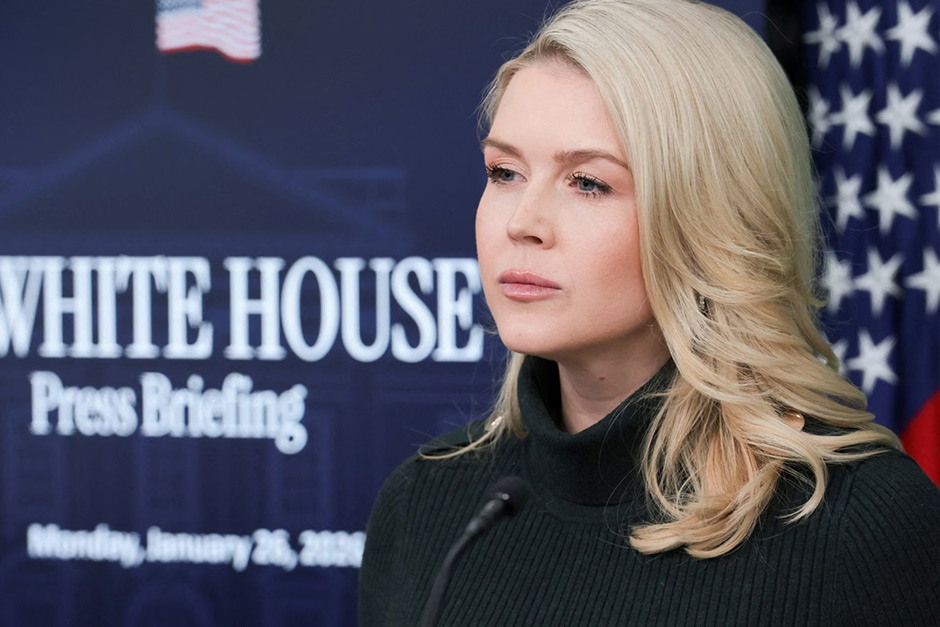
Washington D.C. has once again become the focal point of a contentious global debate, as the White House recently reiterated its defense of robust immigration enforcement, including deportation drives. Amid widespread criticism regarding the perceived harshness of these policies, the administration clarified its stance, asserting that President Trump “does not want to see people hurt.” This statement comes as part of an ongoing narrative seeking to balance the often-conflicting objectives of national security, economic protection, and humanitarian concerns, with implications that resonate from American streets to the bustling homes of the Indian diaspora.
The White House’s Stance: Balancing Law and Empathy
The assertion from the White House aims to reframe the narrative surrounding the Trump administration’s hardline immigration approach. Officials have consistently argued that the President’s actions are driven by a commitment to the rule of law and the security of American citizens, not a desire for harm. The administration’s argument posits that those who enter the country unlawfully or overstay their visas are breaking existing laws, and enforcement is a necessary function of sovereign governance. This perspective often highlights the drain on public resources, potential security risks, and the need to maintain an orderly immigration system as primary drivers behind the crackdown.
Policies such as “zero tolerance” at the border, increased ICE raids, and expedited deportations have been hallmarks of this administration. While these measures are presented as essential for national security and economic stability, they have drawn sharp criticism from human rights organizations, civil liberties advocates, and various international bodies. The White House’s latest statement attempts to bridge this gap, suggesting that while enforcement is firm, it is not malicious. Instead, it positions the actions as a consequence of upholding legal frameworks, designed ultimately to protect the well-being and legal rights of citizens, rather than inflict harm on individuals undergoing deportation proceedings.
Global Repercussions and the Indian Diaspora
The reverberations of U.S. immigration policies are felt far beyond American borders, significantly impacting diverse global communities, including the substantial Indian diaspora. India has one of the largest expatriate communities in the United States, comprising professionals, students, and families, many of whom navigate complex visa categories like the H-1B and the lengthy green card process. The prevailing climate of heightened immigration enforcement, coupled with rhetoric that can sometimes be perceived as unwelcoming, has generated considerable anxiety among Indian-Americans and Indians aspiring to live and work in the U.S.
While the most visible cases of family separation and mass detentions have often involved migrants from Central and South America, the increased scrutiny and enforcement have had a chilling effect across all immigrant communities. Reports of individuals with pending legal statuses or those who have overstayed their visas being caught in immigration sweeps, though perhaps less publicised for Indian nationals, contribute to a pervasive sense of uncertainty. For many Indian families, the dream of a better life in America is intertwined with the stability of immigration laws, and any perceived tightening sends ripples of concern.
Amidst this backdrop, community leaders often find themselves advocating for a balance that respects sovereign laws while upholding humanitarian values. “The landscape of U.S. immigration policy is undoubtedly complex, and the White House’s commitment to avoiding harm is a sentiment many would echo,” observed Dr. Priya Singh, a prominent Indian-American immigration expert. “However, the practical application of enforcement often creates immense distress and disruption for families, regardless of intent. For the Indian diaspora, the focus remains on ensuring transparent, fair processes that acknowledge the contributions immigrants make to American society.” This perspective underscores the nuanced challenge of reconciling policy objectives with human impact.
Conclusion: A Continuous Dialogue
The White House’s defense that President Trump “does not want to see people hurt” in the context of its deportation push highlights the persistent tension between enforcing national immigration laws and addressing the humanitarian consequences of such enforcement. For the global community, and particularly for nations like India with significant populations residing in or aspiring to migrate to the U.S., these statements are more than mere political rhetoric. They influence the everyday lives, future plans, and emotional well-being of millions.
As the debate continues to unfold, finding common ground that upholds national interests while safeguarding human dignity remains a monumental challenge. The discussion requires not just a clarification of intent from policymakers, but also an ongoing, empathetic engagement with the real-world experiences of those directly affected by immigration policies, ensuring that the human cost is always considered alongside legal imperatives.

