


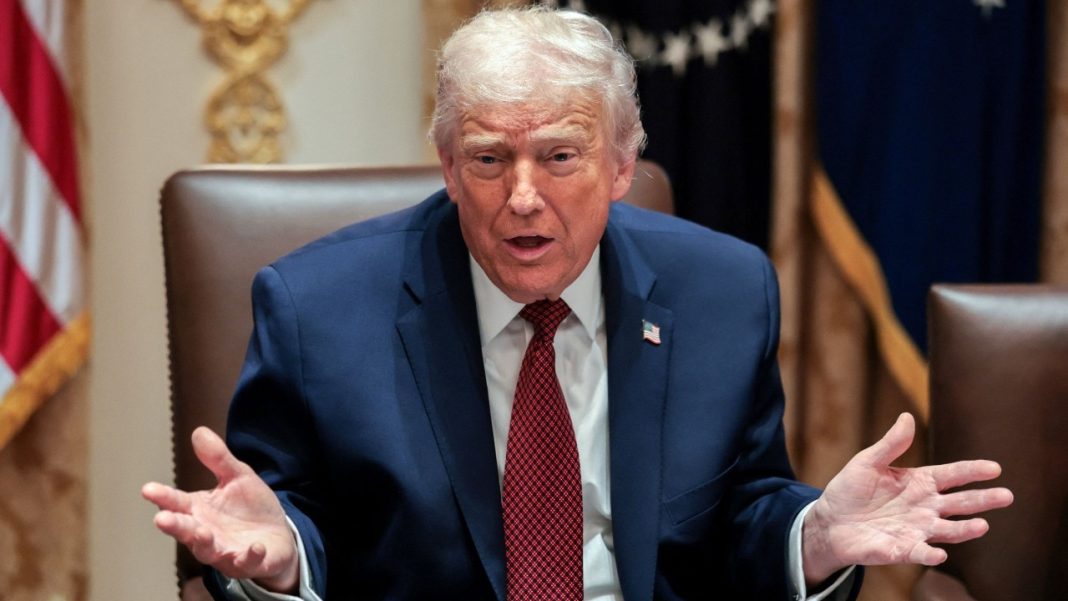
The delicate balance of international trade between the United States and India is once again under scrutiny, with reports emerging that former President Donald Trump is considering imposing fresh tariffs on Indian rice exports. This potential move stems from allegations by US farmers who claim that Indian rice is being unfairly “dumped” into the American market, harming domestic producers. As India stands as the world’s largest rice exporter, such tariffs could have significant repercussions for millions of Indian farmers and the nation’s agricultural economy.
The Allegations: US Farmers’ Concerns Over “Unfair Dumping”
The core of the dispute lies in the accusation of “dumping,” an economic term referring to the practice of a country exporting goods at a price lower than their domestic market price, or even below their cost of production. US rice farmers argue that Indian rice, particularly certain varieties, is entering the American market at prices that are artificially low, creating an unfair competitive environment. This, they contend, makes it challenging for American growers to sell their produce, impacting their livelihoods and the viability of their operations.
While specific evidence supporting these claims in the US context has yet to be widely disclosed, such allegations often point to government subsidies provided to farmers in the exporting country. India’s agricultural sector benefits from various support mechanisms, including minimum support prices (MSPs) for certain crops like paddy, and subsidies for fertilisers, water, and power. US farmers and trade bodies often view these subsidies as providing an unfair advantage, enabling Indian exporters to offer rice at prices that do not reflect true market costs.
India’s Stance and Potential Economic Impact
For India, the prospect of tariffs on rice exports is a grave concern. The country’s agricultural sector, particularly rice cultivation, is a cornerstone of its economy, employing a substantial portion of the rural workforce. In the fiscal year 2022-23, India exported approximately 22 million metric tonnes of rice, reinforcing its dominant position in the global market. Any disruption to this trade flow could lead to significant economic distress.
The Indian government is expected to vehemently defend its agricultural policies, asserting that subsidies are crucial for ensuring food security for its vast population and supporting the livelihoods of small and marginal farmers. Officials would likely argue that these measures are compliant with World Trade Organization (WTO) rules and are not designed to distort international markets.
Should tariffs be implemented, the immediate impact would be felt by Indian rice exporters, who would either have to absorb the additional cost, making their product less competitive, or pass it on to US consumers, potentially reducing demand. This could, in turn, lead to a drop in domestic rice prices in India, severely affecting the income of farmers across major rice-producing states like Punjab, Haryana, Uttar Pradesh, and West Bengal.
“These allegations of dumping often overlook the complex socio-economic realities of Indian agriculture,” commented a senior agricultural economist, requesting anonymity due to the sensitive nature of bilateral trade discussions. “Our support mechanisms are vital for our food security and to uplift millions of farmers. Any tariff imposition based on such claims would not only be a blow to Indian exports but could also destabilise a critical global food supply chain.”
Broader Geopolitical and Economic Implications
This development is not an isolated incident but rather fits into a broader pattern of trade protectionism that gained prominence during the previous Trump administration. The US-India trade relationship has witnessed several points of friction in recent years, including disputes over steel and aluminium tariffs, and India’s withdrawal from the Generalized System of Preferences (GSP) program. While bilateral trade has generally grown, these episodes underscore underlying tensions.
The consideration of rice tariffs also highlights the ongoing debate about global trade rules, agricultural subsidies, and the balance between national interests and international market stability. If the US proceeds with tariffs, it could potentially escalate into a wider trade dispute, prompting India to consider retaliatory measures, further straining the diplomatic and economic ties between the two strategic partners.
For global rice markets, restrictions on Indian exports could have far-reaching consequences, potentially leading to price volatility and supply shortages in countries heavily reliant on Indian rice. As discussions unfold, the global community will be watching closely to see how this potential trade challenge is navigated, with significant implications for both agricultural economies and the future of international trade relations.
The prospect of fresh tariffs on Indian rice adds another layer of complexity to the evolving US-India relationship. While US farmers seek protection from alleged unfair competition, Indian farmers and exporters face the daunting challenge of maintaining their access to a crucial market. The path forward will undoubtedly require careful diplomatic negotiation and a nuanced understanding of the economic realities on both sides to prevent a significant disruption to global food trade.

