


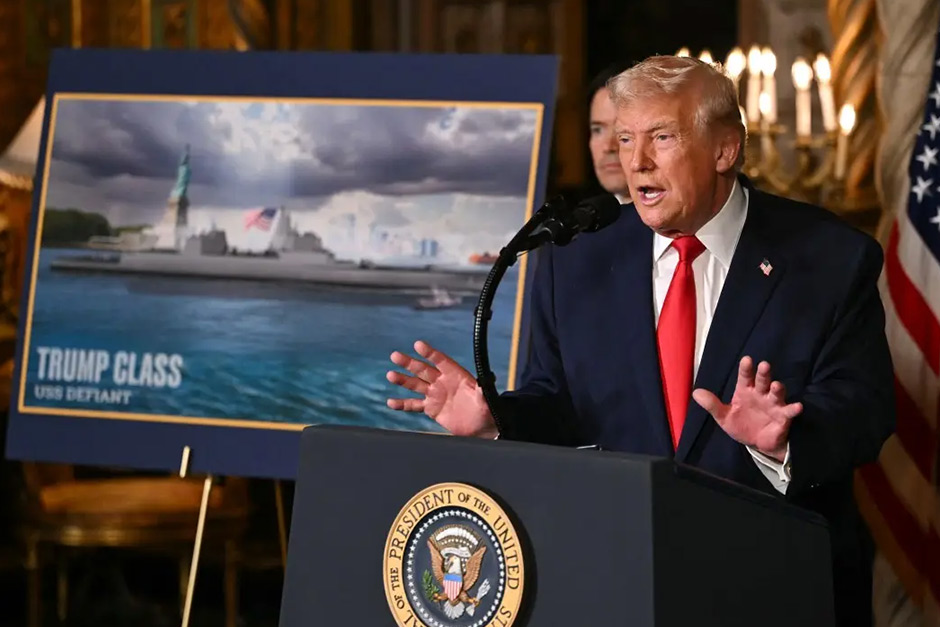
The Indo-Pacific, a crucible of global geopolitical rivalry, sees the United States charting a formidable strategy to counter China’s burgeoning naval might. Central to this is a substantial investment in advanced warships – a drive sometimes linked to “Trump-era” naval capabilities. These ambitious, technologically sophisticated programs aim to project undeniable American power and deter Chinese aggression. Yet, this formidable approach carries an equally formidable price tag, sparking a critical debate: is this a bold, necessary move for global stability, or a financially perilous gamble with long-term implications for the US and the world?
The Quest for Naval Hegemony: Deterrence in the Indo-Pacific
The US Navy’s push for more numerous and advanced warships is driven by a clear rationale: to maintain strategic advantage against China’s rapid naval expansion and assertive actions in the South China Sea. Vessels like the Gerald R. Ford-class aircraft carriers, Virginia-class submarines, and planned next-generation destroyers represent the pinnacle of modern naval engineering, designed for high-intensity conflict and sustained operations.
Proponents argue these vessels are essential for deterrence. Their presence in critical choke points, such as the Taiwan Strait, signals American resolve and capability, theoretically making any aggressive action by China too costly. This strategy aims to uphold the “rules-based international order” and ensure freedom of navigation, vital for global trade and nations like India. The belief is an overwhelmingly powerful US Navy can prevent conflict. As one strategic analyst commented, “The objective isn’t merely to win a war, but to make the prospect of conflict so devastatingly clear that it’s never initiated.” This robust presence also reassures allies and partners, strengthening collective security.
The Price Tag: A Risky Financial Voyage?
While the strategic imperative for a powerful navy is undeniable, its financial implications raise serious questions. The cost of building and maintaining cutting-edge warships is astronomical. A single Gerald R. Ford-class aircraft carrier, for instance, costs upwards of $13 billion, with operational costs running into billions more over its lifespan. The goal of a 355-ship navy, often associated with previous administrative ambitions, demands unprecedented defense spending for decades.
Critics argue such capital-intensive focus could prove a “financial gamble.” Immense resources diverted could strain the US national debt, leading to difficult choices in other critical areas like social programs, infrastructure, or even other defense priorities like cyber warfare. There’s also the risk of technological obsolescence; investing heavily in today’s platforms might leave the US vulnerable to future, asymmetric threats. Some question the effectiveness of these colossal investments against swarms of cheaper drones, advanced anti-ship missiles, or sophisticated cyberattacks – often termed the “missile gap” versus the “carrier gap.”
An Indian Perspective: Navigating the Geopolitical Currents
For India, a significant maritime power with its own strategic interests in the Indo-Pacific, the US naval buildup against China presents a complex tableau. On one hand, a strong American presence helps balance China’s growing assertiveness in the Indian Ocean Region, contributing to regional stability and upholding freedom of navigation. India, a participant in multilateral groupings like the Quad, finds common ground with the US in promoting an open and free Indo-Pacific. The strategic reassurance offered by a robust US Navy is certainly a factor in New Delhi’s calculations.
On the other hand, India maintains strategic autonomy, wary of direct superpower entanglement. The sheer scale of US naval spending highlights immense global disparities in naval capacity. While India steadily modernizes its own navy, indigenous shipbuilding operates on a vastly different financial scale. New Delhi carefully observes these dynamics, understanding that increased tensions could impact trade routes, regional security, and its evolving relationships with both the US and China. The financial sustainability of such an aggressive naval posture, from an Indian viewpoint, is a crucial determinant of long-term regional stability, beyond just short-term deterrence.
The debate surrounding the US Navy’s ambitious shipbuilding strategy – its formidable naval might often linked to “Trump-era” goals – embodies a profound dilemma. Is it an indispensable bulwark against rising Chinese power, or a fiscally unsustainable commitment potentially undermining long-term American strength? The strategic imperative to deter China and safeguard a rules-based international order is compelling, particularly for nations like India. Yet, the astronomical costs raise legitimate concerns about fiscal responsibility and opportunity costs. As the Indo-Pacific remains a focal point of global power dynamics, how the US balances strategic ambitions with economic realities will shape the geopolitical landscape for decades.

