


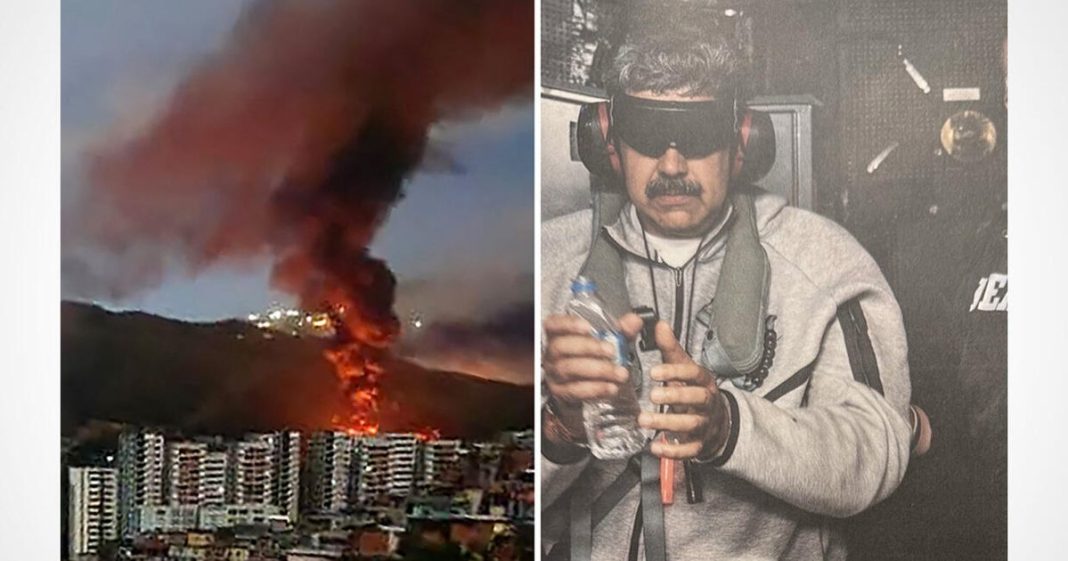
When a former U.S. President declares his nation is ‘in charge’ of another sovereign country, Venezuela, especially as that country’s leader, Nicolas Maduro, faces an indictment in a foreign court, you know the geopolitical temperature has just spiked. This isn’t merely political grandstanding; it’s a dramatic convergence of power plays, legal challenges, and the perennial debate over national sovereignty. The implications ripple far beyond the immediate headlines, touching on international law, diplomatic norms, and the very fabric of global relations.
When “In Charge” Means More Than It Seems
Donald Trump’s assertion that the U.S. is “in charge” of Venezuela is a statement laden with historical echoes and potent geopolitical implications. It harks back to eras where powerful nations openly declared spheres of influence, often with military or economic muscle to back them up. In the context of contemporary international relations, where the principles of national sovereignty and non-interference are theoretically sacrosanct, such a direct claim is astonishingly bold.
What does it signify? Is it a literal declaration of intent to assume administrative control, a stark challenge to the Maduro government’s legitimacy, or perhaps a signal to other global powers about the U.S.’s perceived dominance in the Western Hemisphere? Regardless of its immediate practical enforceability, the claim itself reshapes the narrative. It places the U.S. firmly in a perceived overseer role, challenging Venezuela’s autonomy and international standing in a way that goes beyond traditional sanctions or diplomatic pressure.
As one seasoned observer of Latin American politics recently remarked, “Such declarations, regardless of their immediate enforceability, send potent signals about perceived spheres of influence, challenging the very bedrock of national sovereignty in the eyes of many. It’s a bold assertion that can neither be ignored nor easily dismissed, shaping expectations and responses across the region.” This kind of rhetoric isn’t just talk; it’s a strategic move, often designed to project strength and define a posture in an ongoing international dispute.
Maduro’s Legal Tightrope: A Stage for International Drama
In parallel to these sweeping geopolitical claims, Nicolas Maduro faces a very real, very concrete legal challenge: a looming court appearance in a foreign jurisdiction on drug trafficking charges. The absurdity of a sitting head of state being expected to appear in a U.S. court, on charges originating from the U.S., underscores the unconventional nature of the entire situation. It’s an indictment that, while unlikely to result in Maduro physically standing trial any time soon, serves as a powerful instrument of international pressure and delegitimization.
This legal pressure is intrinsically linked to the broader U.S. policy towards Venezuela. The charges provide a legal framework for Washington’s stance against Maduro, portraying his government not just as authoritarian, but as criminal. It’s an attempt to isolate him further on the global stage, making it difficult for other nations to engage with his regime without implicitly condoning the alleged illicit activities. The court date, therefore, becomes less about jurisprudence and more about a strategic play in a high-stakes political game, where legal tools are wielded to achieve political ends.
The juxtaposition of Trump’s “in charge” claim and Maduro’s legal woes creates a compelling narrative of a nation under immense external pressure. It highlights the intricate dance between international law, the raw exercise of power, and the contested notion of national sovereignty in the 21st century. The drama unfolding in Venezuela is a stark reminder that even in a world governed by international norms, the will of powerful actors can profoundly influence the destiny of sovereign states.
The situation in Venezuela, with its interwoven threads of political declarations and legal challenges, is a fascinating, if concerning, case study in modern geopolitics. It challenges our understanding of national sovereignty, the limits of international law, and the enduring power dynamics between nations. While the immediate future remains uncertain, one thing is clear: the claims made and the legal actions taken will have lasting consequences, shaping not just Venezuela’s path but also the broader landscape of international relations.

