


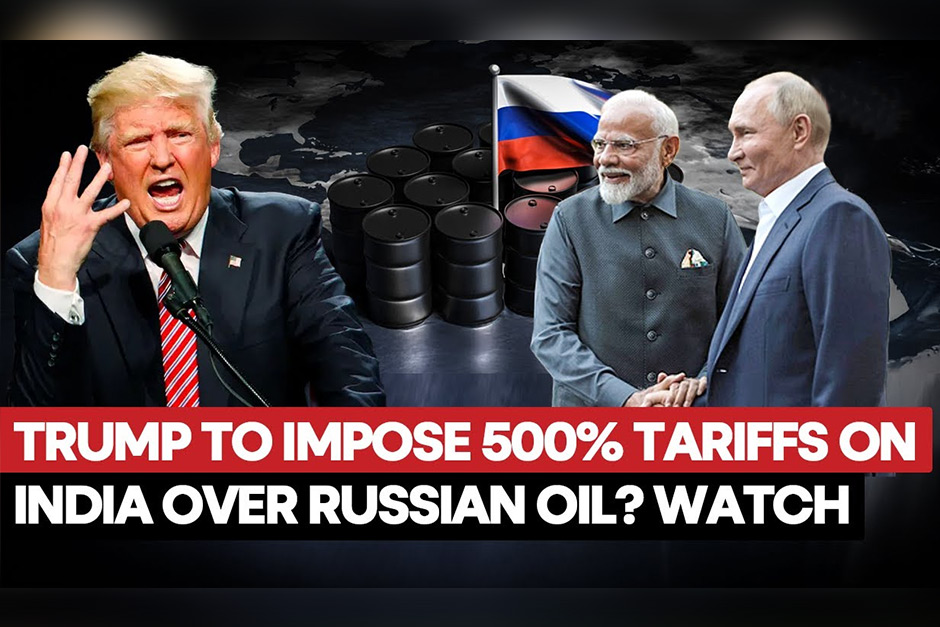
A significant development on the global geopolitical stage is sending ripples of concern across major economies, particularly India. Former US President Donald Trump has reportedly thrown his weight behind a proposed sanctions bill targeting nations that continue to purchase oil from Russia. The bill, if enacted, suggests a colossal 500% tariff on oil purchases made outside the G7 price cap mechanism, with India, China, and Brazil identified as primary targets. This aggressive stance, coming at a time of already volatile global energy markets, raises serious questions about energy security, international trade relations, and the delicate balance of national interests versus global pressures.
The Proposed Tariff and its Enforcement
Details emerging about the proposed legislation indicate a punitive measure designed to dramatically increase the cost of Russian oil for non-compliant nations. The bill reportedly seeks to impose a 500% tariff on any crude oil or refined petroleum products originating from Russia that are purchased at prices exceeding the G7-imposed cap. This cap, set at $60 per barrel for crude, was established to limit Russia’s war revenue while ensuring a stable global oil supply.
Trump’s endorsement amplifies the political weight behind such a proposal, especially as the US presidential election approaches. His “America First” policy historically favored unilateral actions and strong economic leverage. The proponents of the bill argue it would further cripple Russia’s ability to finance its military operations, pushing countries to seek alternative energy sources or adhere strictly to the price cap. However, critics warn that such an aggressive tariff could destabilize global energy markets, leading to price surges and supply shortages for nations heavily reliant on Russian crude due to economic or logistical reasons.
India’s Energy Calculus Under Threat
India has emerged as a significant buyer of Russian crude since the Ukraine conflict began, capitalising on discounted prices. This strategic move has been crucial for India’s energy security, allowing it to manage inflationary pressures and support its rapidly growing economy. Russian oil now accounts for a substantial portion of India’s crude imports, a stark increase from pre-conflict levels.
The potential 500% tariff presents an existential challenge to this strategy. Such an increase would render Russian oil economically unviable for Indian refiners, forcing a rapid and costly pivot to alternative suppliers. This abrupt shift could lead to:
- Increased Import Bills: Sourcing oil from other major producers like Saudi Arabia or the US at market rates, especially if demand spikes, would significantly inflate India’s energy import costs.
- Inflationary Pressures: Higher crude prices inevitably translate to increased fuel costs for consumers and businesses, potentially reigniting inflation and impacting economic growth.
- Supply Chain Disruptions: Reconfiguring supply chains and long-term contracts with new suppliers on short notice would be a complex logistical challenge.
- Geopolitical Strain: The bill could place significant strain on India-US relations, forcing India to make difficult choices between its energy interests and its strategic partnership with the US.
“This proposed tariff is not merely an economic sanction; it’s a direct challenge to India’s energy sovereignty and its right to make purchasing decisions based on national interest,” remarked Dr. Arjun Singh, a leading Indian energy policy analyst. “While India understands the broader geopolitical context, its primary responsibility is to ensure affordable and stable energy for its 1.4 billion citizens. A 500% tariff would fundamentally disrupt that.”
Broader Geopolitical Ramifications
Beyond India, China and Brazil also stand targeted, highlighting a concerted effort to expand the economic pressure on Russia globally. China, a massive energy consumer, has also ramped up its Russian oil imports, albeit often through long-term contracts. Brazil, while less dependent, has also seen increased Russian oil flows. A unified stance from these three major developing economies against such a tariff could have profound implications for global trade governance and the effectiveness of unilateral sanctions.
The proposal also underscores a deepening divide in the global order. While Western nations largely support sanctions against Russia, emerging economies often prioritise their economic stability and non-alignment. This bill threatens to exacerbate that divide, potentially pushing nations closer to alternative economic blocs and challenging the dominance of the US dollar in international energy transactions. The global energy landscape, already grappling with climate transition and supply chain vulnerabilities, stands on the cusp of further uncertainty, with this proposed tariff adding another layer of complexity.
As the debate around this aggressive sanctions bill unfolds, India finds itself at a critical juncture. The decisions made in Washington and New Delhi in the coming months will not only determine the future of India’s energy security but also shape the contours of global economic and geopolitical alliances for years to come. The stakes are undeniably high for all involved, promising a period of intense diplomatic negotiation and strategic re-evaluation.

