


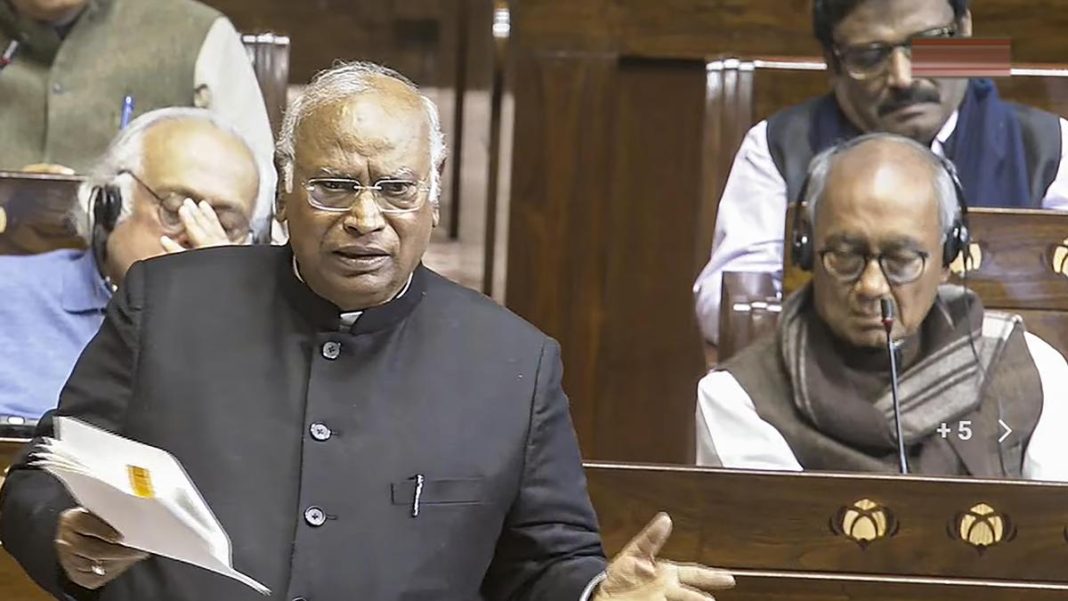
A potential trade deal between India and the United States has ignited a fierce debate, with senior Congress leader Mallikarjun Kharge launching a scathing critique against the government. Kharge has alleged that the proposed agreement, particularly its agricultural provisions, is designed to harm Indian farmers and ultimately destroy the nation’s vital agricultural sector. His comments highlight long-standing concerns about how global trade agreements impact local economies, especially in a country where agriculture remains the primary livelihood for millions.
Opposition Flags Farmer Distress and Sectoral Threat
Mallikarjun Kharge’s strong remarks come amidst ongoing negotiations for a limited trade package between India and the US, which seeks to address various market access issues and reduce tariffs. However, Kharge, in his public statements, asserted that the government’s eagerness to sign such a deal indicates a disregard for the welfare of Indian farmers. “This government is actively working to destroy the agricultural sector and impoverish our farmers by pushing through a trade deal with the US that offers no real protection to our own producers,” Kharge stated, encapsulating the opposition’s fears.
The crux of Kharge’s argument lies in the potential influx of cheaper agricultural products from the US. Sectors like dairy, poultry, and certain fruits and nuts are particularly vulnerable. The US, with its large-scale farming, often benefits from significant subsidies and economies of scale, allowing its products to be more competitively priced in international markets. If India significantly lowers or removes tariffs on these imports, Indian farmers – who often operate on smaller landholdings and face different cost structures – could struggle to compete. This could lead to a severe drop in prices for domestic produce, impacting farmers’ incomes, increasing rural distress, and potentially displacing millions from their traditional livelihoods.
Kharge further contended that opening up the Indian market without adequate safeguards would be a strategic blunder. He pointed to past experiences where trade liberalisation, without careful consideration for domestic sensitivities, led to adverse consequences for specific sectors. The dairy sector, for instance, is a cornerstone of rural economy for countless families, particularly women. Any move that allows cheap dairy imports could destabilise this crucial sector, which is currently largely protected.
Government’s Stance and the Push for Global Integration
While the opposition voices strong objections, the government’s approach to trade deals is typically framed around the larger economic benefits of global integration. Officials often highlight the potential for increased exports of Indian goods, attracting foreign investment, and fostering technological advancements as key drivers for such agreements. The stated objective is to create a more robust and competitive economy, which can in turn generate jobs and improve living standards.
The government’s negotiating teams are tasked with balancing these broader economic goals with the need to protect sensitive domestic sectors. Trade agreements are complex, involving intricate discussions on tariffs, non-tariff barriers, intellectual property rights, and various sectoral considerations. From the government’s perspective, a balanced deal with the US could unlock new opportunities for Indian businesses, particularly in areas where India has a competitive advantage, such as pharmaceuticals, IT services, and certain manufactured goods. They often argue that negotiations include provisions for sensitive sectors, such as phased tariff reductions or specific product exclusions, to mitigate immediate adverse impacts.
However, the concerns raised by Kharge and other farmer advocacy groups underscore the immense pressure on negotiators to ensure that any deal does not compromise the livelihood of the approximately 60% of India’s population dependent on agriculture. The agricultural sector is not just an economic activity; it is deeply intertwined with India’s social fabric, food security, and political stability. Striking a balance between leveraging global trade for economic growth and safeguarding the interests of the vast farming community remains a monumental challenge for policymakers.
The ongoing debate surrounding the potential US trade deal exemplifies the fundamental tension between a nation’s ambition for global economic integration and its responsibility to protect its most vulnerable domestic sectors. As negotiations proceed, all eyes will be on the finer print of the agreement, particularly how it addresses the critical concerns of India’s farmers. The future of a significant portion of the Indian workforce, and indeed the rural economy, hinges on these delicate deliberations.

