


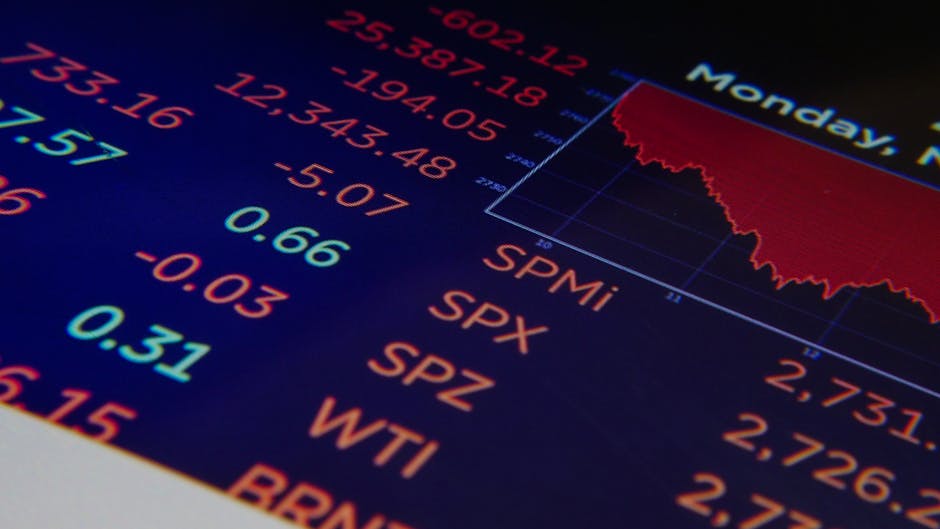
The market is a dynamic beast, constantly shifting, responding to a myriad of forces both seen and unseen. Today, its latest movements present a compelling, if somewhat disquieting, narrative. We’re witnessing a notable downturn in the Nasdaq, often seen as the heartbeat of the tech world, while the price of Brent crude oil has surged past the significant $100 per barrel mark. These aren’t just numbers on a screen; they’re indicators of deeper currents shaping our economic landscape, creating ripples that touch everything from investment portfolios to daily living costs.
The Tech Sector Takes a Breather
The Nasdaq’s recent slide isn’t an isolated event, but rather a reflection of several converging pressures. For months, the tech-heavy index has been grappling with the prospect of rising interest rates. When borrowing costs increase, the future earnings of growth-oriented tech companies, many of which are not yet consistently profitable, are discounted more aggressively. This makes their valuations look less attractive compared to more stable, value-oriented stocks.
Beyond the monetary policy shifts, inflationary concerns are also playing a role. Higher operational costs, from labor to raw materials, can eat into tech companies’ profit margins. Furthermore, geopolitical uncertainties often lead investors to de-risk their portfolios, pulling money out of traditionally higher-growth, higher-volatility assets like tech stocks and moving it into safer havens. It’s a complex interplay, signalling a period where market participants are perhaps prioritizing caution and tangible returns over speculative future growth.
Black Gold’s Resurgent Climb
Simultaneously, the ascent of Brent crude oil above $100 per barrel is a stark reminder of energy’s pivotal role in the global economy. This significant milestone isn’t purely about recovering demand, although the post-pandemic rebound has certainly contributed. Geopolitical tensions, particularly those impacting major oil-producing regions, are introducing substantial supply-side risks and uncertainty into the market. Inventory levels, or the lack thereof in some critical storage facilities, are also adding fuel to the fire.
The implications of triple-digit oil prices are far-reaching. For consumers, it means higher prices at the pump, directly impacting disposable income. For businesses, especially those in transportation, manufacturing, and aviation, increased fuel costs translate directly to higher operating expenses, which are often passed down the supply chain to end consumers, further fanning the flames of inflation. “The ripple effect of oil prices hitting triple digits isn’t just about what you pay at the pump; it’s baked into nearly every good we consume, making it a significant inflation driver across the board,” remarked Dr. Anya Sharma, an independent economic strategist, underscoring the broad impact.
Connecting the Economic Threads
These two seemingly disparate market movements are, in fact, intricately linked. High oil prices are a major contributor to inflation. This inflationary pressure, in turn, strengthens the resolve of central banks to raise interest rates, precisely the factor that puts downward pressure on growth stocks and the Nasdaq. It creates a feedback loop: higher energy costs mean higher inflation, leading to tighter monetary policy, which then dampens enthusiasm for riskier, growth-focused investments. Businesses face a dual challenge: rising input costs from energy and a potentially more cautious consumer base due to inflationary pressures and higher borrowing rates.
Navigating the Current
Today’s market update paints a picture of heightened vigilance for investors and consumers alike. While volatility can be unsettling, it also underscores the importance of a well-informed and adaptable strategy. Understanding the underlying drivers—from monetary policy expectations to global supply-demand dynamics and geopolitical shifts—is key to making sense of the headlines. As always, a long-term perspective and diversification remain crucial tools in navigating these complex and interconnected economic currents.

