


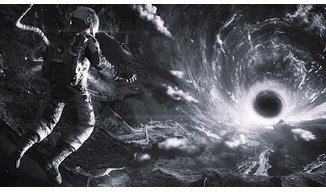
The human imagination has always been captivated by the allure of time. From ancient myths of sages traversing dimensions to modern cinematic blockbusters, the fantasy of stepping beyond the present moment, into the past or future, remains an enduring fascination. As we hurtle through the 21st century, the audacious concept of time travel, once confined to the realm of fiction, is slowly inching its way into serious scientific discourse. By the 25th century, what was once a fanciful dream might evolve into humanity’s grandest scientific and philosophical pursuit, perhaps even an attainable, albeit complex, reality. India, with its rich history of philosophical inquiry into the nature of time and existence, stands poised to contribute uniquely to this evolving global conversation.
The Theoretical Labyrinth and Future Pathways
The bedrock of modern time travel theory lies firmly in Albert Einstein’s theories of relativity. His groundbreaking work redefined time not as a separate entity, but as an inextricable dimension of spacetime. Concepts like time dilation, where time passes differently for observers in relative motion or varying gravitational fields, are not speculative but proven scientific facts. While minute at everyday speeds, this effect becomes significant near the speed of light or massive objects. The 25th century may see humanity harnessing such principles on a grander scale, perhaps through advanced propulsion systems capable of approaching relativistic speeds, effectively allowing for travel into the future.
Far more ambitious are the theoretical pathways to travel to the past or across vast temporal distances. Physicists often point to wormholes – hypothetical tunnels through spacetime that could connect two distant points, or even two different points in time. However, creating and stabilising such wormholes would require exotic matter with negative energy density, a substance yet to be observed or created. The 25th century’s mastery of quantum mechanics, coupled with advanced energy manipulation, might unlock the secrets of such matter, transforming theoretical musings into engineering challenges. Imagine the establishment of a temporal research institute in Bengaluru or Mumbai, focusing on quantum gravity and exotic matter, pushing the boundaries of what is deemed possible.
Ethical Epochs and Societal Ripples
Should time travel become feasible in the 25th century, the scientific triumph would be overshadowed by an unparalleled ethical and societal reckoning. The classic grandfather paradox – altering the past to prevent one’s own existence – highlights the fundamental challenges. Would multiple timelines emerge? Could one truly change the past, or would history resist such alterations, perhaps through some cosmic self-correction mechanism? These are not mere philosophical puzzles; they become critical questions when considering the very fabric of reality.
Beyond paradoxes, the implications for human society are staggering. Access to the past could rewrite history, expose long-held secrets, or even bring back extinct species, challenging our understanding of life and death. Knowledge of the future could dismantle free will, render current events meaningless, and destabilise economies and political systems. Legal frameworks would need to be entirely reimagined to account for temporal crimes, historical tampering, and the rights of individuals across different time periods.
As the eminent physicist Stephen Hawking once pondered, “If time travel is possible, where are the tourists from the future?” This very question encapsulates the profound mystery and the potential self-regulatory nature of time itself. For a nation like India, deeply rooted in concepts of karma, cyclical time (Yugas), and the delicate balance of existence, the implications of altering the past or dictating the future would resonate with profound spiritual and philosophical weight. Debates would not only be scientific but also deeply metaphysical, questioning destiny versus free will in an unprecedented manner.
Conclusion: The Dawn of a New Epoch
The dream of time travel in the 25th century is not merely about developing a new technology; it is about confronting the ultimate frontier of human understanding. It challenges our perceptions of reality, causality, and our place in the cosmos. While the scientific hurdles are monumental, the potential rewards – a deeper understanding of the universe, access to lost knowledge, or even a chance to correct historical injustices – are equally immense. As humanity, perhaps led by collaborative global efforts that include India’s unique blend of scientific prowess and philosophical depth, journeys closer to unraveling the mysteries of time, the 25th century may indeed witness the grandest dream of all transform from speculative fiction into the defining quest of a new epoch.

