


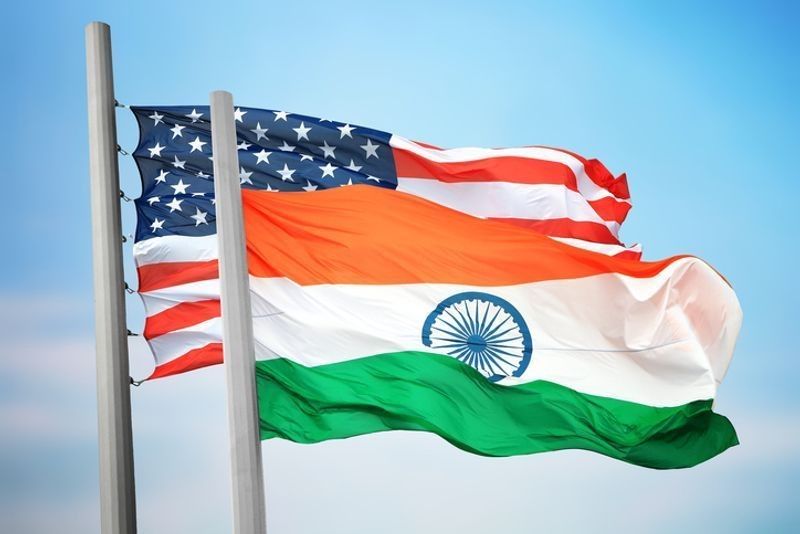
In an era increasingly defined by technological advancements and the global push towards green energy, critical minerals have emerged as the new geopolitical currency. These indispensable elements – from lithium and cobalt powering electric vehicles to rare earths vital for defense systems and semiconductors – are at the heart of national security and economic prosperity. Against this backdrop, the United States’ initiative to form a critical minerals buyers’ club, the Mineral Security Partnership (MSP), has drawn global attention. However, India’s notable exclusion from this strategic alliance has sparked considerable debate, raising questions about the nuances of Indo-US ties and India’s position in the evolving global resource landscape.
The Global Scramble for Critical Minerals
The imperative to secure a stable and diversified supply of critical minerals stems from a confluence of factors. The COVID-19 pandemic exposed the fragilities of global supply chains, while geopolitical tensions have underscored the risks of over-reliance on a single source, particularly China, which dominates the mining, processing, and refining of many crucial minerals. Recognizing this vulnerability, the US launched the MSP in June 2022, bringing together a consortium of “like-minded” nations:
- Australia
- Canada
- Finland
- France
- Germany
- Japan
- The Republic of Korea
- Sweden
- The United Kingdom
- The United States
- The European Commission
- Italy (joined later)
The stated aim of the MSP is to accelerate the development of diverse and secure critical mineral supply chains globally, ensuring that member countries have access to these essential resources. For India, a rapidly industrializing nation with ambitious targets for electric vehicle adoption, renewable energy capacity expansion, and a robust defense manufacturing base, the secure supply of critical minerals is not merely an economic consideration but a strategic imperative. The ‘Make in India’ initiative, coupled with a push for indigenous manufacturing in high-tech sectors, relies heavily on these foundational materials.
India’s Exclusion: A Strategic Oversight or Calculated Move?
The absence of India, a key strategic partner for the US in various forums like the Quad and a burgeoning defense collaborator, from the MSP has led to considerable speculation. While official reasons for exclusion remain unstated, several theories have emerged from diplomatic and strategic circles:
- “Like-minded” Democracies: The US has often emphasized that the MSP comprises countries sharing similar values regarding environmental, social, and governance (ESG) standards in mining and supply chain transparency. Some analysts suggest that India’s regulatory framework, while evolving, might not yet fully align with the stringent standards preferred by the MSP’s founding members.
- Geopolitical Alignment: Despite deepening ties, India maintains a stance of strategic autonomy, particularly evident in its nuanced approach to the Russia-Ukraine conflict. While not a direct factor, India’s broader foreign policy positions might influence perceptions of its “like-mindedness” in specific critical groupings.
- Focus on Downstream Processing: Some argue that the MSP’s initial focus might be on securing raw material extraction and establishing processing capabilities in member countries, where supply chain control and technological expertise are paramount. India’s current critical mineral strategy is still in its nascent stages compared to some other advanced economies.
India’s response, while measured, reflects a recognition of the challenge. The government has signaled its intent to accelerate domestic exploration and mining, as well as actively pursue bilateral partnerships.
Speaking on the implications, Dr. Priya Sharma, a New Delhi-based geopolitical analyst specializing in resource security, noted, “India’s exclusion from the MSP highlights a complex interplay of strategic interests and the varying definitions of ‘like-mindedness’. While a setback, it also pushes India to accelerate its own bilateral critical mineral diplomacy and domestic resource development, rather than relying solely on multilateral groupings where its inclusion may not be guaranteed.” This perspective underscores India’s resilience and its capacity to pivot towards alternative strategies.
Charting an Independent Path: India’s Critical Mineral Strategy
Far from being deterred, India appears to be leveraging this exclusion as an impetus to bolster its independent critical mineral strategy. The establishment of Khanij Bidesh India Limited (KABIL) is a significant step in this direction. KABIL, a joint venture of three public sector undertakings, is tasked with identifying and acquiring critical mineral assets abroad, particularly lithium and cobalt. Initial focus areas include Australia, Argentina, and Africa, rich in resources like lithium, cobalt, and rare earths.
Furthermore, India is intensifying efforts to:
- Boost Domestic Exploration: Utilizing advanced geological surveys and technologies to uncover indigenous reserves of critical minerals.
- Develop Processing Capabilities: Investing in refining and processing infrastructure to add value domestically and reduce reliance on foreign processors.
- Diversify International Partnerships: Actively engaging with non-MSP countries that possess significant critical mineral reserves, forging mutually beneficial supply agreements. For example, India has signed an MoU with Australia for collaboration on critical minerals.
- Promote Circular Economy: Emphasizing recycling and recovery of critical minerals from electronic waste, which can reduce the reliance on primary mining.
While the immediate impact of MSP exclusion might mean higher procurement costs or delays in securing certain supplies, it also presents an opportunity for India to solidify its strategic autonomy in this vital sector. The move could foster greater self-reliance and spur innovation in domestic mineral processing and recycling technologies.
In conclusion, India’s exclusion from the US-led Critical Minerals Buyers’ Club underscores the intricate and sometimes divergent interests at play even among strategic partners. While the MSP aims to create resilient supply chains for its members, India is now compelled to aggressively pursue its own, independent critical mineral security strategy. This development, rather than irreparably straining ties, highlights the complex, multi-faceted nature of the Indo-US relationship, where collaboration in one area doesn’t necessarily translate to complete alignment in all. For India, the path forward involves a robust blend of domestic resource development, diversified international partnerships, and a clear vision for securing its technological and industrial future.

