


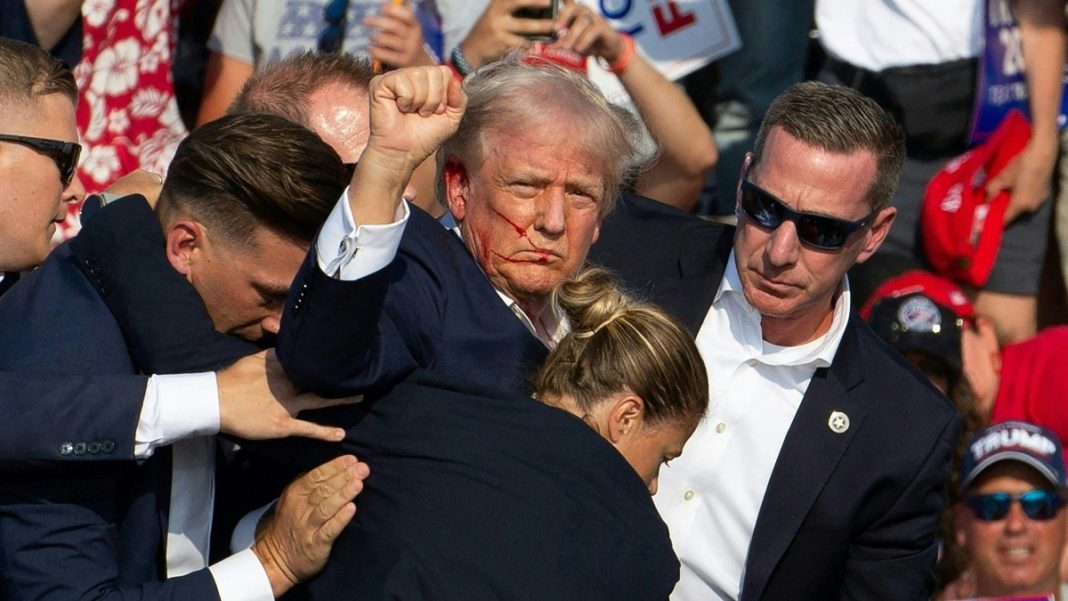
The geopolitical landscape, ever-volatile, has been stirred once again by a potent declaration from Iranian state-affiliated media. Reports circulating internationally indicate that Iranian television has reportedly broadcast a stark message, renewing a chilling assassination threat against former US President Donald Trump. The explicit phrasing, “This time it won’t miss,” has ignited fresh concerns across diplomatic circles and global security analysts, bringing the lingering shadows of past hostilities back into sharp focus. For countries like India, deeply invested in regional stability and energy security, such escalations are met with careful observation and a renewed call for diplomatic restraint.
The Persistent Vow of Retribution
The roots of this renewed threat trace back to January 2020, when a US drone strike in Baghdad, authorized by then-President Trump, killed Major General Qassem Soleimani, the revered commander of the Islamic Revolutionary Guard Corps’ (IRGC) Quds Force. Soleimani was a pivotal figure in Iran’s regional military and geopolitical strategy, considered by many as the second most powerful person in Iran. His assassination was a seismic event, prompting immediate and unequivocal vows of “harsh revenge” from Tehran. Iran retaliated with missile strikes on US bases in Iraq, but many Iranian officials and state-affiliated bodies have consistently maintained that the ultimate revenge – the elimination of those responsible – remains an unfulfilled promise.
For over four years, Iranian rhetoric has periodically resurfaced, reminding the world of its commitment to avenge Soleimani’s death. This latest broadcast, however, stands out due to its pointed nature and the ominous implication embedded in the phrase “This time it won’t miss.” It suggests a persistent, perhaps even evolving, intent, moving beyond mere rhetoric to imply a more determined and potentially active pursuit of retribution. This is not the first time specific threats against Trump have been aired, but the latest iteration suggests an intensifying commitment within certain factions in Iran.
Understanding the Escalation
The broadcast, widely reported by various international media outlets citing Iranian state television and agencies like Tasnim News Agency, reportedly included visuals related to Soleimani and the aforementioned threat. Such pronouncements from state-affiliated media outlets, especially those closely associated with entities like the IRGC, are rarely dismissed as mere propaganda. They often serve as indicators of intent, signaling to both domestic and international audiences the strategic posture and long-term goals of the Iranian establishment.
The direct targeting of a former head of state, particularly one from a rival power, carries immense weight. It underscores the deep-seated animosity that persists between Washington and Tehran, despite shifts in US administrations. This specific language suggests that prior attempts or intentions, if any, were unsuccessful, and that a future endeavor would be executed with heightened resolve. Geopolitical analysts are quick to highlight the gravity of such a statement.
“Such pronouncements from state-affiliated media are rarely idle threats; they often signal a strategic intent, even if the timing and method remain ambiguous. It keeps the issue alive and serves as a continuous pressure point,” notes one observer familiar with Middle Eastern geopolitics.
The threat resurfaces amidst a broader landscape of regional tensions, including conflicts in Gaza and the Red Sea, where Iran-backed groups play significant roles. While direct attribution and execution remain complex and highly dangerous propositions, the rhetoric itself contributes to an already combustible environment.
Regional Stability and India’s Stakes
For India, a nation with significant economic and strategic interests in the Middle East, such escalations are a cause for concern. India shares historical and economic ties with Iran, including past energy imports and the development of the Chabahar Port, which offers a crucial trade route to Afghanistan and Central Asia, bypassing Pakistan. Simultaneously, India maintains robust strategic partnerships with the United States and other Gulf nations. The delicate balance requires New Delhi to navigate regional rivalries with extreme care, advocating for de-escalation and diplomatic solutions.
Any actualization of such a threat, or even further intensification of rhetoric, could destabilize the Strait of Hormuz, a vital chokepoint for global oil trade. India, being a major energy importer, is particularly vulnerable to disruptions that could lead to spikes in crude oil prices. Moreover, the millions of Indian expatriates working in the Gulf region depend on a stable environment for their livelihoods and security. India has consistently championed dialogue and multilateralism as the only viable path to resolving conflicts, a stance that becomes even more pertinent when faced with such grave threats.
The latest pronouncement from Iranian TV serves as a potent reminder of the unresolved grievances and deep animosity that continue to simmer between Iran and the United States. While the feasibility and intent behind such a threat remain subjects of intense speculation, its very existence adds another layer of complexity to an already fragile global security framework. As the world watches, the call for responsible statecraft and de-escalation echoes louder than ever, especially from nations like India, which bear significant stakes in a peaceful and stable international order.

