


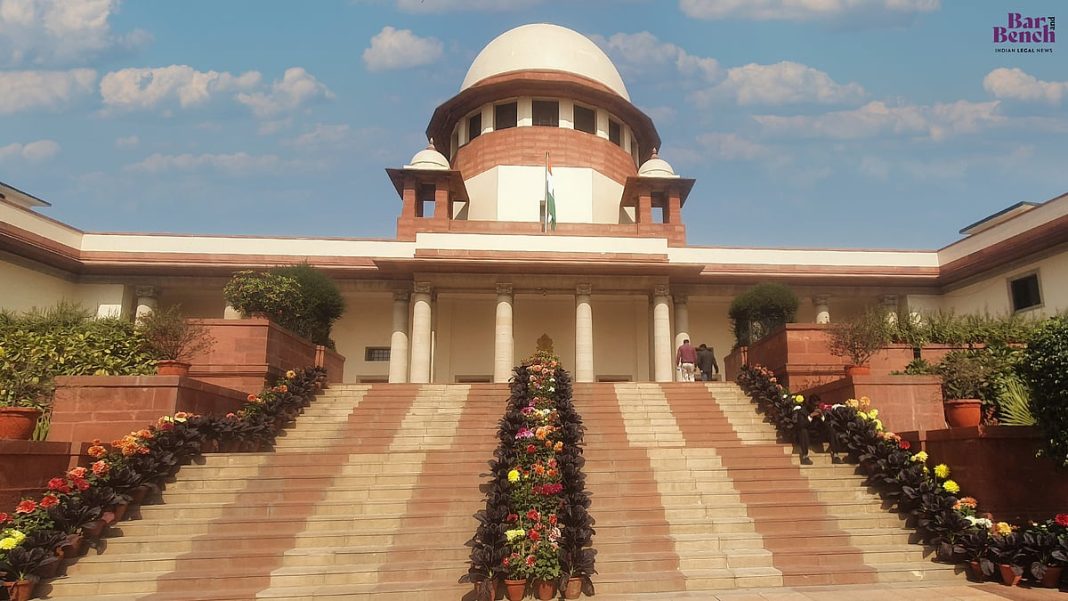
The hallowed corridors of justice are once again echoing with a profound concern, emanating directly from the Supreme Court of India. In a scathing observation that underscores a persistent systemic challenge, the apex court recently decried the practice of High Court judges reserving judgments for extended periods after concluding hearings, labeling it an “ailment” that “must end.” This stern reprimand highlights a critical issue that directly impacts litigants, erodes public trust, and ultimately undermines the very ethos of a fair and expeditious justice delivery system.
The Supreme Court’s remarks came during various proceedings, reflecting a growing exasperation with the delay tactics employed by a few members of the higher judiciary. While the complexity of cases often necessitates thorough deliberation, an undue delay in pronouncing judgments post-conclusion of arguments is seen as a dereliction of judicial duty. This is not merely an administrative lapse but a substantive impediment to justice, causing immense anxiety and financial burden on those awaiting resolution.
The Apex Court’s Stern Admonition
The Supreme Court’s observations serve as a stark reminder of the constitutional mandate for timely justice. Justices Hima Kohli and Ahsanuddin Amanullah, among others, have pointed out that reserving judgments for months, and sometimes even years, after a hearing is complete is a practice fraught with serious consequences. It not only affects the parties involved but also impinges on the institutional memory of the judge, making it harder to recall intricate arguments and nuances presented during the oral submissions.
The bench emphatically stated that once a judge hears a matter, they are expected to deliver a judgment within a reasonable timeframe. The rationale is clear: the arguments are fresh in the mind, the legal research is current, and the litigants’ wait is minimised. Any deviation from this principle is a disservice to the cause of justice. The Supreme Court has, in the past, issued guidelines recommending that judgments be pronounced within a specified period, typically around three months, after reserving. However, the recurring nature of this “ailment” suggests that these guidelines are often honoured in the breach rather than in observance.
The judiciary, being the guardian of the Constitution and the last resort for citizens, must operate with utmost efficiency and transparency. When judgments are delayed indefinitely, it creates a perception of apathy and erodes the fundamental belief that justice will be served impartially and promptly. This is particularly critical in a nation like India, where millions rely on the courts for the protection of their rights and the resolution of disputes.
Repercussions on Litigants and Systemic Trust
The human cost of delayed judgments is immense. Litigants, often at their wits’ end, face prolonged periods of uncertainty. Businesses remain in limbo, families endure emotional distress, and individuals are denied closure. The financial implications are equally severe, with ongoing legal fees, opportunity costs, and the sheer burden of waiting for a decision that could fundamentally alter their lives. This prolonged suspense is antithetical to the spirit of Article 21 of the Constitution, which implicitly guarantees the right to a speedy trial and, by extension, a timely judgment.
Beyond individual suffering, the practice contributes significantly to the overall backlog of cases plaguing the Indian judicial system. While the number of pending cases is a multifaceted problem, delayed judgments compound the issue by tying up judicial resources and creating bottlenecks. It also leads to instances where judges retire or are transferred before pronouncing reserved judgments, necessitating a de novo hearing, thereby wasting precious court time and causing further delays for litigants.
The Supreme Court’s strong stance is a call for greater accountability and judicial discipline. It underscores that the role of a judge is not just to hear arguments but to conclude the process with a reasoned and timely decision. “The integrity of the justice system hinges not just on the correctness of a judgment, but also on its timely delivery. The Supreme Court’s firm reminder is a critical call to uphold the constitutional promise of swift justice,” observes legal analyst Dr. Arjun Prasad, highlighting the broader implications of these delays.
Charting a Path Forward: Ending the Ailment
The Supreme Court’s categorical assertion that this “ailment must end” is not merely a critique but an imperative for reform. Addressing this issue requires a multi-pronged approach. Internally, High Courts could consider stricter enforcement of judgment pronouncement deadlines, coupled with robust administrative oversight. Implementing technology for better case management and introducing performance metrics that include judgment delivery timelines might also prove beneficial.
Ultimately, the onus lies with the individual judges to uphold the highest standards of judicial ethics and efficiency. The solemn duty of dispensing justice demands not only intellectual rigor but also a profound sense of responsibility towards the litigants and the public at large. The Supreme Court’s powerful statement serves as a potent reminder that while justice must be deliberate, it must never be delayed to the point of denial. The timely resolution of disputes is not a luxury but a fundamental right, and ensuring it is paramount for the health of India’s democratic fabric.

