


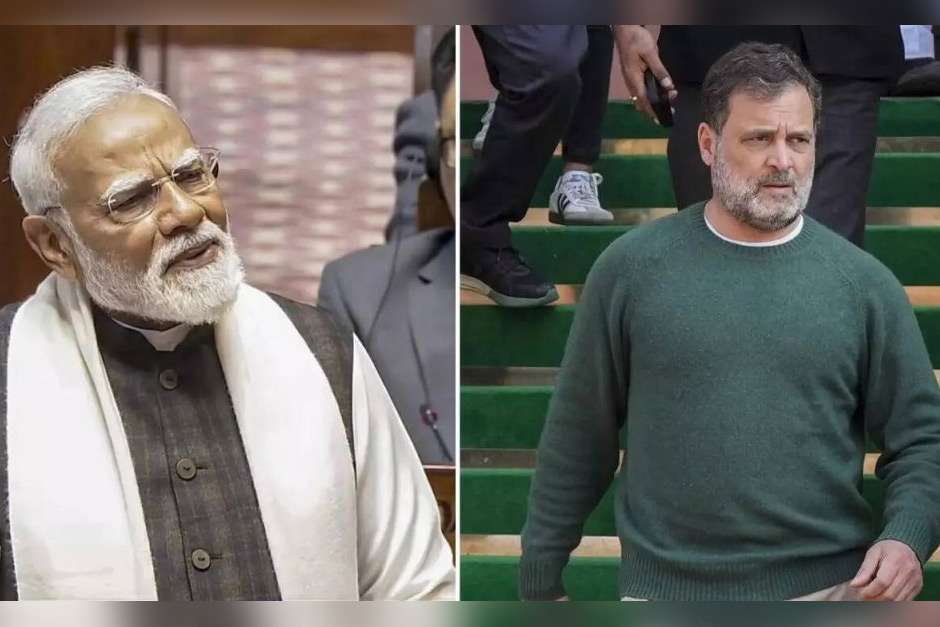
In the vibrant and often charged arena of Indian politics, rhetoric frequently serves as a potent tool to define narratives and sway public opinion. Recently, Prime Minister Narendra Modi reignited a familiar debate, targeting the Nehru-Gandhi family with sharp remarks that questioned their legacy and political efficacy. Speaking amidst various public appearances and parliamentary discussions, PM Modi leveled criticisms, notably asserting, “They stole surname of Mahatma Gandhi,” and delivering a pointed “failed start-up” jab aimed at Congress leader Rahul Gandhi. These comments, while not entirely new to India’s political discourse, underscore a strategic attempt to dismantle the Congress party’s historical claims and redefine its contemporary image.
The Prime Minister’s remarks arrive at a crucial juncture, as India gears up for upcoming state elections and the impending 2024 general elections. Political strategists often employ such high-stakes rhetoric to energize their base and provoke responses from rivals, thereby shaping the national conversation. TrendLyric.com delves into the implications and historical context of these potent political statements.
The Surname Controversy: Challenging a Legacy
One of PM Modi’s most provocative statements revolved around the Gandhi surname itself. Addressing the lineage of the Nehru-Gandhi family, he questioned their attachment to the surname ‘Gandhi’, implying a strategic appropriation rather than a direct ancestral claim to Mahatma Gandhi’s legacy. “Why do they fear keeping the Nehru surname? What is the shame in it? If not Nehru, why not the Gandhi surname? They stole the surname of Mahatma Gandhi,” PM Modi stated, directly attacking a core component of the Congress party’s historical identity.
Historically, the ‘Gandhi’ surname entered the Nehru family through Indira Priyadarshini Nehru’s marriage to Feroze Gandhi. Feroze Gandhi, a prominent freedom fighter and politician, was not related by blood to Mahatma Gandhi. However, the subsequent generations, including Rajiv Gandhi, Sonia Gandhi, Rahul Gandhi, and Priyanka Gandhi Vadra, have all carried the Gandhi surname, which has become inextricably linked with the Congress party’s dynastic leadership. PM Modi’s jab aims to sever this perceived link, suggesting that the family has leveraged the moral authority and nationwide reverence associated with Mahatma Gandhi without truly inheriting his bloodline or, by extension, his ideals.
This tactic is not merely about historical accuracy; it’s a political maneuver designed to weaken the Congress party’s foundational narrative. By questioning the legitimacy of the “Gandhi” surname, PM Modi challenges the party’s long-standing claim as the inheritors of Mahatma Gandhi’s freedom struggle legacy, aiming instead to portray them as opportunists benefiting from a borrowed identity. Congress leaders, on their part, often emphasize their family’s sacrifices and contributions to the nation, arguing that their commitment to public service transcends mere nomenclature.
Rahul Gandhi and the ‘Failed Start-up’ Barb
Beyond the historical lineage, PM Modi also took aim at Congress leader Rahul Gandhi’s political trajectory and perceived effectiveness. The “failed start-up” jibe is a modern, economy-centric metaphor that resonates with India’s burgeoning entrepreneurial spirit. India today prides itself on its vibrant start-up ecosystem, a space where innovation, ambition, and often, rapid failure, are common. By branding Rahul Gandhi as a “failed start-up,” PM Modi attempts to paint him as someone who embarked on a venture (politics) with much fanfare but has failed to deliver concrete results or sustain momentum, much like a business that couldn’t find its footing.
This metaphor is particularly potent in a country where economic growth and job creation are paramount electoral concerns. It plays into a perception, often fostered by the ruling party, that Rahul Gandhi lacks the decisive leadership and pragmatic vision required to steer a national party or the country itself. The comment seeks to diminish his political stature and present him as ineffective, contrasting sharply with the BJP’s narrative of decisive governance and economic development.
Broader Political Implications and Public Perception
Prime Minister Modi’s comments, whether on the Gandhi surname or Rahul Gandhi’s political career, are part of a calculated political strategy. They serve multiple purposes: to discredit the principal opposition party, to consolidate the ruling party’s own narrative of nationalism and development, and to keep the political discourse firmly focused on issues that favor the BJP’s strengths.
Such rhetoric often polarizes public opinion. Supporters of the BJP view these statements as necessary critiques of dynastic politics and a challenge to perceived entitlement. Conversely, Congress supporters and critics of the BJP often decry such remarks as personal attacks, distractions from pressing national issues, and attempts to rewrite history. The ongoing debate highlights how deeply entrenched historical narratives and personal legacies are in Indian electoral politics, often becoming battlegrounds for contemporary political power.
As India moves closer to key elections, the intensity of political discourse is only expected to escalate. These sharp barbs from the Prime Minister against the Gandhi family signify a continued emphasis on legacy, leadership, and perceived performance, shaping the contours of public debate and influencing the electorate’s choices.
The battle for political narrative in India is fierce, and PM Modi’s recent remarks underscore the high stakes involved in defining historical truths and contemporary leadership. Whether these statements will ultimately sway voters or merely entrench existing loyalties remains to be seen, but their impact on the nation’s political conversation is undeniable.

